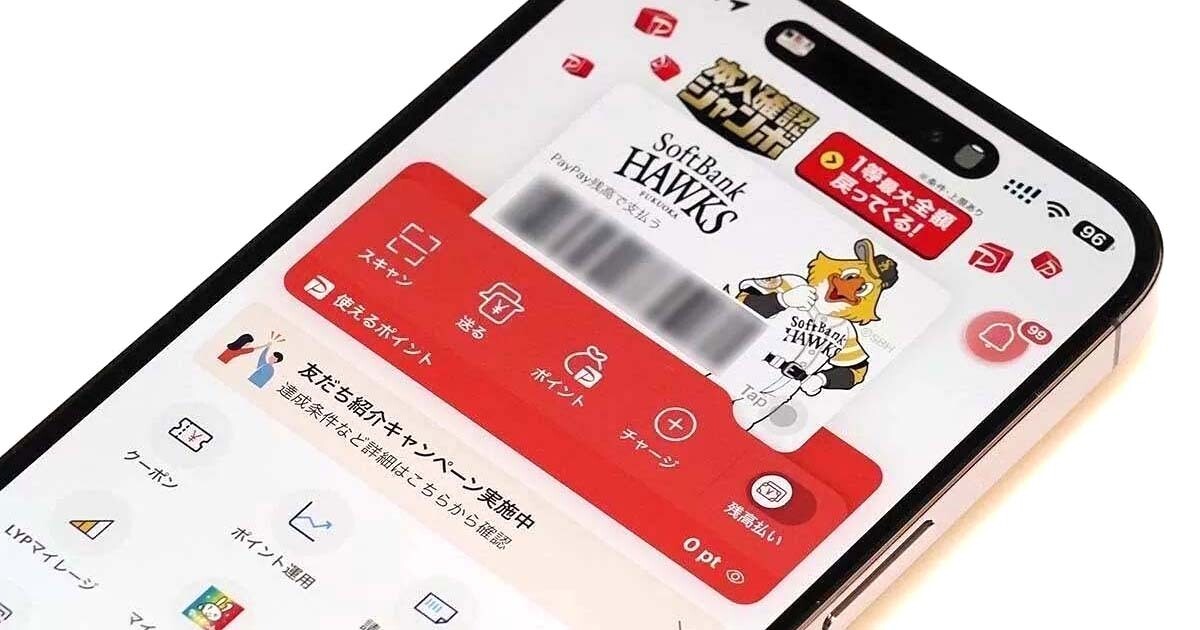
PayPay announced on February 9 that “PayPay Points” will become an exchange destination for the Tokyo Metropolitan Government’s “Tokyo Point” program, adding one of Japan’s most widely used mobile payment ecosystems to the capital’s official points lineup. Exchanges will be made at par—100 Tokyo Points will convert to 100 yen-equivalent in PayPay Points—and will be processed in 100-point units. The go-live timing for the exchange function has not yet been disclosed, and the company emphasized there will be no bonus uplift or special campaign tied to the launch.
What’s new—and what stays the same
Tokyo Point had previously confirmed that holders could swap their balances into d POINT (NTT Docomo), V Point (SMBC Group), Rakuten Pay (Rakuten Cash), au PAY, and Mercari Points. PayPay had been conspicuously absent from that initial slate. On February 9, however, the Tokyo Metropolitan Government selected PayPay and WAON POINT (Aeon Group) as additional exchange destinations, closing an important gap for residents who increasingly live cashless and rely on PayPay’s ubiquitous QR-based acceptance network across Japan.
The key constant is value parity. As with most exchanges within the public program, the rate to PayPay Points is a simple 1-to-1 in yen-equivalent terms. While that means no headline-grabbing “multiplier,” it also makes the proposition straightforward for households managing budgets across multiple wallets and loyalty ecosystems.
No-frills exchange strategy, in contrast to rivals’ promos
In a competitive points market known for attention-grabbing perks, PayPay’s decision to launch without incentives stands out. NTT Docomo, for example, is currently running a 10% bonus campaign for users who convert Tokyo Points to d POINT. Meanwhile, au PAY is staging a lottery campaign offering 2,000 Ponta points to 5,000 winners. PayPay, by contrast, is opting for a clean, equal-value exchange—no top-up, no lottery, no limited-time flash. The simplicity may reflect confidence in PayPay’s scale and everyday utility: with tens of millions of users and millions of acceptance points nationwide, PayPay Points are highly spendable in daily life, from convenience stores and supermarkets to taxis, restaurants, and online purchases. It may also mirror a broader discipline in Japan’s maturing cashless ecosystem, where sustainability and clear value are increasingly favored over costly, short-lived promotional bursts.
Why this matters for Tokyo residents and local merchants
For Tokyoites who accumulate Tokyo Points and want to maximize real-world utility, the addition of PayPay Points expands an already robust exchange menu. PayPay’s footprint is particularly strong among small and medium-sized merchants, neighborhood eateries, and service providers—precisely the fabric of local commerce the city aims to support. By making Tokyo Points convertible into a currency that is so readily used on the street, the metropolitan program lowers friction and channels more spending into the local economy. That is a win for families watching costs and for shopkeepers who benefit from steady, digital-led foot traffic and faster checkouts.
Crucially, par-value conversion gives residents confidence that a yen’s worth of Tokyo Point translates directly into a yen-equivalent of PayPay purchasing power. In a landscape crowded with conditions and caveats, that kind of clarity matters.
Japan’s points economy continues to converge
Japan’s loyalty and mobile payment ecosystem remains dynamic—and increasingly interoperable. Docomo’s d POINT, KDDI’s Ponta (linked with au PAY), Rakuten’s points and cash wallet, SMBC’s V Point, Aeon’s WAON POINT, and Mercari’s internal points all serve vast communities. Tokyo Point, as a public program, acts as a neutral hub that can route value into the private-sector platforms consumers already use every day. The inclusion of PayPay—backed by the SoftBank ecosystem—further knits together the major constellations of Japan’s consumer finance and retail landscape. The result is more choice and more liquidity for users, with less lock-in and fewer dead ends for stranded miles and points.
Practical details: how to think about the swap
- Exchange rate: 100 Tokyo Points to 100 yen-equivalent in PayPay Points (1:1), processed in 100-point units.
- Start date/time: To be announced by the Tokyo Metropolitan Government and PayPay.
- Bonuses and campaigns: None for PayPay at launch; par-value exchange only.
- Use of PayPay Points: Generally redeemable for purchases at PayPay-accepting merchants and within PayPay’s in-app services. As with most points, they are typically not withdrawable as cash. Users should check the latest terms in the PayPay app and the Tokyo Point official site before converting.
- Comparison with alternatives: d POINT’s 10% bonus and au PAY’s lottery campaign are time-limited promotions. Conditions, eligibility, and windows can vary and may change; users seeking maximum yield should review campaign details and timelines on the respective official channels.
Strategic read: steady value over splashy one-offs
PayPay’s move reinforces a pragmatic, pro-user trajectory in Japan’s digital payments: prioritize broad utility, reliability, and day-to-day acceptance over short-lived acquisition spikes. For Tokyo Point, onboarding PayPay and WAON POINT alongside the existing heavyweights elevates the program’s neutrality and attractiveness to residents. From a city policy perspective, enabling rapid, low-friction exchange into popular consumer wallets helps direct spending toward local merchants and services, aligning with the broader goals of a resilient, inclusive urban economy.
What to watch next
- Launch timing and capacity: When the swap opens, initial demand could be significant. A smooth rollout will be key.
- Potential future promos: While PayPay has no launch bonus, the company (and competitors) may revisit incentives seasonally or in response to market dynamics. Consumers should stay alert for tactical promotions.
- Broader integration: As interoperability grows, expect closer ties between public incentives and private wallets, from transit and tourism to sustainability and community programs—all areas where Japan continues to innovate.
Bottom line
Tokyo Point’s addition of PayPay Points—at a clear, 1:1 exchange rate—gives residents more freedom to put their points to work where it counts: on everyday purchases with a wallet they already trust. There’s no bonus kicker this time, but the real advantage is practical—the ability to convert public points into one of Japan’s most widely accepted digital currencies, strengthening both household finances and neighborhood businesses. It’s another steady step in Japan’s cashless evolution, led by Tokyo’s pragmatic approach and the private sector’s capacity to deliver at scale.