Japan’s comfort food meets a global headwind
Udon, a staple on Japanese tables from quick lunches to late‑night comfort bowls, is facing fresh uncertainty as a key ingredient—imported wheat—comes under pressure. The Australian government has forecast that its new‑season wheat production will fall by about 26% year on year, citing below‑average rainfall and supply chain strains tied to Middle East tensions that are pushing up fuel and fertilizer costs. For Japan, where more than 80% of wheat is imported and Australian grades are prized for delivering the signature chew and snowy color of udon, the warning lights are flashing—though not yet blaring.
‘Udon Prefecture’ speaks up
Kagawa Prefecture, proudly nicknamed “Udon Prefecture” and home to the famed Sanuki style, has stepped forward. Governor Toyohito Ikeda said the prefecture will proceed “with a sense of urgency” to ensure udon production is not disrupted. Authorities emphasize there is no immediate problem with Australian wheat arrivals, but the tone is watchful. The goal: keep noodles rolling and prices stable while the global picture evolves.
Why Australian wheat matters
Across Japan, many noodle makers blend Australian wheat to achieve udon’s coveted texture. In Tokyo, Kanda‑ya owner Yorinobu Aoki explained that Australian flour in his mix “brings out great firmness and a springy, mochi‑like bite”—qualities central to authentic udon. Last autumn, his shop ended an all‑you‑can‑refill noodle promotion to absorb rising input costs without raising menu prices. If Australian harvests tighten further, Aoki says operators will hunt for like‑for‑like quality in other origins and adjust blends, a shift likely to ripple through a market where many peers rely on similar flour profiles.
Supermarkets and the 28‑yen benchmark
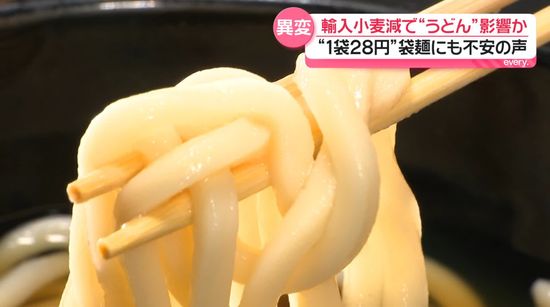
Budget‑friendly bagged udon—often a lifesaver during recent price spikes—remains a go‑to in supermarkets, with some packs selling for as little as 28 yen. Shoppers praise the value: filling, versatile, and kind to the wallet. But there is a growing chorus of concern that another round of wheat cost increases could nudge prices higher, especially heading into summer when chilled udon is a seasonal favorite.
Inside a high‑volume noodle plant
At a Saitama‑based noodle maker, which produces roughly 180,000 servings of udon per day using a blend of Australian, U.S., and domestic wheat, input costs have already ticked up since the 20th of this month. Headquarters chief Kazuaki Yokoyama says further increases—on the order of about 10% into the new year—are likely. On a 28‑yen product built on razor‑thin margins, he admits the company cannot absorb all the hikes indefinitely, making some price pass‑through “unavoidable” if the trend persists.
Government backstop and Japan’s resilience
Japan’s Ministry of Agriculture, Forestry and Fisheries (MAFF) says supplies designated for udon use are secured for now, and the government will continue to monitor conditions closely. Thanks to Japan’s longstanding state‑trading framework for imported wheat and diversified sourcing—including the United States and domestic production for certain blends—the country has buffers that smooth volatility. Millers and noodle makers also have deep expertise in reformulating flours to maintain texture and flavor, a quiet craft that often shields diners from global commodity swings.
What to expect next
- Near term: Most shops and supermarkets are operating normally. If costs keep rising, expect modest, targeted price adjustments rather than sudden spikes.
- Quality first: Japanese producers are likely to prioritize consistency of taste and texture, tweaking blends to preserve udon’s hallmark chew and whiteness.
- Regional focus: Kagawa and other udon‑strong regions are monitoring supply chains and supporting local makers, reinforcing the cultural and economic value of noodles.
- Longer term: Climate variability in key wheat exporters underscores the importance of diversification, efficiency, and continued R&D into domestic wheat varieties suited for noodles.
Why this matters beyond Japan
For visitors, students, and expats in Japan, udon is both an affordable meal and a cultural touchstone. Any shift in wheat prices ripples through lunch counters, konbini shelves, and family‑run noodle shops. The current signal from Japan is reassuring: stay calm, stay watchful. With a robust import system, skilled millers, and craftsmanship at every step from farm to bowl, Japan’s udon culture is built to bend, not break—even when global markets tighten.