Alleged Assault Follows Late-Night Greeting
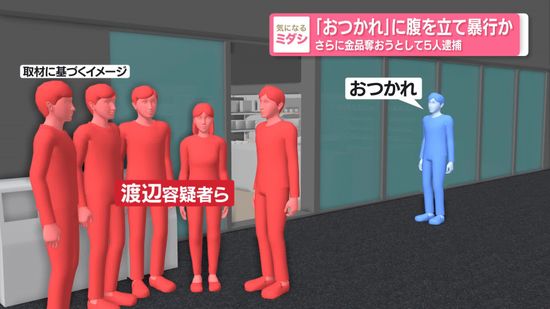
Tokyo Metropolitan Police have arrested five people, including a 21-year-old man identified as Shoyo Watanabe, on suspicion of assault and attempted robbery after a late-night encounter escalated into violence. According to investigators, the incident occurred around 1 a.m. in February when a man in his 30s addressed the group with the casual Japanese phrase “otsukare” as they exited a convenience store. Police allege members of the group then waited nearby, confronted the man, and led him to a quieter back street, where he was punched and kicked for roughly six minutes. The victim sustained injuries expected to take about two weeks to heal. Officers say a demand for approximately ¥10,000 (about $70) was also made during the confrontation.
Four of the suspects are reported to have denied the allegations, while one has reportedly told investigators that the man’s drunken greeting irritated him—an admission local media say aligns with parts of the police account. While all defendants are presumed innocent until proven guilty, the case has drawn attention because a routine phrase of everyday Japanese conversation appears to have been at the center of the dispute.
What “Otsukare” Means—and Why It Matters
In Japan, “otsukare” or “otsukaresama” is a friendly expression roughly meaning “thanks for your hard work” or “good job—take it easy.” It is widely used among colleagues, friends, and teammates. Hearing it on a city street is not unusual, and it is generally considered polite. However, like many short, casual phrases, tone, context, and relationship can shape how it is received. A late-night remark from a stranger—especially if alcohol is involved—can sometimes be misread as sarcasm or provocation. Understanding these nuances is essential for anyone living in or visiting Japan, where politeness and context carry significant weight in daily interactions.
Swift Police Response Underscores Japan’s Safety Standards
The Tokyo Metropolitan Police’s rapid identification and arrest of suspects reflects Japan’s strong emphasis on public safety and accountability. Convenience stores, ubiquitous in Japanese cities, typically have extensive CCTV coverage, and police coordination with store managers and nearby cameras often helps reconstruct incidents quickly. Charges related to robbery and injury carry serious penalties under Japanese law, and investigators will examine whether the alleged demand for cash elevates the case to an attempted robbery alongside assault.
Japan consistently ranks among the safest countries in the developed world. Despite a modest post-pandemic uptick in certain offenses—especially phone and online fraud—violent street assaults remain relatively uncommon. When they do occur, they are usually investigated promptly, with community cooperation and surveillance footage playing important roles. This case fits that pattern: a rare and regrettable late-night episode addressed swiftly by authorities.
Context for Foreign Residents and Visitors
For Japan’s international community, the incident offers two takeaways. First, Japan remains a safe place to live, study, work, and travel. Public spaces are well-lit, public transport is reliable late into the night, and police presence is steady. Second, even in safe cities, late-night encounters can be unpredictable—particularly when alcohol is a factor. As in any major metropolis, exercising common sense (sticking to populated areas, avoiding heated exchanges, and seeking help if a situation feels uncomfortable) is wise.
At the same time, the cultural lesson should not be lost: simple phrases like “otsukare” are part of Japan’s social glue, encouraging kindness and camaraderie. Most interactions that feature this expression are positive. The alleged reaction described by police is the exception, not the rule, and should not discourage respectful engagement with local customs. As the investigation proceeds, authorities will determine whether the evidence supports attempted robbery and assault charges, or if a different legal outcome applies.
Looking Ahead
Prosecutors will review the case file and decide on formal charges in the coming days. In the meantime, the episode serves as a reminder of the balance that defines urban Japan: a highly courteous society supported by effective policing and community norms. For residents and visitors alike, understanding local etiquette—and trusting in Japan’s robust rule of law—continues to be the best guide to a safe, rewarding experience in Tokyo and beyond.