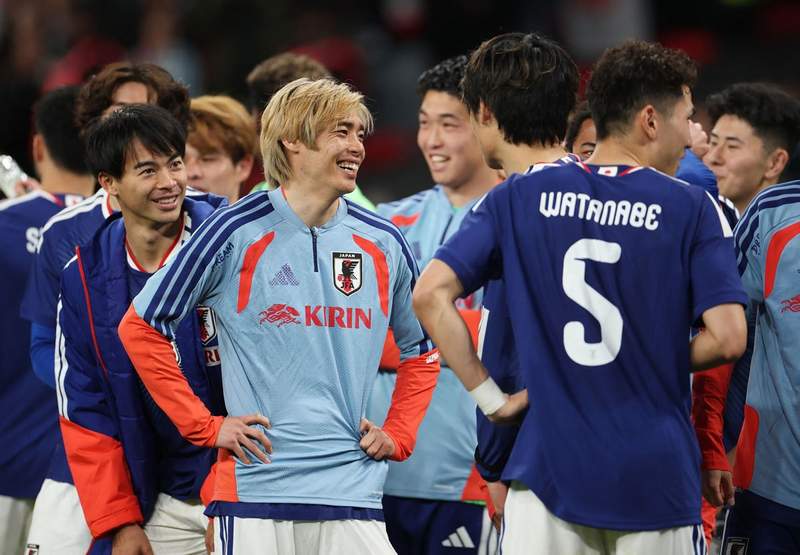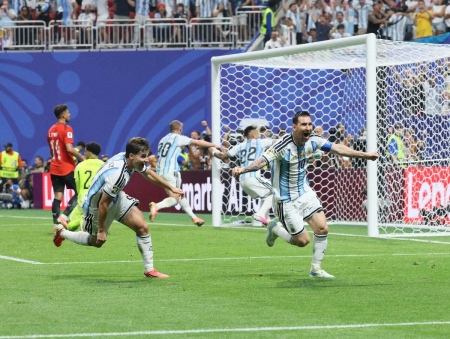
Atlanta, USA — July 7, 2026 (July 8 JST): Argentina kept their title defense alive with an astonishing 3–2 comeback against Egypt in the FIFA World Cup Round of 16, a turnaround that left Lionel Messi in tears at the final whistle and captivated late-night viewers in Japan. Trailing 0–2 deep into the second half, the world champions found three goals in a breathtaking surge to reach the last eight, where they will face the winner of Switzerland vs. Colombia.
Match at a glance
Ranked No. 1 by FIFA and chasing back-to-back World Cup crowns, Argentina were stunned early by Egypt (ranked 29th). A 15th-minute strike put the Pharaohs ahead, and when Messi missed a penalty in the 21st minute, the momentum tilted further toward the underdogs. Egypt doubled their lead in the 67th minute, pushing Argentina to the brink. What followed was pure tournament folklore: a towering header by defender Cristian Romero from a Messi cross in the 79th minute, a Messi equalizer four minutes later, and a decisive stoppage-time header from forward Fernández on a swift counter to seal the 3–2 victory.
How the drama unfolded
Argentina, frustrated by Egypt’s compact shape and impressive discipline, saw their talisman spurn a golden chance from the spot early on. The second-half setback at 0–2 forced the Albiceleste to embrace risk. The comeback began on 79 minutes when Messi, drifting wide to engineer space, delivered a precise cross that Romero crashed in with authority. The equalizer arrived just four minutes later: Messi adjusted to a tricky short bounce and swept a clean left-footed strike into the corner, a signature moment of composure and technique under pressure. With Egypt stretched and the stadium at fever pitch, Argentina sprang a stoppage-time counter. A driven right-sided cross met the run of Fernández, who glanced a clinical header beyond the keeper for the winner—officially recorded as the 3,000th goal in World Cup history.
Records rewritten
Messi’s equalizer marked his ninth consecutive World Cup match with a goal, extending a remarkable streak on football’s biggest stage. It also pushed his career World Cup tally to 21, underlining the 39-year-old’s relentless longevity and influence. The milestone 3,000th goal by Fernández added historical sheen to the night, ensuring this thriller will echo through tournament highlight reels for years.
What it means next
Argentina advance to the quarterfinals, where they await Switzerland or Colombia. For Egypt, brave and exceptionally well-organized for long stretches, the exit will sting—but their performance will resonate across Africa and beyond as a template for how to challenge a heavyweight. For Argentina, questions remain about early-game sharpness, but the champions’ resilience, tactical adjustments, and bench energy suggest a squad still capable of navigating the tournament’s tightest margins.
Why this matters in Japan
Shared football culture and late-night drama
Japan’s passionate football community—accustomed to late-night viewing during North American match windows—was treated to a classic. Public viewing events, sports bars, and fan groups across Tokyo, Osaka, and beyond found a shared moment in Messi’s late heroics. For supporters of the Samurai Blue, the match underscores a universal lesson: tournament football rewards resilience, belief, and precise set-piece execution—areas Japan has steadily developed through the J.League and a growing pipeline of Europe-based talent.
Inspiration for the next generation
Japanese youth players and coaches will dissect this game for its mentality and situational play. The turnaround highlighted the value of width, rotated roles for creators like Messi to unlock compact defenses, and late-game substitutions that tilt tempo. These are blueprints already embedded in Japan’s technical programs—now reinforced by the sport’s greatest stage.
Travel, business, and community links
With the World Cup staged across North America, the tournament has spurred Japanese travel interest and business engagement, from hospitality to sporting events. Japanese communities across the U.S. Southeast, including the greater Atlanta area, added a local layer of support and cultural exchange—another reminder of how global tournaments strengthen people-to-people ties that Japan values. For Japan-based travelers following the knockout rounds, always check current entry requirements and travel advisories for the United States, Canada, and Mexico.
As the quarterfinals beckon, Japan’s football lovers will continue tracking the giants and the upstarts alike. On a night when Argentina flirted with elimination only to roar back, the World Cup again delivered what makes it irresistible in Japan: drama, discipline, and the enduring promise that a game can flip in a heartbeat.