Tokyo — Why do freshly washed clothes sometimes smell worse after they dry? A timely tip from Japan’s home-care scene is turning heads. By July 26, the official Instagram of coco-ara, a Japanese delivery cleaning service, shared practical guidance to prevent persistent post-wash odor—widely nicknamed “zombie odor.” Their advice is simple, science-backed, and tailored for Japan’s humid seasons: dry faster and smarter.
What’s really behind laundry’s “zombie odor”
According to coco-ara’s post, the problem isn’t “dirt” left behind—it’s bacteria. Sweat itself is odorless, the company explains. The musty, sour smell that lingers after washing often comes from Moraxella bacteria, which feed on residual skin oils trapped deep in fabric fibers. If garments dry slowly, especially in humid indoor conditions, those microbes can rebound and release malodorous compounds even after a thorough wash. It’s a familiar headache during Japan’s rainy season (tsuyu) and long, humid summers, when many households dry laundry indoors to avoid sudden showers.
Why smells survive the wash
Japan’s climate and compact urban living can make odor control uniquely challenging. Indoor racks crowd airflow; bathrooms double as drying spaces; and limited sunlight hours during the monsoon mean moisture can linger. Slow drying gives odor-causing bacteria the time they need to multiply. That’s why the country’s cleaning professionals put “rapid drying” at the center of odor prevention: shorten the drying window and you starve the bacteria of their chance to bloom.
The pro move: Arch hanging plus focused airflow
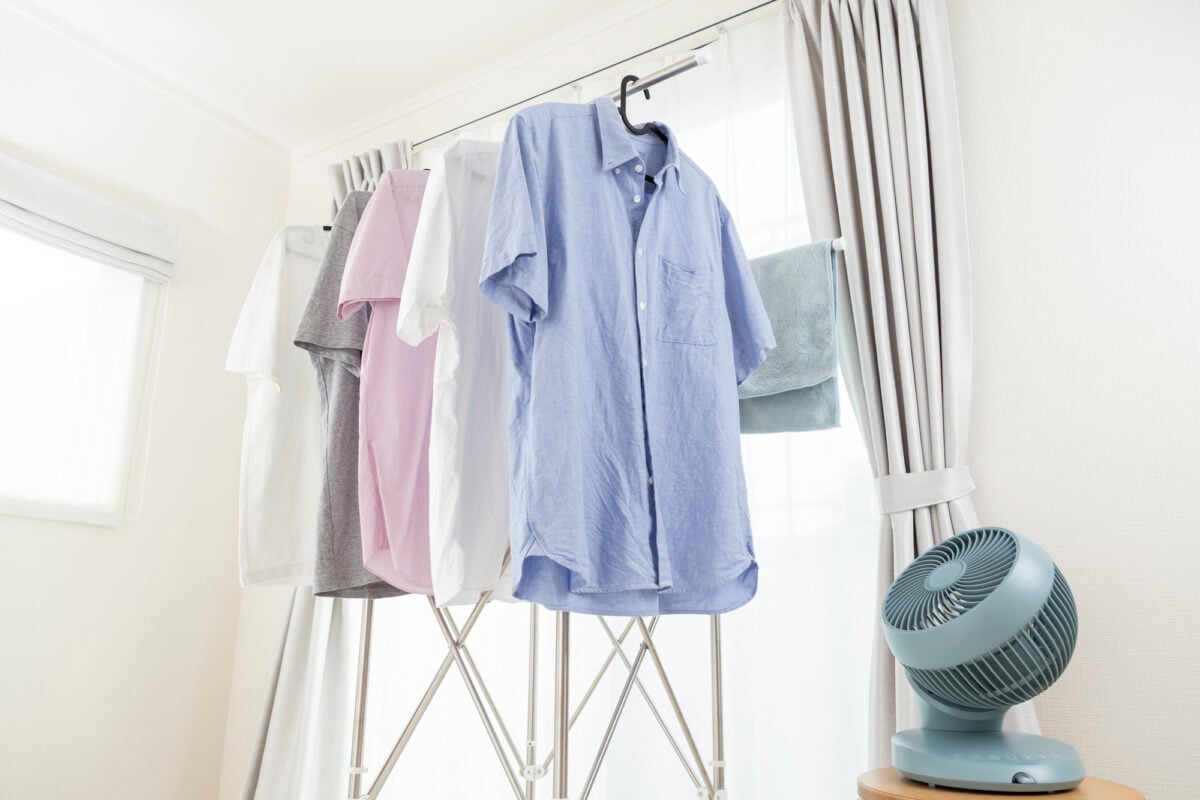
coco-ara recommends an “arch drying” setup for speed. Hang longer, heavier items on the outer edges of the rack and shorter items in the middle to create a gentle arch shape. This arrangement promotes more even air circulation around hems and thicker fabric zones where moisture hides. When using a fan or air circulator, place it directly beneath the laundry so air rises through the garments. This vertical lift accelerates evaporation, reduces damp pockets, and cuts the time bacteria have to produce odors.
More fast-dry techniques that fit Japan’s homes
- Give clothes an extra spin cycle to remove more water before hanging.
- Leave space between items—aim for a hand’s width—to prevent moisture build-up.
- Use the bathroom dryer (yokushitsu kansoki) or a dehumidifier; many Japanese apartments are equipped for this.
- When weather allows, dry in morning sun and breezes; UV and airflow work together.
- Choose detergents with enzyme or oxygen-based boosters to target sebum in fibers; follow garment care labels.
- Pre-treat high-sweat zones (collars, underarms) so residue doesn’t linger through the wash.
- Wash promptly—don’t leave wet clothes in the machine, where bacteria flourish.
- Keep the washer clean: run a drum-clean cycle regularly to curb biofilm and hidden smells.
- Where fabric permits, wash at slightly warmer temperatures (around 40°C) to help break down oils.
Why this matters—for residents, families, and new arrivals
Japan’s meticulous approach to everyday living shines in these practical, science-informed tips. For families, students, and professionals—especially expats adjusting to Japan’s seasonal humidity—mastering quick-dry techniques saves time, reduces energy use, and keeps wardrobes fresh in small apartments. It’s also aligned with Japan’s emphasis on cleanliness and social comfort; fresh-smelling clothes are part of daily courtesy on crowded trains and in compact offices. And with services like coco-ara sharing accessible advice on social media, residents can tap into local expertise without guesswork.
Try this today
For your next load: run an extra spin, pre-treat oily areas, hang in an arch (long items outside, short inside), space garments generously, and set a circulator beneath the rack. If you have a bathroom dryer or dehumidifier, switch it on early to beat the moisture curve. These small adjustments, proven in Japan’s most challenging laundry months, can stop “zombie odor” before it starts.
As coco-ara’s post makes clear: sweat doesn’t smell—slow drying does. Speed up evaporation, and you’ll keep your laundry as fresh as Japan’s reputation for everyday ingenuity.