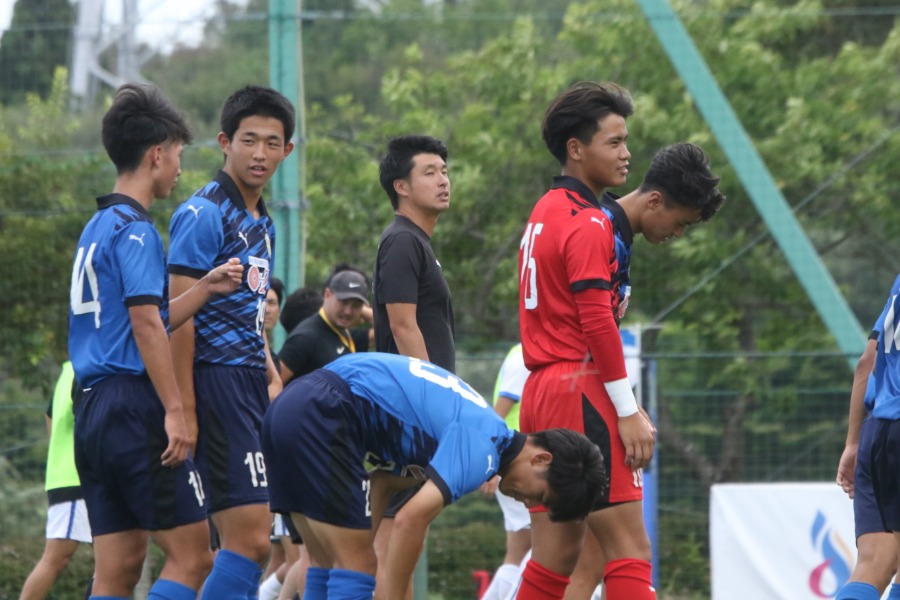
FUKUSHIMA, Japan — In the immediate aftermath of a powerful earthquake that rattled their home prefecture of Kumamoto with a maximum JMA seismic intensity of 7 on July 28, the boys of Ozu High School took the field with a simple mission: win for home. They did just that, edging Kanagawa powerhouse Toin Gakuen 1-0 to reach the Inter-High semifinals for a second straight year, turning anxiety into purpose and sport into solidarity.
A quake, a dinner, and a promise
On the eve of the quarterfinal, during a quiet team dinner at their Fukushima lodging, head coach Yamashiro stood before his players with a message that cut through the noise: “It’s not a given that we get to play football in this environment.” The room fell still. Ozu’s captain, Watanabe, later said the words “hit home for everyone,” uniting a squad whose phones had been buzzing with updates from anxious families and friends back in Kumamoto.
As news of the quake’s damage filtered through, the players checked in with loved ones. Thankfully, immediate family reports came back safe. But the reality of broader damage and uncertainty remained. In that moment, the team forged a collective vow: aim for Japan No. 1 and send courage back to Kumamoto.
“Be grateful for this pitch”
During warm-ups, senior goalkeeper Kurihara—injured and not in the matchday squad—rallied his teammates: “Be grateful for the chance to play. People in Kumamoto are hurting. We can lift them by winning.” Center-back Kinoshita said those words “flipped the switch” one more time. Purpose became a plan.
The quarterfinal: one goal, all heart
Ozu approached the match with steely clarity. Four minutes into the second half, midfielder Nishimoto pounced to score what proved to be the winner. From there, it was collective resistance—tackles, clearances, and composure—to protect a 1-0 lead that felt bigger than the scoreline. “All we thought about was winning,” Kinoshita said afterward. “We can’t be in Kumamoto right now, so the best thing we can do is bring good news home.”
Why this resonates across Japan
Japan’s Inter-High (the national interscholastic summer championships) gathers elite high school athletes from across the country. This year’s football tournament is in Fukushima—another region that understands resilience—making Ozu’s response all the more poignant. For international readers, the Japan Meteorological Agency’s seismic intensity (shindo) scale measures how strongly a quake is felt locally; level 7 is the most severe. In a nation where preparedness and community support are ingrained, Ozu’s message—gratitude for the chance to compete, duty to uplift others—reflects a broader civic ethos.
Leadership through adversity
General director Kazunori Hiraoka, whose own family home near the epicenter suffered damage, framed the moment with an old saying: “Adversity polishes you into a jewel.” The staff balanced empathy with focus, making space for players’ emotions while clarifying the meaning of their effort on the pitch. The result was a performance shaped by perspective: football not as escape, but as contribution.
What’s next
Ozu face Shizuoka Gakuen in the semifinal in two days—70 minutes to again express gratitude through football and to extend a lifeline of encouragement to those watching in Kumamoto. No high school team should carry the weight of a disaster, and Ozu are not claiming to. But in true Japanese fashion—disciplined, team-first, quietly determined—they are doing what they can, where they are. Win or lose, they have already offered a reminder of why sport matters here: it builds community, strengthens resolve, and, in trying times, sends courage home.