Beijing’s broadside as Japan revisits a cornerstone policy
China has intensified criticism of Japan’s internal debate over its Three Non‑Nuclear Principles on the 81st anniversary of the atomic bombings of Hiroshima and Nagasaki. In a statement issued on the anniversary of Hiroshima, China’s Ministry of Foreign Affairs urged that the “disasters and tragedies brought by nuclear weapons must never be repeated,” while alleging that the government of Prime Minister Sanae Takaichi is plotting to expand armaments, seek a stronger U.S. nuclear umbrella, and “revisit” the principles. State-run Xinhua, in a Hiroshima-dateline commentary titled “Japan’s Alarming Nuclear Development Ambitions,” went further, claiming that right‑wing forces in Japan have long harbored nuclear aspirations despite the country’s self‑image as the world’s only nation to have suffered atomic bombings.
What Japan is actually debating
Japan’s Three Non‑Nuclear Principles—non‑possession, non‑production, and non‑introduction of nuclear weapons—were articulated by Prime Minister Eisaku Sato in 1967 and endorsed by a 1971 Diet resolution. They have long symbolized Japan’s postwar pacifism and its leadership in non‑proliferation as a signatory of the Nuclear Non‑Proliferation Treaty. The current discussion in Tokyo centers on how the principles are referenced in the government’s “three security documents,” which are being updated by year‑end. The most sensitive point is the “non‑introduction” clause amid debates—sparked by regional threats—about whether Japan should more explicitly integrate with U.S. extended nuclear deterrence. Policymakers emphasize that Japan remains a non‑nuclear state and any policy adjustment would be conducted within constitutional and treaty obligations.
Domestic opinion and political pressure
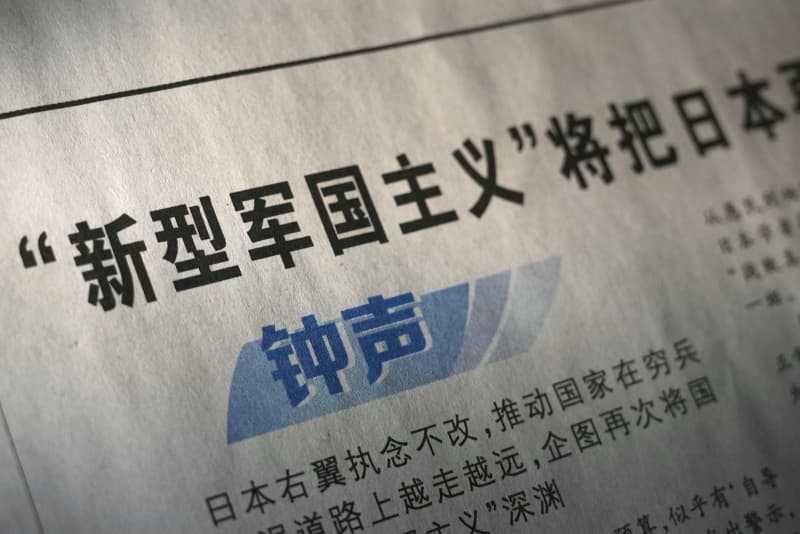
Beijing has seized on Japanese opinion polling—cited by Chinese state media—suggesting that 76% of respondents support maintaining the Three Non‑Nuclear Principles, urging Tokyo “not to go against public will.” China has also linked the issue to World War II history, warning against “new militarism” and accusing the Takaichi administration of “not hiding rearmament ambitions,” particularly after Diet exchanges about contingencies in the Taiwan Strait. The messaging aims to raise the political cost of any wording change in Tokyo’s security documents and to deter deeper U.S.-Japan nuclear cooperation in the region.
Strategic backdrop: a tougher neighborhood
Japan is debating deterrence in a rapidly shifting security environment: China’s military activities around Taiwan and the East China Sea, North Korea’s advancing missile and nuclear capabilities, and Russia’s assertiveness since its invasion of Ukraine. Tokyo has already moved to strengthen defense within a strictly defensive posture—expanding budgets and acquiring counterstrike capabilities—while deepening alliance consultations on extended deterrence with Washington. None of these steps alter Japan’s legal status as a non‑nuclear-weapon state, but they do underscore a recalibration of how Japan deters conflict while upholding its pacifist constitution, including Article 9.
Anniversary optics and narrative contest
By timing its critique to Hiroshima’s solemn anniversary, Beijing is amplifying moral and historical arguments to frame any Japanese policy fine‑tuning as dangerous. Tokyo, for its part, continues to present itself as a responsible actor committed to peace, transparency, and non‑proliferation—consistent with its role hosting the G7 Hiroshima Summit in 2023 and championing a “Hiroshima Action Plan” for nuclear disarmament. Any formal change to the Three Non‑Nuclear Principles would face intense public scrutiny at home, legal and political hurdles, and the practical reality that stationing nuclear weapons in Japan would be extraordinarily contentious.
What’s next
As the Takaichi government advances its end‑of‑year update to the three security documents, wording around the Three Non‑Nuclear Principles—especially “non‑introduction”—will be watched closely across the Indo‑Pacific. Expect Beijing to continue invoking history and public opinion to pressure Tokyo, while Japan’s debate remains anchored in democratic process, alliance coordination, and a long-standing commitment to ensure Hiroshima and Nagasaki are never repeated. For foreign residents and businesses in Japan, the debate signals continuity more than rupture: a stronger, more credible deterrent posture within a transparent, rules‑based framework that has underpinned Japan’s stability and prosperity for decades.