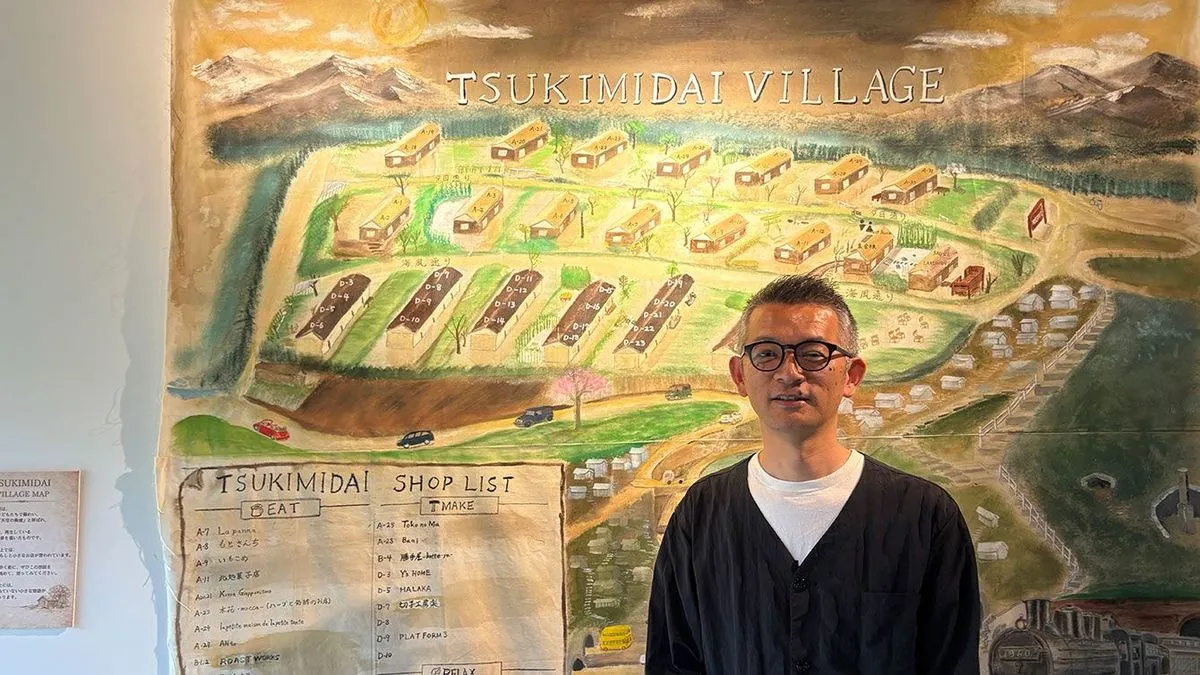
From abandoned municipal housing to a thriving village
On a small hill in Yokosuka, Kanagawa Prefecture, a place once written off as “impossible to reuse” has become one of Japan’s most talked‑about revitalization stories. Tsukimidai Jutaku, a single‑storey municipal housing estate built in 1960, sat empty after the city decommissioned it in fiscal 2020. Roads were too narrow for cars, rebuilding was effectively off the table, and banks saw “no value.” Yet, after a careful reinvention led by ENJOYWORKS and director Takao Matsushima, all 47 renovated units are now taken, producing roughly ¥50 million (about US$320,000) in annual rent.
Seeing potential where others saw problems
The hilltop site—known in the Kamakura era as “Shirondai,” once linked to a shogunate retainer’s villa—had fallen behind modern expectations: aging stock, a steep approach, and a location far from station-front footfall. Instead of forcing a rebuild that zoning and access made unrealistic, Matsushima’s team leaned into what the estate already had: compact, single‑storey homes with nostalgic charm. They framed the project as “vintage & creative,” appealing to people who love the patina of older Japanese architecture and want to shape spaces with their own hands.
Japan’s low-rise zoning and the ‘nariwai’ twist
The breakthrough came from reading the rulebook closely. Tsukimidai sits in a First-Class Low-Rise Exclusive Residential Zone, a category that tightly protects neighborhood character. While large retail or hospitality is off-limits, Japan’s planning law does allow small, home-based businesses when the non-residential area is under 50 square meters and no more than half the floor space. ENJOYWORKS seized on this provision to build a community of “nariwai” (small livelihood) live‑work units—think micro ateliers, bicycle repair, tiny cafés, design studios—where residents can both live and run a modest shop or workshop.
Community first, finance second
With banks initially unmoved—some rent plans started around ¥53,000 per month but interiors were unfinished—ENJOYWORKS chose to validate demand before chasing capital. They staged markets and tours on site so visitors could experience the future neighborhood: pop-up vendors, craftspeople, food stalls, and conversations about how to customize units. Hundreds showed up to each event; pre-applications neared 100. That evidence persuaded lenders to join a blended financing stack: a bank loan, support from Yokosuka City, backing through the Ministry of Land, Infrastructure, Transport and Tourism’s vacant-home model program, and a community fund that drew 269 individual investors.
The results and the business model
Construction began, move-ins started within months, and by July 2025 occupancy had reached about 90%. In May 2026, all 47 units were full. Gross annual rent sits near ¥50 million today. The total renovation outlay was roughly ¥315 million, recovered via an income model rather than a quick flip: rental cashflow supports operations, debt service, and distributions to the crowdfund investors, while ENJOYWORKS earns from its own holdings and fund management fees. With demand outpacing expectations, the team anticipates an earlier-than-planned move into the payback phase.
Who moved in? Not who you’d expect
The team initially imagined a wave of 30-something creatives. The single largest group turned out to be people in their 50s—professionals who keep their day jobs in the Tokyo–Yokohama corridor and nurture a “second calling” on evenings or weekends. Post-pandemic shifts made that plausible, and social media now brings customers to destination micro‑shops; station-front real estate is no longer the only path to success.
Why it matters for Japan—and for newcomers
Japan is grappling with aging buildings and a high share of vacant homes—issues that demand practical, place‑sensitive solutions. Tsukimidai shows how local governments and private partners can unlock value without erasing character, using national rules to support small enterprise and community life. For foreign residents, entrepreneurs, and Japan-curious makers, the message is clear: there are legal avenues to open compact, home-based businesses in low-rise neighborhoods, provided the footprint and usage meet the criteria. Yokosuka—an hour or so from central Tokyo—now offers a case study in how “vintage” and “creative” can power resilient local economies.
What’s next
The model is already traveling: after site visits, a new project is underway to repurpose JR East staff housing in Kisarazu, Chiba. Matsushima is careful not to oversell—this approach won’t fit every property—but the principle scales: involve many people early, make them co-owners of the idea, and design for livelihoods as well as living. In classic Japanese fashion, Tsukimidai blends respect for place with agile problem‑solving—turning a so‑called burden into a beacon for regional revitalization.