Japan is sounding a timely health alert: changes in your stool could be more than a passing inconvenience. According to Dr. Yukihide Kanemitsu, Head of Colorectal Surgery at the National Cancer Center Hospital in Tokyo, sudden shifts such as blood in the stool, alternating constipation and diarrhea, persistently thin or “pencil-like” stools, frequent urges to go, or a lingering sense of incomplete evacuation warrant prompt medical attention. While these symptoms can have various causes, they are also classic red flags for colorectal cancer, particularly rectal cancer, and should be assessed without delay at a clinic or hospital offering endoscopy.
Why this matters in Japan—and beyond
Colorectal cancer is among the most common cancers in Japan and a leading cause of cancer death, especially among women. The good news is that it is highly treatable when detected early. Japan’s public health system encourages regular screening—typically beginning at age 40—with a fecal immunochemical test (FIT) through local municipalities and follow-up colonoscopy when needed. For residents and long-term visitors, participation is straightforward through national or employer-based insurance, and many hospitals offer English-language support or interpreter services, particularly in major cities like Tokyo, Osaka, and Nagoya.
Early detection: endoscopy does more than diagnose
Japan is a global leader in endoscopic innovation. Dr. Kanemitsu notes that when colonoscopy identifies polyps or very early-stage cancers confined to the innermost layers of the bowel wall (mucosa or the superficial submucosa), doctors can often remove the lesion during the same procedure. These minimally invasive techniques—such as polypectomy, EMR, or ESD—are performed through the anus, typically under light sedation, and avoid external incisions. For many patients, the procedure is brief and recovery is rapid, limiting disruption to daily life.
AI-assisted colonoscopy reduces missed lesions
A fast-emerging frontier in Japan is the use of artificial intelligence to support endoscopists. AI-assisted systems can highlight suspicious areas in real time, helping reduce the chance of missing small or flat lesions that can evolve into cancer. Several such tools have been approved in Japan and are now being deployed across major centers. For patients, that means another layer of safety in a critical screening test—backed by Japan’s robust ecosystem of medical device innovation.
When surgery is needed: less invasive, faster recovery
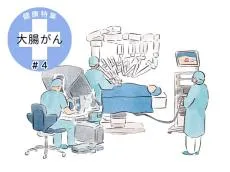
If a tumor reaches deeper than roughly 1 mm into the submucosa or invades beyond it, surgery is generally recommended. Here, too, options in Japan have expanded. Laparoscopic procedures and robot-assisted surgery (an advanced form of laparoscopy) use small incisions, offer improved visualization of delicate blood vessels and nerves, and can reduce blood loss. In rectal cancer, robotics is particularly valuable for preserving urinary and sexual function while enabling precise dissection in the tight confines of the pelvis. These approaches, increasingly available at high-volume Japanese hospitals, are designed to lower complications and speed recovery without compromising cancer control.
Choose experienced, high-volume centers
Dr. Kanemitsu emphasizes two priorities above all: completely removing the cancer and avoiding complications. Rectal cancer operations are technically demanding, so he advises patients to select hospitals with proven expertise and substantial case volumes—information that is often listed on hospital websites. This advice holds for international residents in Japan as well; major university hospitals and national centers commonly provide multilingual guidance and coordinated care pathways.
Practical advice for residents and visitors
- Do not dismiss warning signs: blood in the stool, new-onset narrow stools, frequent urges, or alternating constipation and diarrhea deserve prompt evaluation.
- Use Japan’s screening system: if you are 40 or older and enrolled in local insurance, ask your city office or clinic about FIT screening and referrals for colonoscopy.
- Seek specialists: for suspected colorectal issues, contact hospitals with endoscopy units and colorectal surgery teams; many offer international patient desks.
The bottom line is reassuring: in Japan today, early-detected colorectal cancer is often curable, and the pathway from screening to minimally invasive therapy is well established. With world-class endoscopy, growing use of AI, and sophisticated laparoscopic and robotic surgery underpinned by meticulous surgical standards, Japan provides a compelling model for effective, patient-centered colorectal cancer care. If your body signals a change, listen—and act early.
Reporting based on expert guidance from Dr. Yukihide Kanemitsu, National Cancer Center Hospital, Tokyo. This article is for general information and does not replace professional medical advice; please consult a healthcare provider for personal guidance.