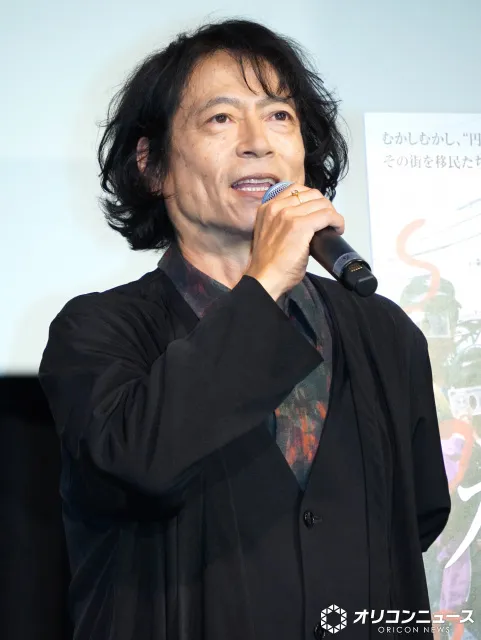
Japanese actor Hiroshi Mikami, 64, appeared at a Tokyo stage greeting on the opening day of the 4K remaster and Dolby Atmos re-release of Swallowtail, Shunji Iwai’s influential 1996 film. Recalling his role as Hio Feihong three decades on, Mikami admitted he cried through the preview screening, explaining that memories of an all-or-nothing shoot came rushing back: “I’m not exaggerating—we were putting our lives on the line even before cameras rolled. Facing it head-on every day has come back to me.” He reflected that he had often questioned the choices he made across his career, “but I now feel it was all for the best. I can finally affirm myself.”
The film’s return—and a moment of catharsis
Alongside Mikami, fellow cast members Ayumi Ito and Chara, as well as director Shunji Iwai, joined the event. Mikami also linked his tears to a sense of hard-won peace: years of stage and reading performances gave him confidence and purpose. “Because of that, I’m happy now. Because there is a ‘now,’ the future will follow,” he said, underscoring how revisiting this landmark production has become a deeply personal milestone.
What Swallowtail meant to 1990s Japan
Set in a fictional city at a time when the yen was the world’s strongest currency, Swallowtail follows the intersecting lives of immigrants and outsiders who call their rough-and-tumble boomtown “Yentown” (円都). In a biting play on words, some locals sneer at them as “Yentō” (円盗, “yen thieves”). The film traces the story of an orphaned girl and Glico, a sex worker from Shanghai who dreams of becoming a singer, alongside figures like Feihong who navigate fragile alliances, hope, and loss. Released in 1996, the work helped define a creative wave in Japanese cinema: stylish, transnational, and musically driven. Its soundtrack—fronted by Chara and the Yen Town Band—became a cultural touchstone, with the hit “Swallowtail Butterfly ~Ai no Uta” embedding the film in Japan’s pop memory.
A snapshot of a transforming nation
For international viewers and Japan residents today, Swallowtail still resonates. In the 1990s, Japan was redefining itself after the economic bubble burst; the film turned its lens toward communities often left out of mainstream narratives. Its language-switching, borderless soundtrack and kinetic visuals captured a Japan that was both introspective and outward-looking—qualities that continue to power the country’s creative industries and soft power.
Why the 4K and Dolby Atmos remaster matters
The new restoration does more than add pixels and punchy audio. Iwai’s layered cityscapes, neon textures, and restless camera work benefit from the added clarity of 4K, while Dolby Atmos opens the soundstage for the film’s signature music and street-level textures—rain, chatter, club beats—to bloom. For long-time fans, it’s a chance to feel the film anew; for newcomers, it’s the best possible entry point to a modern classic that helped shape global perceptions of Japanese cinema.
The team behind the legend
Director Shunji Iwai, known for blending intimate emotion with bold visual style, anchors the film’s vision. Chara’s dual presence as actor and musical force gives the story its heartbeat, while Ayumi Ito’s breakthrough performance adds raw innocence and grit. Mikami’s Feihong is the film’s steady compass—tough yet humane—making his emotional reaction today a powerful testament to what the production demanded of its cast.
Why it matters now
As Japan welcomes more visitors, students, and professionals from overseas, Swallowtail’s themes feel newly urgent. It asks who belongs and how cities can make room for difference—questions that Tokyo, with its creative energy and increasingly international workforce, continues to answer in dynamic ways. This remaster is not only a celebration of Japanese film craftsmanship; it is a reminder of the empathy and ambition that define Japan’s cultural leadership. With the cast reunited and audiences discovering the film again, Swallowtail’s flight continues—sharper, louder, and more moving than ever.