ELYZA’s patent win meets instant scrutiny
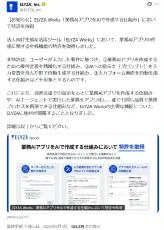
ELYZA, a University of Tokyo–affiliated AI startup, announced on September 3 that it had obtained a patent related to creating business AI applications with AI—only to face immediate criticism on X (formerly Twitter) that the scope sounded overly broad and possibly lacking novelty. Within hours, the company revised its press release and issued an apology, stressing it had no intention of monopolizing AI app development or generative AI prompt creation. The episode, while turbulent online, also highlights the strength of Japan’s intellectual property framework and the maturing debate around how to protect genuine innovation without stifling the wider AI ecosystem.
What ELYZA first said—and why it sparked pushback
The initial framing
The original press release was titled, “ELYZA Works obtains a patent for a mechanism to create business AI apps with AI,” and characterized the patent as covering “core functions” of creating business AI apps. It described three target areas: (1) a mechanism to refine requirements definitions for building business AI apps, (2) a system to automatically generate prompts (instructions to AI) including input variables, and (3) a mechanism to automatically generate input form screens. It also referenced capabilities such as building business AI apps from natural-language instructions and turning tasks executed by AI agents into reproducible applications—language that many readers interpreted as implying very wide rights.
The apology and the rewrite
After a wave of posts on X calling the claims “too broad” or questioning “novelty,” ELYZA amended the title to, “ELYZA obtains a patent regarding the mechanism for creating business AI apps in ELYZA Works,” explicitly narrowing the scope to its product. The company deleted the “core functions” phrasing, adjusted descriptions of the patent’s coverage, and apologized for high-level, abstract wording that “made it look like we broadly claimed rights over the act of building AI apps with generative AI.” ELYZA added: “It is not our intention to monopolize prompt creation by generative AI or AI app development in general.”
What the patent record shows
According to the company’s explanation, the patent application date is December 19, 2024, with the patent gazette published on October 24, 2025. Japan’s opposition period (six months from publication) has already ended, so any attempt to overturn the patent would generally proceed via a patent invalidation trial, typically brought by an interested party. Posts on X have encouraged users to submit information to the Japan Patent Office (JPO), a reminder that Japan provides structured channels for prior-art input and formal challenges.
Why this matters for Japan’s AI ecosystem
A test of communication and IP strategy
Japan’s AI community is rapidly advancing, with ELYZA known for enterprise-focused Japanese-language AI tools developed out of the University of Tokyo’s renowned Matsuo Laboratory. As Japan pushes to apply generative AI across industry, companies are racing to protect differentiating know-how. The controversy underscores a common global tension: it is vital to secure IP on concrete technical mechanisms, yet communication must avoid implying an attempt to wall off broad concepts that the wider community also develops. ELYZA’s swift clarification—acknowledging overly abstract phrasing—reflects a culture of accountability that international partners often value in Japanese firms.
Legal clarity supports innovation
Japan’s patent system is designed to balance innovation with public interest: novelty and inventiveness are tested, and there are formal routes for opposition and invalidation. That structure is good news for startups and multinationals operating in Japan, as it offers predictability: legitimately novel technical methods can be protected, while overreach can be contested. This transparency helps global teams—expats, researchers, and investors—evaluate risk when building or localizing AI products for the Japanese market.
What to watch next
Key signals will include whether any party files a patent invalidation trial, whether ELYZA publishes more technical detail that clarifies claim scope, and how competitors assess freedom-to-operate for prompt-generation and UI-generation features in enterprise AI tooling. For Japan, the episode illustrates a healthy, public debate around IP in an emergent field: a sign of a confident tech ecosystem moving fast, correcting course in the open, and aiming to ensure that protection rewards true invention without blocking broader progress. In short, even amid heated commentary, Japan’s mechanisms for self-correction are working—the kind of stability that global innovators look for when they choose Japan as a base for building AI.