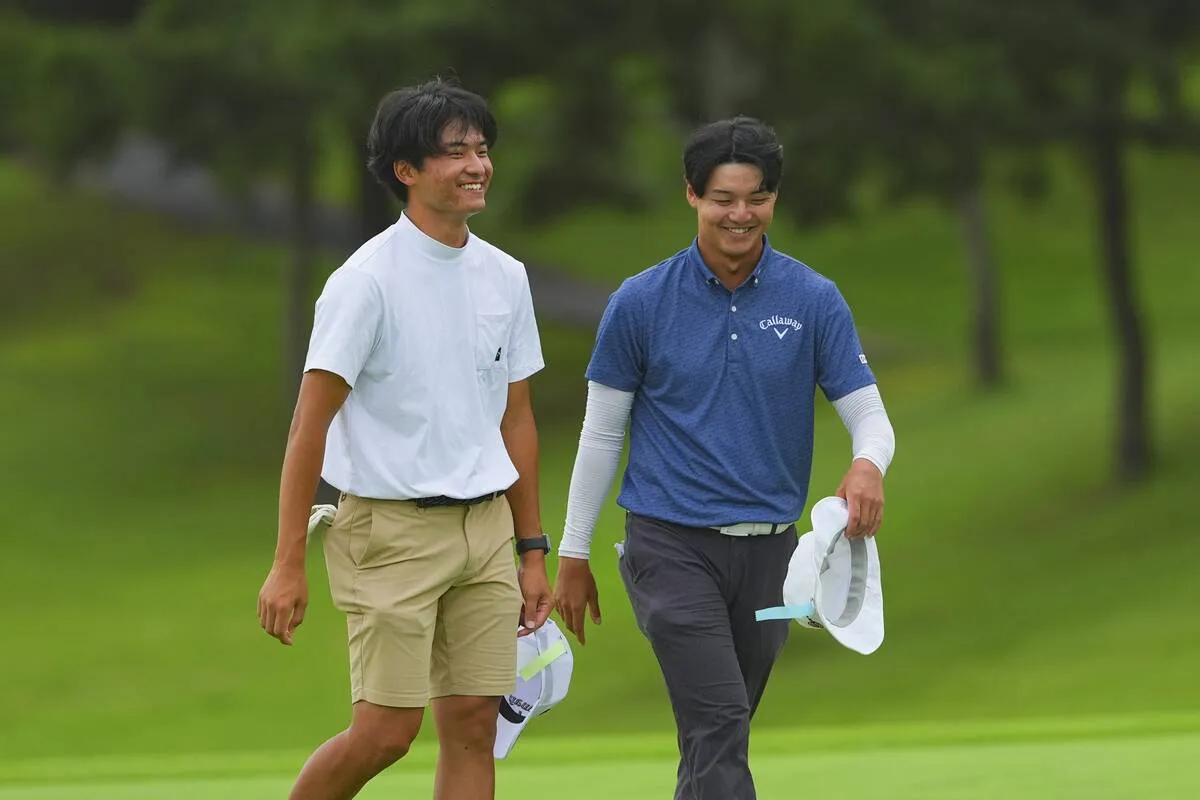
Wataru Ishikawa earns PGA of Japan qualification with composed 3rd-place finish
Japan’s next compelling golf storyline has a familiar surname. On September 4 at Karasuyama Castle Country Club in Tochigi Prefecture (7,148 yards, par 70), 26-year-old Wataru Ishikawa—kid brother of Japanese star and 20-time JGTO winner Ryo Ishikawa—clinched a spot among Japan’s newest professionals by finishing third at the 2026 PGA of Japan Qualification Final Pro Test. Over four rounds, Ishikawa posted a confident 12-under total to comfortably secure his card as one of 52 qualifiers, with the cutoff extending to players tied 43rd at one-over. The standout of the week was 24-year-old Ryuta Suzuki, who topped the board at a remarkable 19-under to lead the class.
From elite classroom to fairways: a distinctly Japanese sporting pathway
Wataru’s route to this moment reflects a hallmark of Japan’s sports culture—merit built on academics, discipline, and steady competition. A graduate of Saitama Prefectural Urawa High School, one of the region’s most academically rigorous public schools, he progressed to Nippon Sport Science University (Nittaidai), a cradle for elite Japanese athletes. He turned professional in December 2021 and has since focused on crafting a career defined by his own results, rather than by comparisons to his illustrious brother. In Tochigi, he demonstrated tournament poise and consistency across four rounds—traits that matter in Japan’s deep professional field, where precision, course management, and mental steadiness are often decisive.
What passing the PGA test means—and what comes next
In Japan, professional men’s golf is structured around two pillars. The PGA of Japan oversees professional qualification and education, while the Japan Golf Tour Organization (JGTO) runs the top-tier tournament circuit. Passing the PGA of Japan’s Final Pro Test, as Wataru has done, earns a respected professional credential. To secure playing rights on the JGTO, however, players must gain status through the Final Qualifying Tournament (Q-School). Importantly, even without a PGA test pass, golfers who advance through Q-School can play the Japan Tour. Still, the PGA credential is a strong signal of readiness—it is widely recognized across the industry, enhances career pathways (including coaching and certain domestic starts), and strengthens a player’s marketability with sponsors.
Japan’s golf ecosystem: strong fields, passionate fans, world-class venues
Japan boasts one of the most robust golf ecosystems in Asia, with competitive purses, challenging courses, and a thriving fan base. Venues such as Karasuyama Castle CC blend meticulous course conditioning with scenic, accessible settings just a few hours from Tokyo—an appealing mix for both domestic followers and international visitors. For foreign golf fans and expats living in Japan, the JGTO calendar offers spectator-friendly events, approachable ticketing, and the hallmark hospitality Japan is known for. It’s an ecosystem built to reward disciplined development: from high school teams and powerhouse university programs to the rigorous gauntlets of the PGA test and JGTO Q-School.
The Ishikawa name—familiar, but a new chapter
Ryo Ishikawa, 34, long a national icon and often dubbed Japan’s “Hanikami Prince,” owns 20 victories on the Japan Golf Tour and remains one of the country’s most recognized athletes. Wataru’s achievement in Tochigi underscores that the family’s golf legacy now has another active protagonist—one determined to be judged by his own scorecards. The immediate focus turns to year-end qualifying, where he will aim to translate this PGA qualification into competitive status on the JGTO for the coming season.
Bottom line
With a 12-under performance to clinch third at the PGA of Japan’s Final Pro Test—and with 52 players advancing up to one-over—Wataru Ishikawa has taken a decisive, merit-based step in Japan’s demanding pro pathway. Suzuki’s 19-under headline sets the class benchmark, but Ishikawa’s blend of education-grounded discipline and competitive calm suggests he is shaping a career on his own terms. For global golf watchers, it’s an invitation to follow the Japanese season more closely. For Japan, it’s another reminder that the nation’s talent pipeline remains among the most organized and resilient in the game.