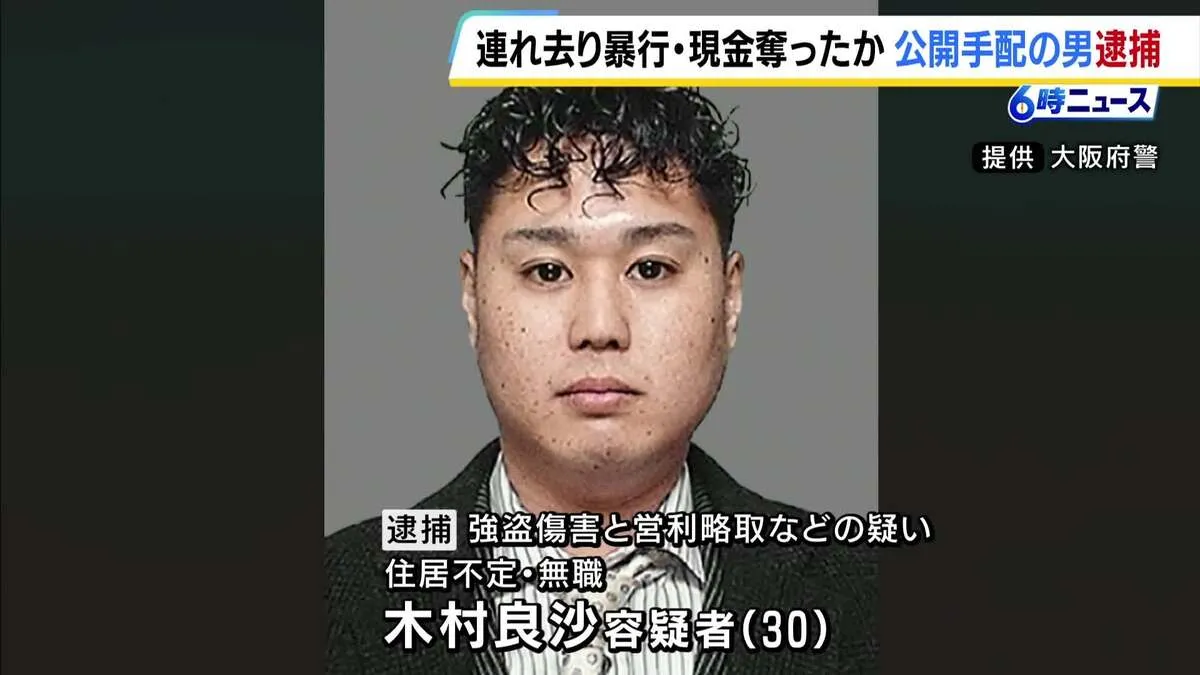
Arrest after international handoff
A 30-year-old man who was the subject of a nationwide public wanted notice has been arrested in Japan after being deported from Cambodia in connection with a violent kidnapping-robbery in Osaka’s Nishi Ward. Police identified the suspect as Kimura Ryōsa (木村良沙), of no fixed address and unemployed. According to investigators, Kimura was arrested on 4 September on suspicion of conspiring with others to force an acquaintance, then 26, into a vehicle on a street in Nishi Ward, assault him, and steal approximately ¥2.6 million in cash (about US$17,000). The alleged crime occurred in August 2024.
From flight abroad to a return in custody
Police say Kimura fled Japan after the incident. In late July this year, Cambodian authorities notified Japan’s National Police Agency (NPA) that he had been taken into custody there. He was deported to Japan on 3 September and transferred to Osaka Prefectural Police the following day. During questioning, investigators say Kimura has exercised his right to remain silent. Police continue to search for another publicly wanted suspect, identified as Furukawa Yuma (古川優麻), 28, in connection with the same case.
How Japan’s “public wanted notice” system works
Japan’s kōkai-tehai, or public wanted notice system, is a key tool in serious investigations. When police judges that a suspect is likely to flee or that public help could be decisive, they release names, photos, and details nationwide and online. This approach, coupled with extensive CCTV coverage in urban areas and strong cooperation with foreign counterparts, often narrows escape routes. In this case, coordination between Cambodia and Japan enabled a swift handover through deportation procedures rather than a lengthier extradition process.
Context for residents and visitors
While the allegations are grave, it is important to note that Japan remains one of the safest countries in the G7, with comparatively low rates of violent crime. Incidents involving forced abduction and cash theft are rare and typically attract significant public attention and rapid police responses. Osaka’s Nishi Ward, a central district known for its mix of offices, shops, and residential streets, is generally busy and well-patrolled. The use of cash remains more common in Japan than in some countries, a factor that occasionally figures in robbery cases; however, most urban areas are supported by visible policing and community vigilance.
Legal trajectory and due process
As with all suspects in Japan, Kimura is presumed innocent unless and until proven guilty in court. Following arrest, police may seek detention while gathering evidence, and prosecutors decide on formal charges. Japan’s legal framework guarantees the right to counsel and the right to remain silent, even as investigators conduct detailed interviews. Any prosecution would likely consider charges related to robbery, injury, and unlawful confinement, which carry significant penalties under Japanese law.
International cooperation in focus
This arrest underscores Japan’s growing effectiveness in cross-border policing throughout Southeast Asia, an area where many international investigations now unfold. The NPA has strengthened ties with partners from Cambodia to Thailand and beyond, facilitating information sharing and transfers under local immigration laws when applicable. For residents and the international community in Japan, the message is clear: serious offenses draw a robust and coordinated response, both domestically and overseas.
What’s next
Osaka Prefectural Police are continuing to piece together the timeline, identify all alleged participants, and recover any remaining evidence or assets. The search for Furukawa Yuma (28) continues under a public wanted notice. Authorities are urging anyone with credible information to contact the police. As the case proceeds, it will serve as a reminder of Japan’s emphasis on public safety, methodical investigations, and international cooperation that helps keep communities secure.