On Japan’s tropical nights, “off” isn’t always saving you money
As Japan’s humid summers intensify, a long‑standing bedtime habit—switching the air conditioner off after a few hours—faces a rethink. Leading Japanese manufacturers, including Daikin, Panasonic, and Mitsubishi Electric, now officially advise keeping your air conditioner running through the night during so‑called “tropical nights,” when the outdoor temperature does not fall below 25°C. Their rationale blends comfort, health, and energy efficiency—core priorities in a country that has spent decades refining high‑efficiency, inverter‑based cooling technology.
What the numbers say: tiny cost gap, big comfort and health gains
Panasonic’s sleep-time testing found that a room set to 28°C and left on overnight stayed comfortably cool—around 26.1°C after eight hours—while a three-hour off timer allowed the room to rebound to a stifling 31.2°C. Despite the stark comfort difference, the electricity cost gap was just about 15.2 yen for the night, adding up to less than 450 yen in a month. In short: on hot, sticky nights, keeping the unit on does not “waste” electricity the way many assume.
Why “on” can be more efficient than you think
Modern Japanese air conditioners use variable-speed (inverter) compressors. When you cut power and let the room heat up, the unit must later run hard to pull the temperature back down, drawing significant power in a short burst. If you keep it on, the system maintains a steady 26–27°C with light, intermittent operation. The total energy over the night can be similar—or even lower—than the timer approach, especially with newer models that excel at fine control and dehumidification.
Sleep, safety, and Japan’s summer reality
Quality sleep depends on the body’s core temperature gently dropping after you fall asleep. Overheated rooms can disrupt this process, leading to lighter sleep and grogginess. In Japan’s muggy summer, heat-related illness is also a persistent concern; public agencies repeatedly encourage appropriate AC use at home, not only in daytime but also overnight during heatwaves. It’s a pragmatic message: safeguarding health takes priority, and thanks to Japan’s engineering leadership, you can often do it with only a few extra yen.
How to set your AC for tropical nights
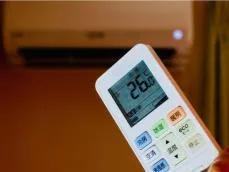
For nights when outdoor temperatures stay above 25°C, aim for a setpoint of 26–28°C and adjust for comfort. Point airflow upward or use swing mode to avoid a direct chill, and keep a light blanket or towel at hand to prevent overcooling. Consider a “smart” timer approach: don’t switch the unit off; instead, raise the set temperature by 1–2°C from around 4 a.m., when your body is more prone to feeling cold. Many households find something like 26°C for the first half of the night and 28°C near dawn strikes the ideal balance.
Extra tips for efficiency and comfort
- Close curtains and blinds to keep radiant heat out, and shut doors to avoid cooling unused spaces.
- Clean filters regularly; dust build-up forces the unit to work harder.
- Try dehumidify (dry) mode if you feel chilly; reducing humidity can boost comfort at slightly higher temperatures.
- If your unit is old or non‑inverter, results may vary; consider an upgrade to a modern, high‑efficiency model common in Japan’s market.
Why Japan’s advice matters globally
Japan’s approach reflects decades of innovation in home cooling and public guidance—think the Ministry of the Environment’s “Cool Biz” culture and precise appliance standards. As tropical nights become more frequent worldwide, Japan’s data-driven, health-first guidance offers a blueprint: small adjustments, smart technology, and respect for sleep science. For expats and travelers in Japan, embracing these settings can make summer nights not just bearable, but genuinely restorative—while keeping utility costs under control.
Bottom line
On hot, humid nights when the mercury won’t dip below 25°C, leaving the air conditioner on at 26–28°C is typically the smarter, healthier choice. You’ll likely sleep better, reduce heat-related risks, and spend only a little more—sometimes no more at all—thanks to the efficiency of Japan’s modern AC systems.