Over 1,700 fall ill as Indonesia’s free school meal plan faces new crisis
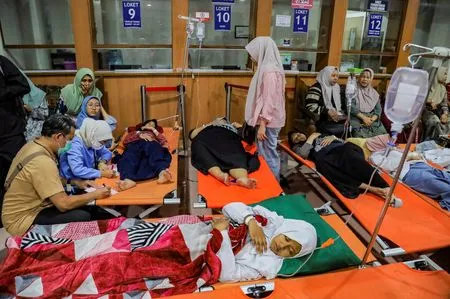
More than 1,700 students and teachers have fallen ill over three days in Indonesia after eating government-provided free school meals, according to local officials cited by Reuters. A high school in Lasem, Central Java, reported 777 new cases on the 3rd, after meals served a day earlier left 752 students and 25 teachers suffering from diarrhea and vomiting. A local doctor said 15 people were hospitalized for treatment. The school served grilled chicken; a designated taster reportedly noticed a “slimy” texture on some pieces before distribution, raising immediate questions about sourcing, handling, and time-temperature controls.
A wider pattern, not isolated incidents
Lawmakers and health officials say the outbreak is part of a broader pattern. In three other locations this week, at least 950 people also fell ill in cases tied to the same free-meal initiative, pushing the three-day total past 1,700. The multi-billion-dollar program, launched in 2025 by President Prabowo Subianto to improve nutrition for tens of millions of children, has faced allegations of corruption, leadership turnover, and repeated mass food poisoning. Officials have frequently identified improper food storage and delays in delivering cooked meals as key factors. Charles Honoris, an opposition lawmaker, said the incidents are a “system failure,” citing Ministry of Health data that as of September 1 up to 50,000 people had been affected by food poisoning incidents this year. Authorities are under intensifying pressure to tighten procurement, enforce standards, and improve monitoring across a vast supply chain that spans remote districts and diverse vendors.
Why this matters to Japan—and what Japan does differently
For readers in Japan and those interested in the region, the crisis throws a spotlight on the systems and safeguards that keep school lunches safe at scale. Japan’s well-established kyushoku (school lunch) model is widely studied for its reliability: licensed nutritionists plan menus; central kitchens and school facilities implement standardized hygiene protocols; and hazard analysis and temperature control are built into daily routines. Since 2021, Japan has promoted HACCP-based approaches nationwide for food businesses, and schools commonly adhere to strict time windows from cooking to consumption, with routine record-keeping, equipment sanitation logs, and vendor audits. While no system is immune to risk, large-scale outbreaks in Japanese school lunches are rare, thanks to disciplined operations, a robust cold chain, and a culture of continuous training. This case in Indonesia underscores how crucial those operational details are—procurement transparency, cold storage capacity, refrigerated transport, and last-mile delivery discipline can be the difference between a nutritious lunch and a public-health emergency.
Opportunities for cooperation and business
There is substantial scope for Japan–Indonesia cooperation. Japan has long shared food safety expertise across Asia through public and private initiatives, and Japanese companies are global leaders in cold-chain logistics, insulated containers, refrigeration units, kitchen equipment, and IoT temperature monitoring. Practical steps—such as digital temperature logging from kitchen to classroom, GPS time-stamps on deliveries, vendor certification aligned with HACCP principles, and regular third-party audits—could sharply reduce risk. For Japanese firms, the need is clear: scalable central kitchens, reliable cold-chain solutions, and on-site training. For families and educators—Japanese expats included—stronger safeguards mean confidence that nutrition programs deliver benefits without compromise.
What to watch next
Indonesia’s government faces a critical test: restoring trust while keeping the nutrition gains of a signature social program. Key signals will include transparent investigations into this week’s outbreaks, procurement overhauls that reward safety and performance, stricter enforcement against violations, and the adoption of digital traceability tools. Collaboration with partners, including knowledge exchange with Japan’s school lunch professionals, could help the program pivot from crisis response to prevention. The stakes are high—but so is the potential to build a safer, more resilient meal system, drawing on lessons that Japan has refined over decades.