Japan prepares an unprecedented overseas firefighting operation
Japan’s Self-Defense Forces are preparing to begin firefighting operations in Indonesia, marking the first time the country’s military has carried out an overseas mission to combat a forest fire. The operation will take place in western Kalimantan, on the Indonesian portion of the island of Borneo, where a forest fire is currently burning.
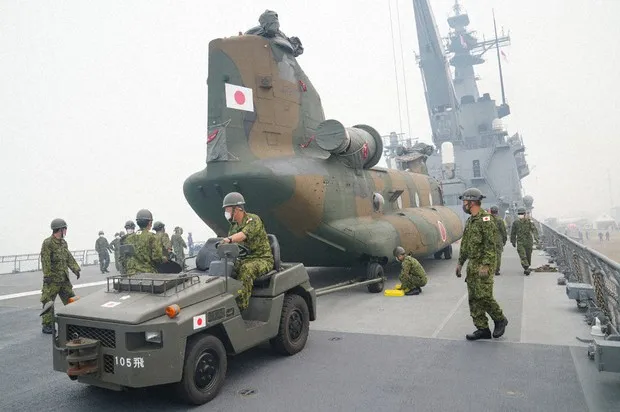
The transport vessel Kunisaki, carrying three large helicopters assigned to the firefighting effort, arrived at a port in West Kalimantan Province on the 10th. Japanese personnel continued coordination with Indonesian authorities on the 13th as they prepared the aircraft and confirmed operational procedures.
Helicopters will drop river water over fire zones
During the planned operation, the helicopters will collect water from a river using large buckets and release it from the air over areas affected by the fire. The mission is expected to last approximately one week, although the schedule may change depending on weather conditions, fire activity, visibility and coordination with local authorities.
The operation was initially scheduled to begin on the 13th. However, the start was postponed because smoke from the fire reduced visibility, creating difficult and potentially dangerous conditions for helicopter operations. For aerial firefighting, clear visibility is essential not only for locating burning areas but also for safely navigating near forests, rivers and other aircraft.
A significant step in Japan’s international disaster response
The deployment represents an important development in Japan’s international disaster-relief efforts. Although the Self-Defense Forces are primarily responsible for protecting Japan, they have increasingly supported humanitarian assistance and disaster-response missions overseas. These activities can include transport, medical support, rescue operations and logistical assistance following major natural disasters.
Japan has extensive experience responding to disasters at home, including earthquakes, typhoons, floods and landslides. That experience has strengthened the Self-Defense Forces’ ability to mobilize personnel, transport heavy equipment and operate in challenging conditions. The Indonesia mission applies those capabilities to a different type of emergency: a rapidly spreading forest fire requiring sustained aerial support.
Cooperation between Japan and Indonesia
The mission also highlights the close relationship between Japan and Indonesia. The two countries have broad ties in trade, investment, infrastructure development, tourism and people-to-people exchange. Cooperation on disaster management is especially significant because both nations face a range of natural hazards and have a strong interest in improving regional resilience.
Forest fires in Indonesia can create serious environmental and public-health challenges. Smoke may affect nearby communities, transportation and air quality, while fires can damage forests and wildlife habitats. In some cases, smoke pollution can also cross national borders. The Japanese deployment is therefore not only a bilateral gesture but also a practical contribution to wider regional disaster cooperation.
By working alongside Indonesian authorities, Japan’s Self-Defense Forces will gain valuable experience in overseas emergency response while providing specialized aerial firefighting support. The success of the operation will depend on weather, visibility, local conditions and careful coordination, but the mission underscores Japan’s willingness to contribute concrete capabilities when international partners face urgent emergencies.