Eight-year sentence issued in China
A Chinese court has sentenced a man wanted by Tokyo police over graffiti at Japan’s Yasukuni Shrine to eight years in prison in a separate extortion case, according to Chinese media reports.
The defendant, identified as Chinese national Dong Guangming, was convicted by a court in Hangzhou, Zhejiang Province, after being accused of demanding several hundred grams of gold from a livestream seller involved in online product sales. Prosecutors reportedly argued that Dong used coercive tactics to obtain a substantial amount of money, conduct that constituted extortion and related offenses.
The verdict was handed down on the 11th, although the available report did not specify the month. Dong was detained by public security authorities in Hangzhou in August 2024 in connection with the extortion investigation.
Connection to the Yasukuni Shrine investigation
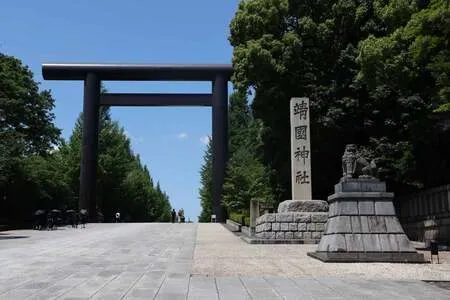
Dong had already attracted the attention of Japanese authorities in May 2024, when a stone pillar at Yasukuni Shrine in Tokyo was spray-painted with the word “toilet.” Following the incident, the Metropolitan Police Department’s Public Security Bureau placed him on a nationwide wanted list on suspicion of property damage and insulting a place of worship.
Japanese investigators allege that Dong was responsible for the vandalism before he returned to China. Because he left Japan, the investigation became dependent on cross-border cooperation and developments in China. The latest Chinese ruling concerns the separate extortion case; it does not represent a verdict on the alleged damage at Yasukuni Shrine in Japan.
Why the case drew attention in Japan
Yasukuni Shrine is one of Japan’s most politically sensitive religious and historical sites. Established in Tokyo to commemorate people who died in service to Japan, it is visited by members of the public and political leaders. However, the shrine is also the subject of controversy in East Asia because it enshrines convicted Class-A war criminals alongside other war dead. Visits by Japanese officials have therefore sometimes drawn criticism from China and South Korea.
The 2024 graffiti incident quickly became a major news story in Japan because it involved damage to a prominent national and religious landmark. Images and video connected to the act circulated online, intensifying public concern about security at important cultural sites and the potential role of social media in amplifying provocative behavior.
Broader implications
Dong has been described as an online influencer who posted videos and other content on social networking platforms. The extortion conviction highlights the legal risks faced by influencers whose online activities extend into commercial livestreaming, fundraising or alleged intimidation. It also underscores how digital visibility can bring rapid attention to incidents that cross national borders.
For Japan, the case illustrates the challenges involved when a suspect wanted by Japanese police is located in another jurisdiction. The eight-year sentence may resolve the Chinese criminal proceedings, but any future development concerning the Yasukuni investigation would depend on Chinese authorities, Japanese requests and applicable legal and diplomatic procedures. At present, the reported conviction is limited to the extortion case, while the Japanese allegations remain separate and unresolved.