Search Underway After Contact Is Lost
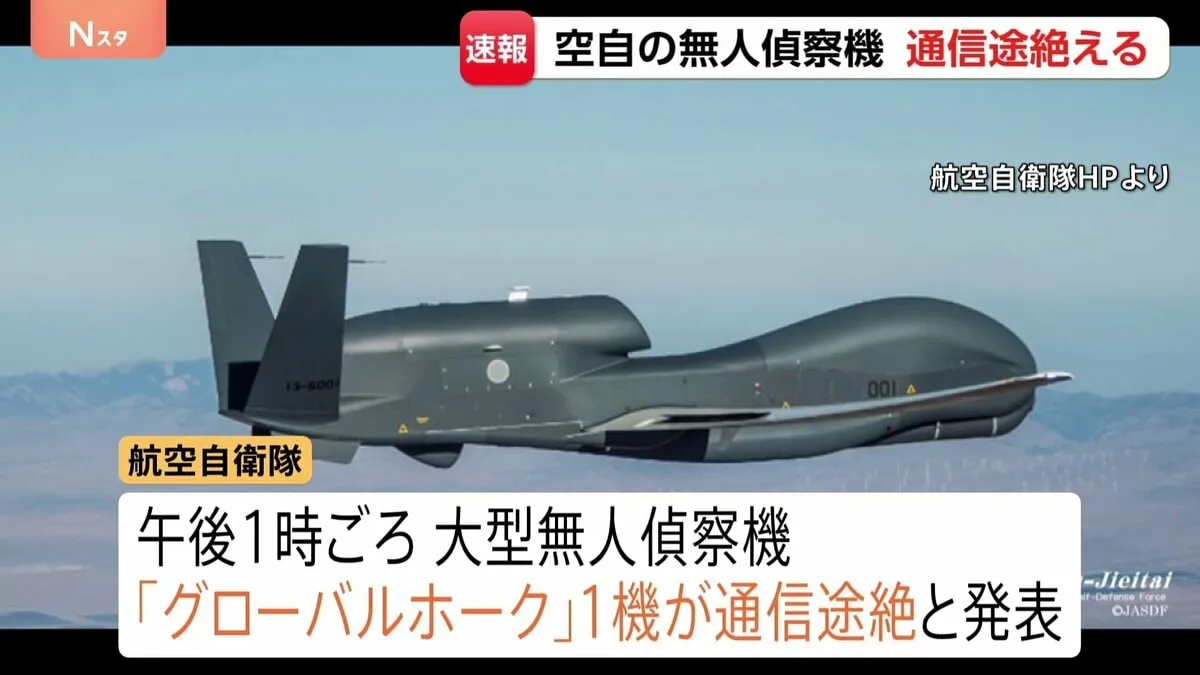
Japan’s Air Self-Defense Force is searching for one of its large unmanned reconnaissance aircraft after communications with the vehicle were lost over the Pacific waters off Tottori Prefecture. The aircraft, a U.S.-made RQ-4B Global Hawk, reportedly became unaccounted for at around 1 p.m. local time, according to an announcement by the Air Self-Defense Force.
The aircraft was believed to be operating approximately 50 kilometers off the coast of Tottori, over international waters. Japan’s Self-Defense Forces have begun search operations and are examining every possibility, including the potential that the aircraft may have crashed. Officials have not publicly confirmed the cause of the communications failure, the aircraft’s exact location, or whether any debris has been found.
What Is Known So Far
The incident involves a single Global Hawk aircraft assigned to Japan’s Air Self-Defense Force. Global Hawks are high-altitude, long-endurance unmanned aircraft designed primarily for intelligence, surveillance and reconnaissance missions. They can remain airborne for extended periods and collect information using sophisticated sensors, allowing operators to monitor wide areas without placing a crew onboard.
Because the aircraft is unmanned, there is no pilot or onboard crew at risk. However, the loss of communications with a military aircraft is treated as a serious operational and aviation safety matter. Search teams must determine whether the aircraft experienced a technical problem, lost its communications link, changed course, or went down at sea.
Why the Incident Matters to Japan
Japan has strengthened its surveillance and monitoring capabilities in recent years as security conditions in and around the Indo-Pacific have become increasingly complex. The country’s geography, including its long coastline and numerous remote islands, makes persistent aerial and maritime observation an important part of national defense and disaster preparedness.
The Global Hawk fleet is operated from Japan’s Misawa Air Base in Aomori Prefecture and forms part of Tokyo’s effort to improve long-range intelligence-gathering capabilities. The aircraft can support the monitoring of maritime activity and help provide a broader picture of developments around Japan, particularly in areas where information must be collected over long distances.
Investigation and Next Steps
Authorities are expected to focus first on locating the aircraft and confirming the circumstances surrounding the communications loss. Search operations may involve Self-Defense Force aircraft and vessels, depending on weather, sea conditions, the aircraft’s last known position, and available tracking data. Information from civilian maritime and aviation authorities may also help establish whether the aircraft’s flight path changed before contact was lost.
No information has been provided indicating injuries, damage to civilian property, or disruption to commercial aviation. The incident remains under investigation, and further details are likely to emerge as search teams analyze radar, satellite, and communications records. Until the aircraft is located, officials have emphasized that no single explanation has been confirmed.