Moscow protests U.S. missile deployment in Kyushu
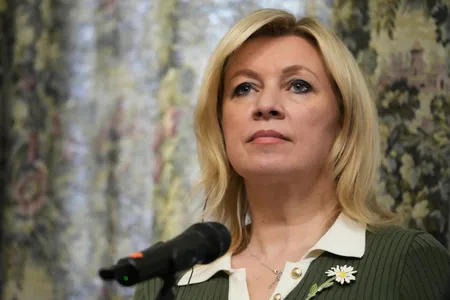
Russia has demanded that Japan remove a U.S. military mid-range missile system deployed in the country, describing the issue as a serious security concern. Maria Zakharova, director of the Russian Foreign Ministry’s Information and Press Department, said on September 18 that Moscow had sent a formal protest to Japan on September 3 regarding the deployment of the U.S. Army’s Typhon missile system in Kyushu.
According to Zakharova, the Russian document called for the system to be removed. She also said Russian Deputy Foreign Minister Andrei Rudenko urged Japan to treat the contents of the protest “in the most serious manner” during a meeting with Japanese Ambassador to Russia Akira Muto on September 16.
Typhon system deployed for joint exercises
The Typhon system has been deployed at the Japan Maritime Self-Defense Force’s Kanoya Air Base in Kagoshima Prefecture since June. Its presence is connected to joint training involving Japan, the United States and Australia. The deployment forms part of broader efforts by the three countries to strengthen operational coordination and improve their ability to respond to potential security challenges in the Indo-Pacific region.
For Japan, the exercises reflect a growing emphasis on practical cooperation with trusted partners. Japan faces an increasingly complex regional environment, including North Korea’s missile development, China’s expanding military activity and continuing uncertainty over the future of regional security arrangements. Joint drills allow participating forces to improve communication, logistics and readiness without necessarily establishing a permanent foreign missile base.
Why the deployment matters
The Typhon, also known as the Mid-Range Capability system, is designed to launch land-based missiles. Its deployment in Japan has attracted international attention because systems of this type can influence the strategic balance across a wide area. The system’s presence also comes amid increased discussion of deterrence, defense cooperation and the protection of sea lanes that are vital to Japan’s economy.
Russia’s objection reflects Moscow’s broader opposition to the expansion of U.S.-led military cooperation near its borders and in the wider Asia-Pacific region. Russian officials have repeatedly criticized defense arrangements involving the United States and its allies, arguing that such deployments could increase military risks. Japan and the United States, meanwhile, have emphasized the importance of maintaining a credible deterrence posture and preparing for possible contingencies.
A sensitive balancing act for Japan
The issue places Japan in a delicate diplomatic position. Tokyo must strengthen its national security and alliance cooperation while managing relations with neighboring countries, including Russia. The Japanese government has not, in the information provided, announced a decision to remove the system or detailed its response to Moscow’s protest.
The Typhon deployment is understood to be linked to training rather than an announcement of a permanent stationing arrangement. Nevertheless, the episode highlights how even temporary military exercises can carry wider strategic and diplomatic implications. As Japan continues to modernize its defense capabilities and deepen cooperation with the United States and Australia, deployments in locations such as Kagoshima are likely to remain closely watched by regional governments.
The Russian demand adds another layer to the security debate surrounding Japan. It also underscores the importance of clear communication, transparency and diplomatic engagement as Tokyo works to protect its national interests while supporting stability in the Indo-Pacific.