Government targets 2027 launch
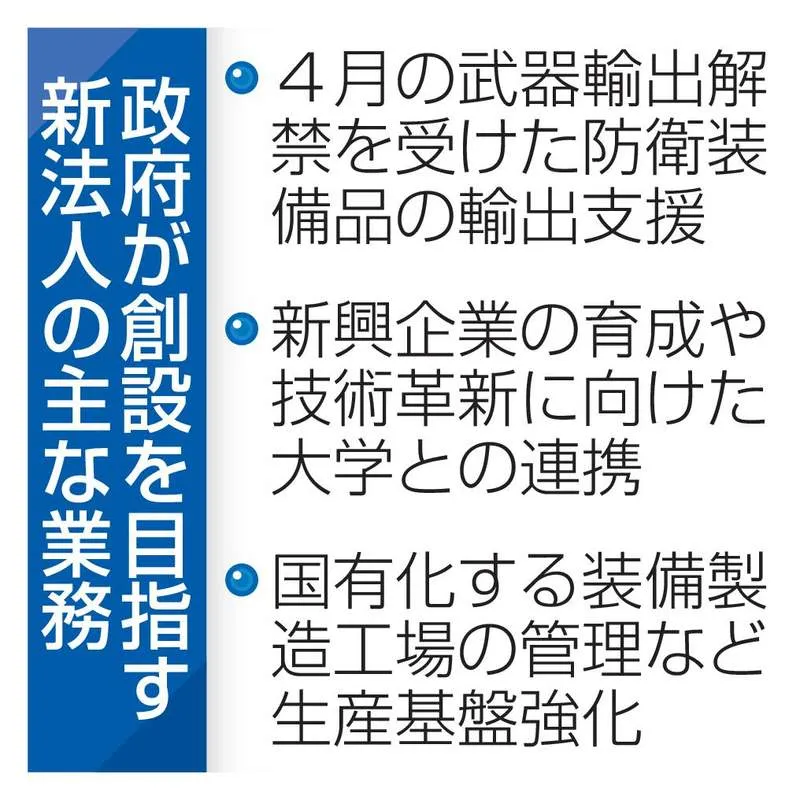
The Japanese government is preparing to establish a new public organization in fiscal 2027 to support defense equipment exports, nurture emerging companies, and reinforce the country’s domestic production base, people familiar with the matter said on the 19th.
The proposed organization would serve as a central coordinator between the government, manufacturers, financial institutions, and other relevant industries. Officials believe this role could reduce the financial, operational, and reputational risks that have discouraged many private companies from entering Japan’s defense sector.
Addressing long-standing industry challenges
Japan’s defense-related businesses often require significant initial investment while generating relatively limited returns compared with other industrial fields. Development projects can also take many years, and companies may face public criticism or concerns about becoming involved in military-related activities. These factors have contributed to a cautious approach among Japanese corporations and banks.
The new organization is intended to help overcome these barriers by coordinating support across government agencies and creating more predictable conditions for investment. It could also provide assistance to startups and smaller firms developing technologies that may have applications in areas such as robotics, artificial intelligence, communications, unmanned systems, and advanced manufacturing.
Possible role in defense exports
One proposal under consideration is a system in which the new entity would purchase defense equipment from Japanese companies and act as an overseas sales window. The concept has been compared with the United States’ Foreign Military Sales, or FMS, framework, although the exact structure and legal responsibilities have not yet been finalized.
Such an arrangement could make it easier for Japanese manufacturers to reach overseas customers while allowing the government to manage export procedures, compliance, and diplomatic coordination more systematically. For foreign partners, a centralized Japanese contact point could also simplify discussions about procurement, maintenance, training, and long-term support.
Potential management of state-owned facilities
The organization may also be tasked with managing factories producing strategically important defense equipment if those facilities are brought under state ownership. The objective would be to secure stable production capacity in preparation for prolonged conflicts or disruptions to international supply chains.
Supporters say stronger control over critical manufacturing capabilities would improve resilience and reduce dependence on vulnerable overseas supply routes. However, some opposition lawmakers have warned that state management of defense factories could evoke memories of Japan’s prewar military arsenals, known as “kosho.” The comparison reflects broader concerns about transparency, civilian oversight, and the appropriate limits of government involvement in defense production.
Interagency preparations already underway
A preparatory office has reportedly begun operating with personnel from the Ministry of Defense, the Ministry of Economy, Trade and Industry, and the Ministry of Education, Culture, Sports, Science and Technology. The government is expected to submit legislation related to the new organization during the next regular session of the National Diet.
Japan has been gradually revising its defense policies in response to a more challenging security environment in East Asia, including concerns about supply-chain stability and the rapid development of new military technologies. At the same time, any expansion of defense exports is likely to receive close public and parliamentary scrutiny. The success of the proposed organization will therefore depend not only on funding and industrial expertise, but also on clear rules, accountability, and public explanation.
If approved, the initiative could give Japan’s defense industry a more stable foundation while creating new opportunities for innovative domestic companies. It would also mark a significant effort to balance Japan’s pacifist traditions with the practical need to maintain reliable production and international security cooperation.