Families seek U.S. support for abductee issue
Families of Japanese citizens abducted by North Korea, together with members of Japan’s bipartisan parliamentary group on the abduction issue, have asked the United States to ensure that the matter is discussed if President Donald Trump holds a future meeting with North Korean leader Kim Jong Un.
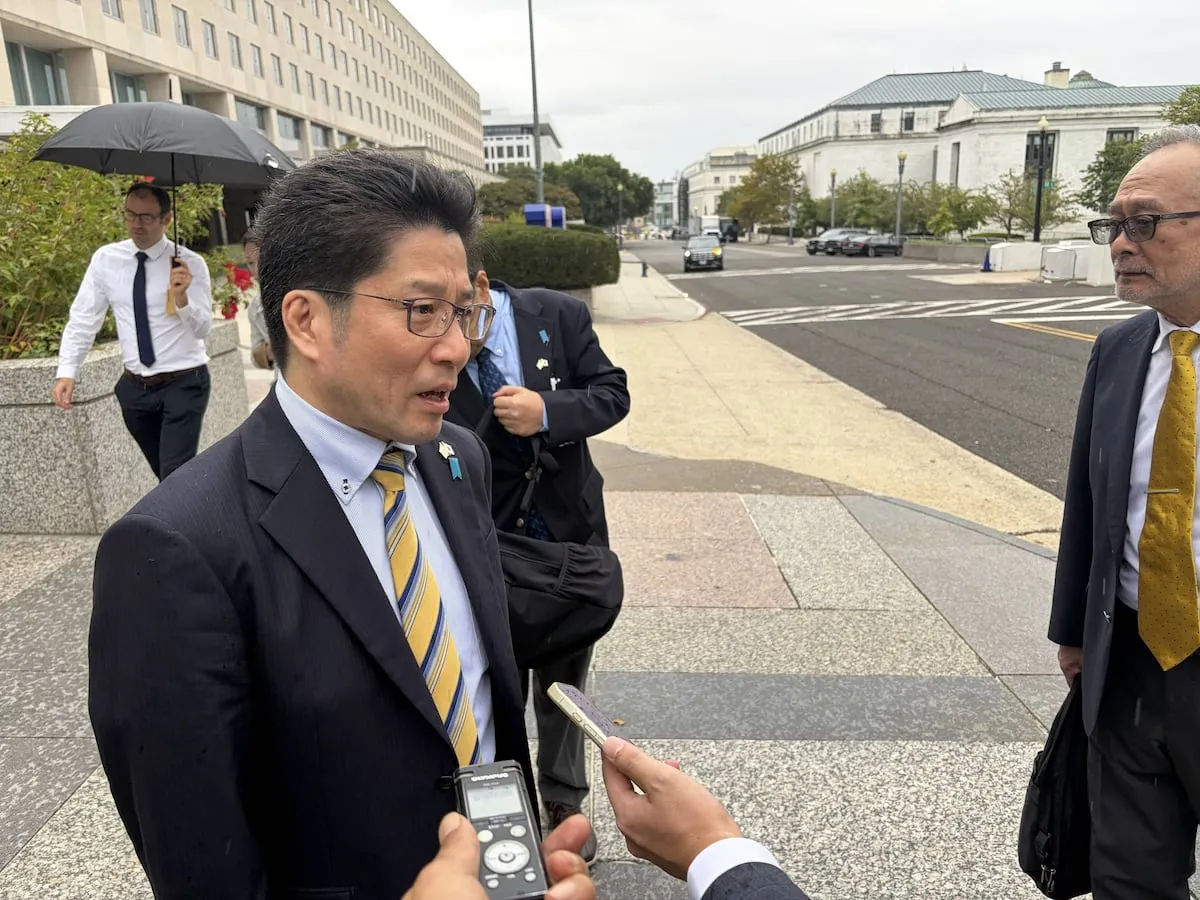
The Japanese delegation made the request during a meeting on the 21st at the U.S. Department of State in Washington with Acting Assistant Secretary Turner. The group also asked Washington to continue supporting Japan if a summit between Japanese and North Korean leaders becomes possible.
Takuya Yokota, 58, head of the Association of Families of Victims Kidnapped by North Korea, disclosed the details to reporters after the meeting. Yokota is the younger brother of Megumi Yokota, who was 13 when she was abducted and is now 61 according to the family’s official age reference.
A long-standing national issue for Japan
The abduction of Japanese citizens by North Korea remains one of Japan’s most sensitive diplomatic and humanitarian issues. Japanese authorities have officially recognized 17 citizens as having been abducted by North Korea, while the families and Japanese government have long maintained that the full number of victims may be higher.
The issue has remained unresolved for decades. In 2002, then-Prime Minister Junichiro Koizumi visited Pyongyang, where North Korea acknowledged the abduction of Japanese citizens and allowed several survivors to return to Japan. However, many families continue to seek answers about the fate of their relatives and the return of those believed to still be in North Korea.
Megumi Yokota’s case has become a powerful symbol of the issue. Her parents spent decades campaigning for information about their daughter and for the return of all abductees. Her mother, Sakie Yokota, has met political leaders and international officials in an effort to keep global attention focused on the families’ demands.
‘Very encouraging,’ family representative says
According to Takuya Yokota, the U.S. official expressed a willingness to cooperate fully in efforts to resolve the abduction issue. Yokota described the American response as “very encouraging.” He also asked the U.S. side to show understanding of the issue if a Japan–North Korea leaders’ meeting is arranged.
The meeting was attended by Koichiro Iizuka, 49, the eldest son of Yaeko Taguchi, who was 22 when she was abducted, as well as former Chief Cabinet Secretary Katsunobu Kato, deputy chairman of the parliamentary group on the abductions, and Upper House lawmaker Tsuneo Kitamura.
Diplomatic implications
Japan has consistently emphasized that the abduction issue must be addressed alongside broader security concerns, including North Korea’s nuclear and missile programs. For Japanese families, however, the matter is deeply personal: every unanswered question represents another family separated for decades.
Any future engagement between Washington and Pyongyang could therefore carry significant importance for Japan. While the United States has its own priorities in negotiations with North Korea, Japanese officials and families hope American diplomacy can help ensure that the abductees are not overlooked. The latest Washington meeting signals continued coordination among the families, Japan’s lawmakers and the U.S. government as Tokyo seeks progress on one of its most enduring foreign-policy challenges.