Japan and the United States coordinate ahead of U.S.-China talks
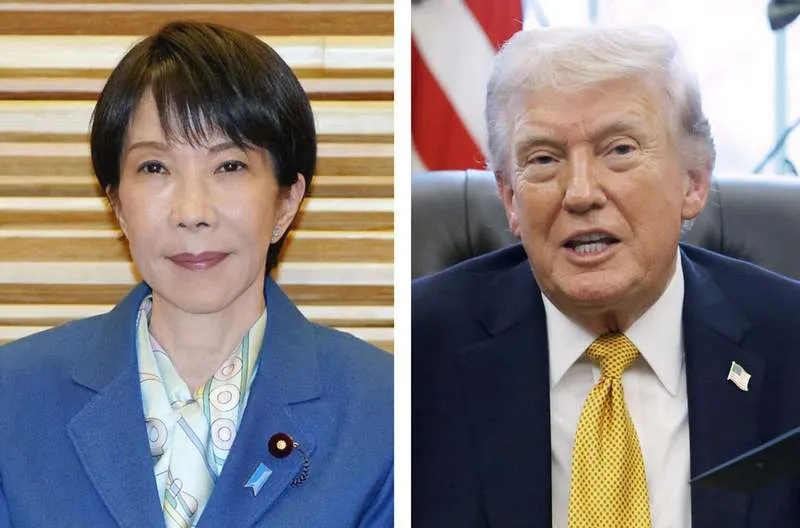
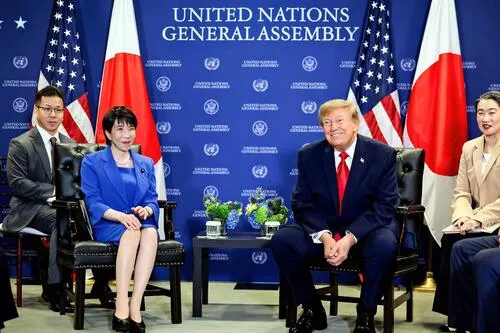
Japanese Prime Minister Takaichi met with U.S. President Donald Trump at United Nations headquarters in New York on September 22 local time, or September 23 in Japan, as Tokyo and Washington sought to align their assessments of China ahead of a planned U.S.-China leaders’ meeting in Washington on September 24.
The meeting comes at a strategically important moment for Japan, the United States and the wider Indo-Pacific. As Washington prepares for direct discussions with Beijing, Tokyo is working to ensure that its views on regional security, economic stability and the rules-based international order are clearly understood by its principal ally. The Japan-U.S. alliance remains the foundation of Japan’s national security policy and a central element of the broader security framework in the Indo-Pacific.
Trump praises Takaichi’s leadership
At the beginning of the meeting, Trump referred to the high level of public support enjoyed by the Takaichi administration. He praised the Japanese government’s performance, saying that it was “doing a fantastic job” and that the prime minister would “leave her mark on history.”
The remarks highlighted the positive atmosphere surrounding the talks. For Takaichi, the recognition also offered an opportunity to demonstrate that her government has maintained political momentum while strengthening Japan’s relationships with key international partners. High approval ratings can provide a government with greater room to pursue diplomatic, economic and security policies, although maintaining public confidence remains an ongoing challenge.
Tokyo emphasizes continuity in alliance management
Takaichi told Trump that four ministers responsible for important aspects of Japan’s relations with the United States had remained in their positions following the launch of her second reshuffled cabinet on September 17. Among them were Foreign Minister Toshimitsu Motegi and Finance Minister Katayama.
She presented the decision as evidence of continuity and stability in the management of Japan-U.S. relations. Takaichi called for the two countries to deepen personal relationships among officials responsible for policy and to make the bilateral alliance “unshakable.”
Maintaining ministerial continuity can be particularly significant in an alliance that covers a wide range of issues, including defense cooperation, trade, supply-chain resilience, energy security and financial policy. Close working relationships among senior officials can also help Tokyo and Washington respond more quickly when regional developments require coordinated action.
Why the meeting matters for Japan
Japan is closely watching the direction of U.S.-China relations because developments between the world’s two largest economies have direct consequences for Japanese security and prosperity. China is Japan’s largest trading partner, while the two countries also face unresolved strategic and maritime concerns. At the same time, Japan depends on the United States for extended deterrence and remains deeply connected to the American economy.
The leaders’ discussion therefore reflects Japan’s effort to balance diplomacy, economic interests and national security. Tokyo has consistently supported dialogue while stressing the importance of maintaining a free and open Indo-Pacific. Coordination with Washington before the U.S.-China summit allows Japan to communicate its concerns and help ensure that regional issues are not discussed without the perspective of a key neighboring country.
The New York meeting also sends a political message: despite changes in governments and international uncertainty, Japan and the United States intend to keep their alliance at the center of their approach to the Indo-Pacific. The results of the upcoming U.S.-China talks, and the level of coordination achieved between Tokyo and Washington, will be closely watched across Asia.