Holiday plans disrupted across eastern Japan
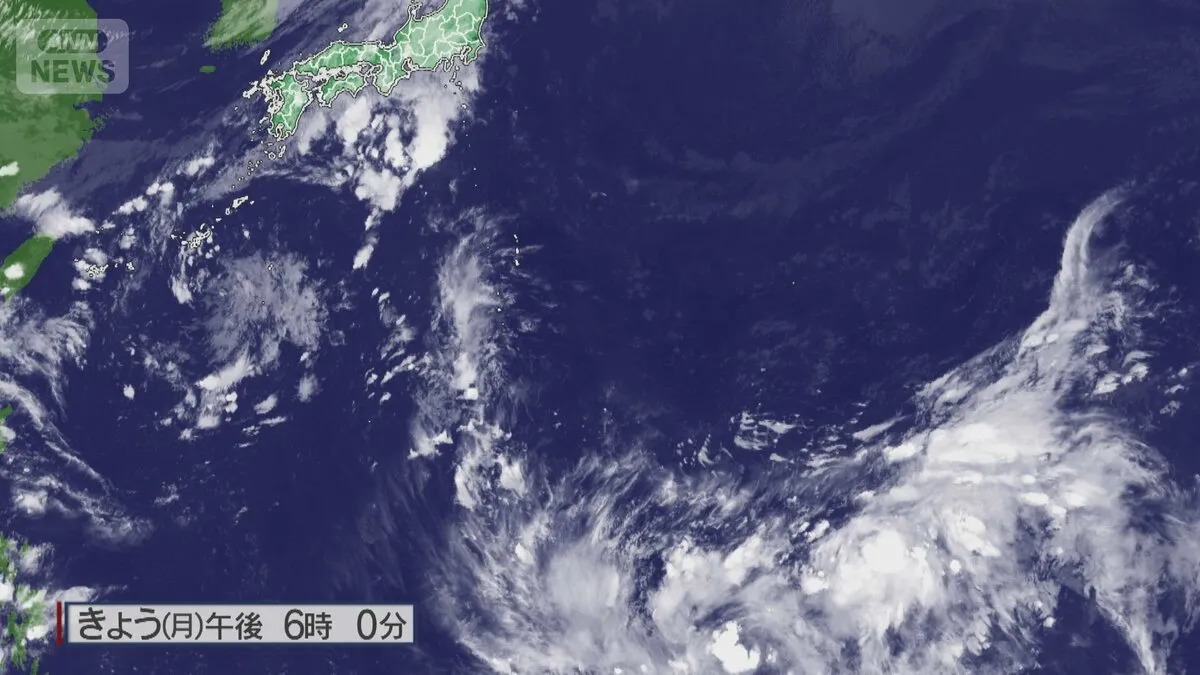
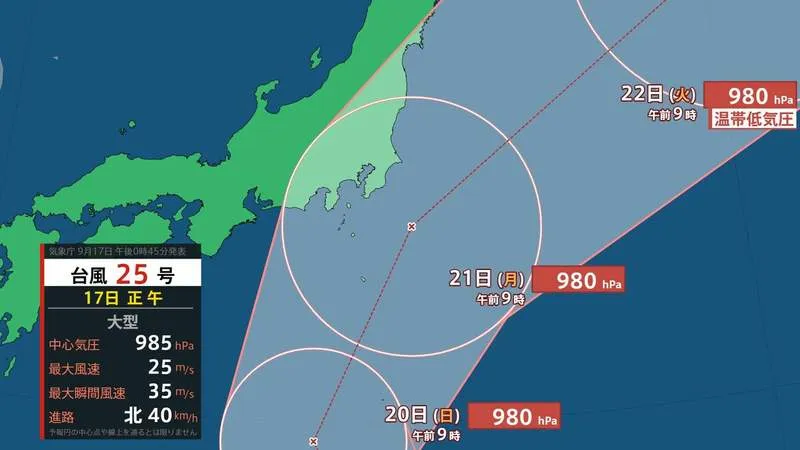
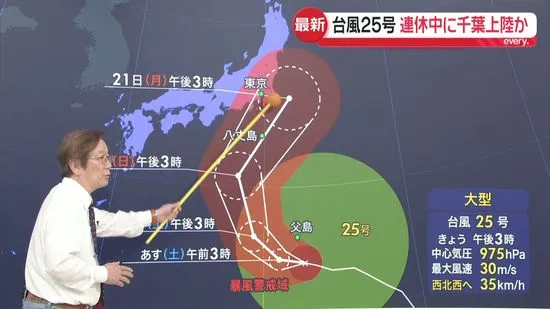
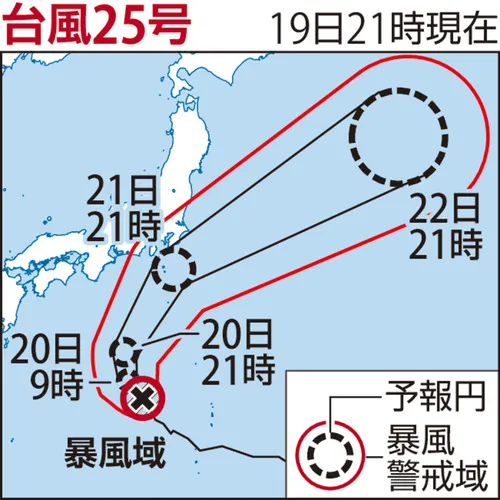
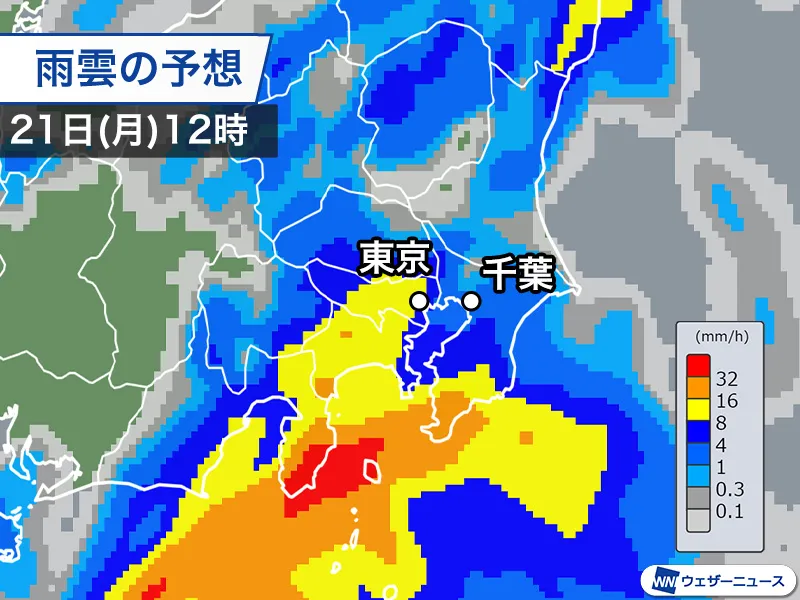
Typhoon No. 25 brought severe rain and strong winds to parts of eastern Japan during the Silver Week holiday period, disrupting tourism, transportation, festivals and agricultural operations. The storm affected popular destinations including Hakone, the Izu Peninsula, Chiba and Ibaraki, while businesses and farmers faced significant financial losses after earlier rounds of heavy rain.
At Hakone’s Owakudani, a famous volcanic valley in Kanagawa Prefecture, visibility deteriorated rapidly as powerful winds, driving rain and thick mist created near-whiteout conditions. Some visitors struggled to return safely to their vehicles, while overseas tourists said they had not expected the weather to worsen so dramatically after leaving their accommodation in relatively light rain.
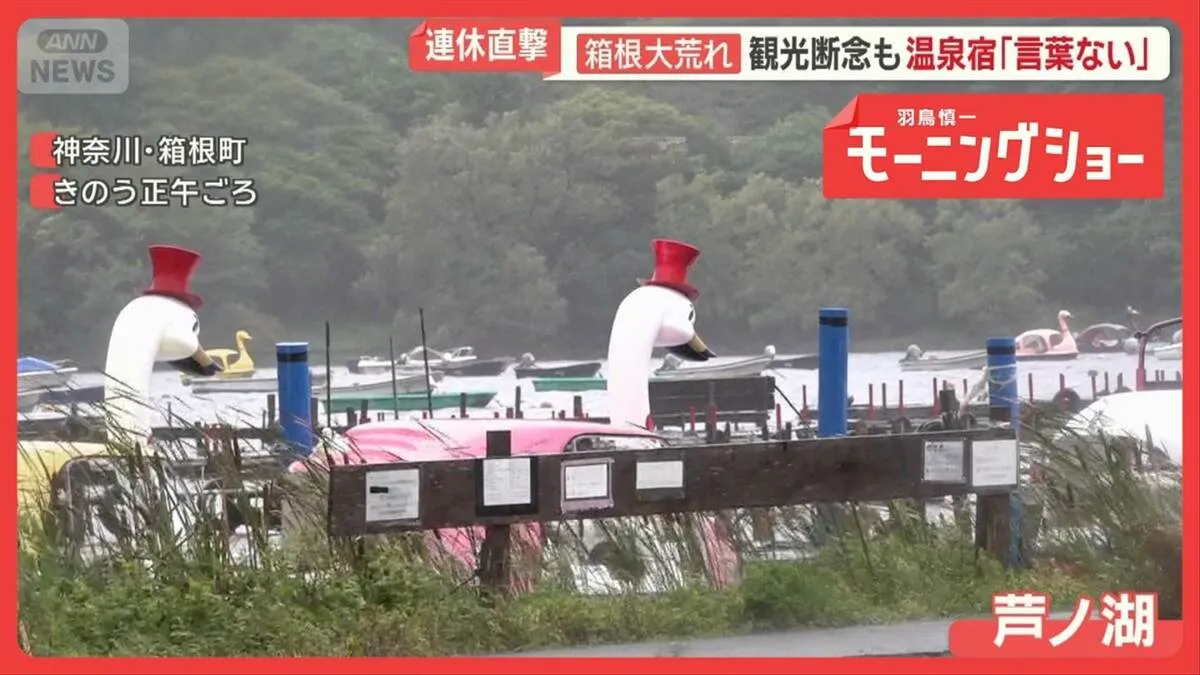
Nearby Lake Ashi also experienced a major rise in water levels. The boundary between the lake and surrounding land became difficult to distinguish, and sightseeing boats were suspended because of the dangerous conditions. For many visitors, carefully planned holiday itineraries had to be changed.
Families adapt as Hakone attractions close
One family of five had traveled from Tokyo to celebrate the father’s 60th birthday, a milestone known in Japan as kanreki. They had planned to visit Owakudani but abandoned the trip because of the torrential rain and spent the day at their hotel instead.
Another family from Ibaraki Prefecture replaced outdoor sightseeing with a traditional Hakone yosegi zaiku workshop. The visitors had hoped to go to the Venetian Glass Museum, but moved the plan to the following day. The change illustrated how travelers and local businesses attempted to preserve the holiday experience safely despite the storm.
At a hot-spring inn in Hakone-Yumoto, three of nine reserved rooms were canceled the day before arrival. Because the cancellations were caused by severe weather, the inn did not charge cancellation fees. The facility’s chairman said there was little more the business could do than accept the situation when guests called to cancel, while noting that the inn had originally been fully booked.
Festivals, rail services and outdoor businesses affected
In Ishioka, Ibaraki Prefecture, organizers went ahead with a festival believed to have more than 300 years of history, but shortened the procession and introduced additional precautions. Attendance was substantially lower than usual, with local residents estimating that normal crowds can be more than twice as large.
In Shimoda, Shizuoka Prefecture, rain battered a replica black ship near the station as streets remained largely empty. Izu Kyuko railway services between Ito and Izukyu-Shimoda were suspended, leaving some travelers focused primarily on finding a safe way home.
Chiba Prefecture, which had already suffered serious flooding in August, also recorded fresh damage. At Hirakawa Country Club in Chiba City, water overflowed from a pond and flooded cart paths and walkways. Nishikigoi carp were seen swimming across a submerged pedestrian path. The club’s shop had previously been flooded to a height of approximately 1.6 meters, damaging appliances and equipment, while part of the clubhouse ceiling collapsed because of leaks.
Repairs from the August flooding were estimated at around 30 million yen. The latest storm forced the course to close from September 20 through September 22, with the manager estimating business losses of roughly 10 million yen during the three-day shutdown.
Small tourism operators and farmers face mounting pressure
A campsite in Kujukuri, Chiba Prefecture, which opened in June as a private, one-group-per-day facility, recorded no reservations for Silver Week because of the typhoon forecast. The operator said the campsite had welcomed guests every weekend in September before the storm, but prolonged rain had already caused flooding and damage to terrace supports.
In Kimitsu, an emergency safety warning was issued as the Koito River overflowed. A nearby strawberry farm was flooded after water levels rose rapidly. The farmer said flooding had occurred several times that year and that practical measures were limited; once the water recedes, the main task is cleaning and recovery.
Rice growers in Sammu also faced serious losses. Repeated rain prevented the rice grains from drying before more rain arrived, causing some ears of rice to germinate before harvest. Because sprouted rice loses commercial quality, approximately four hectares out of a total of 40 hectares may be impossible to harvest. The estimated damage was about 6 million yen.
The storm’s impact highlights the vulnerability of Japan’s tourism and agricultural sectors to increasingly disruptive weather patterns, particularly after repeated heavy-rain events. At the same time, the response showed the importance of Japan’s careful travel safety decisions, flexible local services and strong community efforts to protect visitors, residents and businesses. Authorities continue to urge people to monitor official warnings, avoid flooded areas and reconsider travel when severe weather threatens.