When The Pokémon Company opened pre-orders for Pokémon Legends Z-A, many Japanese players did a double take at the till. The standard package is listed at 7,128 yen (tax included), while the upgraded Pokémon Legends Z-A Nintendo Switch 2 Edition comes in at 8,128 yen. That feels higher than 2019’s Pokémon Sword and Shield, which launched at 6,578 yen. And it is—nominally. But is it “too high,” or simply where the market has cycled back to? A look at three decades of software pricing shows that today’s tags, while not cheap, are hardly unprecedented.
When cartridges were king—and costly
In the Famicom era of the late 1980s, the going rate for a new game was around 4,000 to 5,000 yen. That baseline changed dramatically with the 16-bit transition. As the Super Famicom (Super NES) captured Japan in the early 1990s, average prices surged toward the 8,000-yen mark. This wasn’t greed as much as physics and fabrication. Super Famicom games shipped on ROM cartridges packed with expensive semiconductors, and in many cases they embedded bespoke enhancement chips tailored to individual games. Those custom components drove up bill-of-materials costs and limited the economies of scale. Even mass production couldn’t shave costs the way optical media later would.
The result was a generation defined by premium shelf prices. The 1994 release of Final Fantasy VI arrived at a head-turning 11,400 yen before tax—an amount that dwarfs today’s mainstream tags. Adjusted for Japan’s relatively mild inflation since the mid-1990s, that would still land well north of 12,000 yen in today’s money. And FFVI was not a total outlier: the RPG boom pushed developers to adopt larger-capacity cartridges, further ratcheting up costs title by title.
CD-ROM breaks the price ceiling
Then came a structural shift. With Sony’s PlayStation and Sega’s Saturn in the mid-1990s, the industry pivoted to CD-ROM. Optical discs offered two decisive advantages: they were extremely cheap to manufacture at volume, and capacity increases barely moved unit costs. Almost overnight, the market saw high-profile titles selling for 5,000 to 6,000 yen—roughly a third lower than late Super Famicom peaks. Final Fantasy VII, for example, could be purchased for roughly half the price of its cartridge-based predecessor. That affordability didn’t just delight consumers; it helped propel PlayStation into mainstream dominance by lowering the all-in cost of ownership for players building a library.
Nintendo’s cartridge outlier—and a quieter price curve
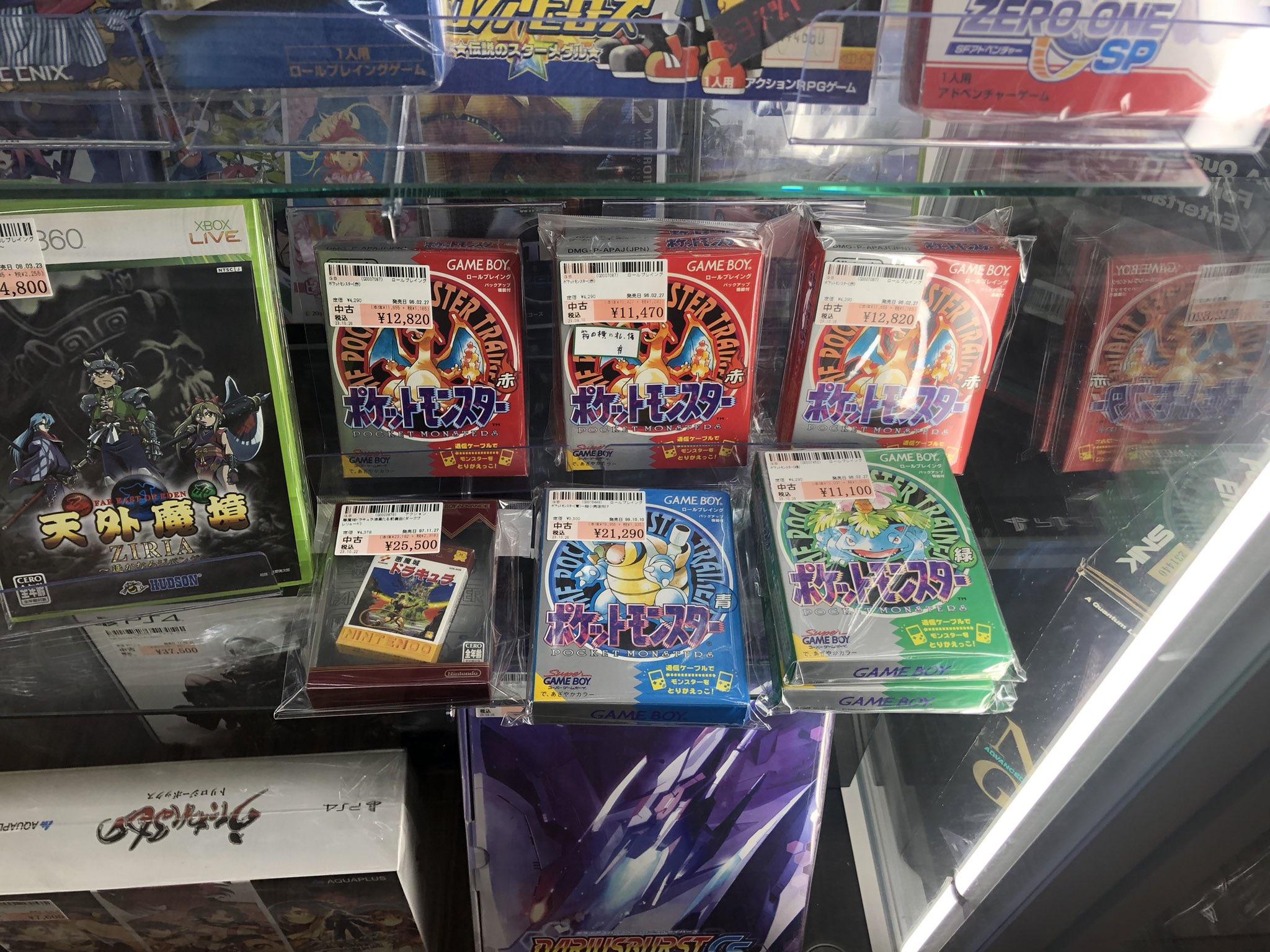
Nintendo swam against the optical tide with 1996’s Nintendo 64, sticking with cartridges for speed and anti-piracy reasons. Even so, Nintendo had refined its manufacturing pipeline enough to keep prices in check compared with late Super Famicom extremes. Super Mario 64 launched at 4,800 yen before tax, Super Smash Bros. at 5,800 yen, and Pokémon Stadium at 6,800 yen with the GB Pack included (known abroad as the Transfer Pak, used to link Game Boy titles). The numbers were competitive, suggesting that smarter cartridge production—and careful scope management—could blunt the format’s inherent cost disadvantages.
HD era realities: rising scope, rising sticker prices
Prices stayed relatively stable through the PlayStation 2 era, but the HD transition reset the calculus. From PlayStation 3 onward, the move to Blu-ray discs and high-definition production pipelines pushed development budgets sharply higher—larger art teams, longer schedules, complex engines, and growing expectations for cinematic quality. Retail tags drifted back toward the 7,000–9,000 yen range that now defines much of the market.
Consider a few recent benchmarks. Silent Hill f, released in September 2025, lists at 8,580 yen (tax included). Elden Ring, the global hit action RPG, retails at 9,240 yen in Japan. And Pokémon Legends Z-A’s 7,128 yen standard edition—8,128 yen for the Switch 2 Edition—sits comfortably within that band. The uptick versus Sword and Shield is real, but it reflects a broader market where flagship “full-price” games have crept upward to support higher production values and longer content pipelines.
Why “expensive” looks different today
Three forces shape how players perceive prices in 2025. First, inflation and exchange-rate volatility complicate direct comparisons. Japan’s consumer prices rose modestly over the long run, but the recent bout of inflation and a weaker yen have squeezed publishers’ margins on global franchises priced in dollars or euros, limiting their flexibility to cut Japanese yen MSRPs. Second, digital distribution has normalized list-price parity between physical and download versions, erasing the deep retail discounting that used to appear months after launch. Third, tiered editions have proliferated. A base product might sit at 7,000–8,000 yen, but “deluxe” or “ultimate” versions with DLC, early access, or cosmetic packs frequently push north of 10,000 yen. In that landscape, a standard Pokémon at 7,128 yen looks intentional: a premium mainstream price that stops short of the AAA ceiling.
The cartridge lesson still matters—just differently
It’s tempting to equate the Super Famicom era’s cartridge costs with today’s digital distribution, but the cost drivers have shifted from silicon to people. In the 1990s, specialized chips made individual cartridges expensive even before a single line of code was written. Today, the marginal cost of producing another digital copy is near zero, but the upfront cost of making that copy worth buying—world-class art, voice acting, orchestral scores, network back ends—has exploded. For platform holders and major publishers, positioning flagship releases near 8,000 yen is less about the plastic in the box than funding multi-year productions and ongoing post-launch support, from patches to events.
Alternatives, value, and what comes next
Players do have more price levers than in the 1990s. Indie games, often priced between 1,000 and 3,000 yen, deliver focused experiences at lower cost. Subscription services on rival platforms bundle back catalogs for a monthly fee. Seasonal sales discount many third-party titles. Nintendo’s first-party games, however, tend to hold price longer—by design. For evergreen heavyweights like Pokémon, Nintendo values price stability and brand consistency over rapid discounting. That strategy reinforces why the initial sticker must carry the commercial weight of the project.
So is 8,128 yen “expensive” for a new Pokémon? Historically, not especially. It’s well below the Super Famicom’s late-era peaks and squarely in line with the modern AAA range. Relative to Sword and Shield’s 6,578 yen, it’s a step up, but one consistent with broader trends and the industry’s quest to differentiate big-budget productions from a vibrant indie and mobile ecosystem. If the past three decades are any guide, game prices move in waves—up with format shifts and ambition, down when new manufacturing or distribution models unlock efficiencies. For now, the wave has crested around 7,000–9,000 yen. Until another technological break—whether cloud-native delivery, smarter asset reuse, or new monetization norms—reshapes the economics, don’t expect that tide to recede.