Philippines sends patrol vessel and aircraft
MANILA, Oct. 1 — The Philippine Coast Guard said it deployed one of its largest patrol vessels and an aircraft to respond to a Chinese marine research vessel operating in waters near the northern province of Batanes, close to Taiwan. Manila said the operation prevented what it described as unauthorized marine scientific research and forced the vessel to leave its anchorage area.
The Philippine Coast Guard said the Chinese research vessel, identified as JIA HAI KE 7, had remained since Sept. 28 approximately 37 nautical miles, or about 69 kilometers, northwest of Itbayat Island. The area lies near the Luzon Strait, a strategically important waterway connecting the South China Sea and the waters around Taiwan.
In response, the Philippines dispatched the 97-meter patrol vessel BRP Teresa Magbanua and one aircraft. According to the Coast Guard, the patrol ship approached the research vessel to within 100 yards, or roughly 91 meters, while a rigid-hull inflatable boat was deployed. Philippine personnel issued radio warnings as the smaller boat made several passes around the Chinese vessel.
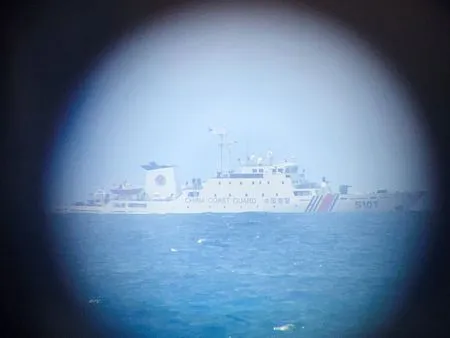
China Coast Guard vessel also appears
The Coast Guard said the research vessel attempted to avoid a Philippine military vessel during the operation. It later reported that a China Coast Guard ship arrived and sought to protect the research vessel, issuing a radio warning to Philippine forces.
Philippine authorities described the involvement of the China Coast Guard as significant because the research vessel is privately owned. They also raised questions about the vessel’s possible links to the Chinese government and the purpose of any data that may have been collected near Batanes and areas close to undersea cable routes in the Luzon Strait.
The Philippines said the research vessel was removed from its anchorage area, but the Teresa Magbanua would continue monitoring it to ensure that it moved clearly away from the country’s exclusive economic zone. Manila has not said that the vessel was fully expelled from the wider Philippine EEZ, making continued surveillance an important part of the response.
Why the incident matters beyond the Philippines
The encounter highlights growing concern across the Indo-Pacific over maritime research, tracking activity and the protection of critical undersea infrastructure. Under international maritime law, foreign vessels may have certain navigation rights, but coastal states regularly scrutinize marine surveys conducted in or near their exclusive economic zones, particularly when the purpose and affiliations of the activity are unclear.
The location is also important for Japan. Japan depends heavily on secure sea lanes and undersea communications cables linking the Japanese archipelago with Southeast Asia, North America and other global markets. Japan and the Philippines have strengthened maritime cooperation in recent years through coast guard exchanges, defense cooperation and efforts to support a free and open Indo-Pacific. Although Japanese authorities were not involved in this specific incident, developments around the Luzon Strait are closely watched in Tokyo because regional stability affects Japan’s trade, energy supplies and communications networks.
The episode also underscores the value of professional, documented coast guard operations. By using a patrol vessel, aircraft, radio warnings and continued monitoring, the Philippines presented its response as a measured effort to protect its maritime jurisdiction while avoiding unnecessary escalation. The incident may add to wider calls for clearer communication and greater transparency in maritime activities throughout the region.