Taiwan Begins Receiving New F-16 Fighter Jets
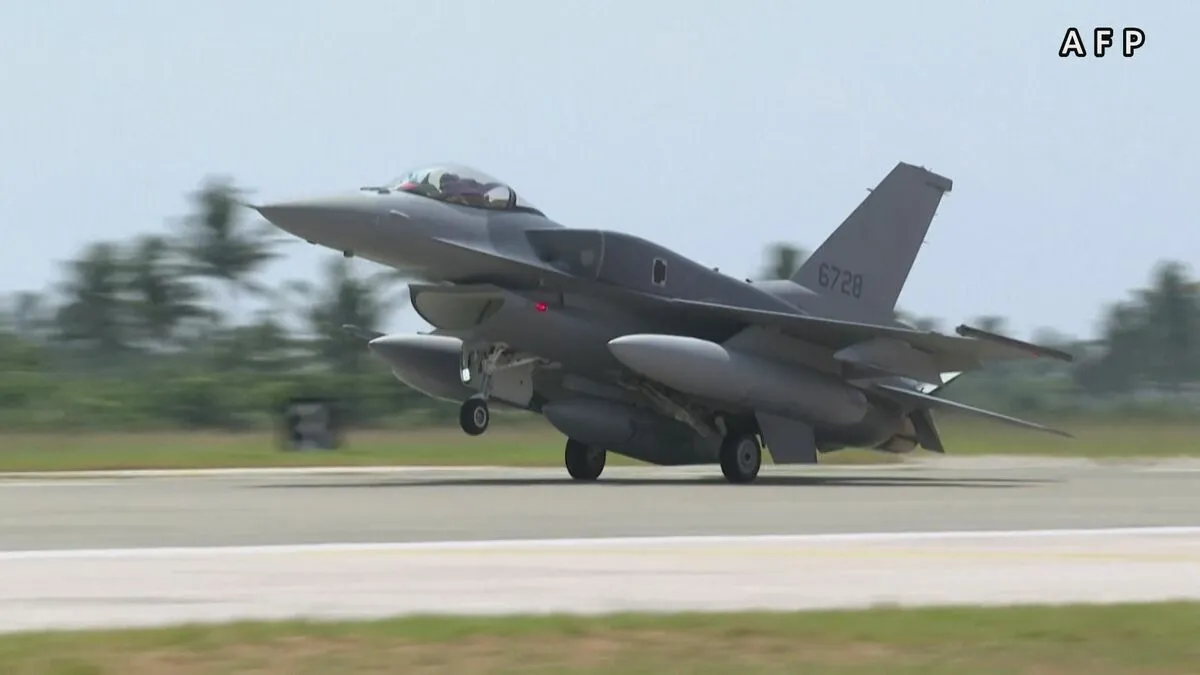
Taiwan’s Ministry of National Defense has announced the arrival of two advanced F-16 fighter jets purchased from the United States, marking the first delivery under a major aircraft program intended to strengthen the island’s air-defense capabilities.
The two aircraft landed at an air force base in Taitung, eastern Taiwan, according to the ministry. They are the first batch of 66 advanced F-16 fighters whose sale was approved by the United States in 2019 during the first Trump administration. Taiwan is expected to continue receiving the aircraft while preparing for acceptance procedures, pilot training and other operational requirements.
Strengthening Air Defense Amid Rising Pressure
The delivery comes as Taiwan faces growing military pressure from China. Beijing claims Taiwan as part of its territory and has increased military activities around the island in recent years, including air and naval operations in nearby waters and airspace. Taiwan’s government rejects Beijing’s sovereignty claims and says its future should be determined by its people.
The new aircraft are designed to improve Taiwan’s ability to monitor and respond to activity in and around its airspace. The F-16s will complement Taiwan’s existing fleet and are expected to provide enhanced capabilities in areas such as radar performance, weapons integration, communications and electronic warfare. Their arrival is therefore significant not only because of the number of aircraft involved, but also because of the modernization of Taiwan’s broader defense network.
Part of a Wider U.S. Defense Relationship
The aircraft purchase is part of a long-standing security relationship between Taiwan and the United States. Washington does not maintain formal diplomatic relations with Taipei, but it has supplied Taiwan with defensive weapons for decades under the Taiwan Relations Act. U.S. officials have repeatedly described Taiwan’s ability to defend itself as important to maintaining peace and stability in the Taiwan Strait.
The United States announced another arms-sale package for Taiwan in December under the Trump administration, with a total value reported at approximately $11.1 billion. China strongly criticized the decision, arguing that arms sales to Taiwan interfere in China’s internal affairs. Washington and Taipei, however, present the equipment as defensive in nature.
Why the Development Matters to Japan
Although the aircraft are being delivered to Taiwan, the development is closely watched in Japan and elsewhere in the Indo-Pacific. Taiwan lies near Japan’s southwestern islands, including Okinawa, and any serious crisis in the Taiwan Strait could affect regional trade routes, aviation, energy supplies and maritime security. Japan has increasingly emphasized the importance of peace and stability in the Taiwan Strait while strengthening its own defense capabilities and cooperation with the United States and other partners.
For foreign residents and visitors interested in Japan, the issue highlights why security developments in East Asia can have implications beyond national borders. Japan’s proximity to Taiwan, its extensive commercial links with the region and the presence of major sea lanes make cross-strait stability an important regional concern. Taiwan’s receipt of the new F-16s is unlikely to resolve those tensions on its own, but it represents a concrete step in Taipei’s effort to improve deterrence and maintain the ability to protect its airspace.