New facility raises questions over China’s regional ambitions
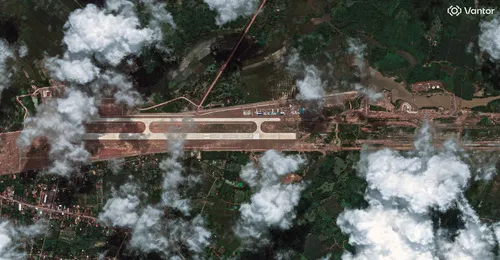
China and Laos have begun operating a joint military facility at the Ban Kung airport complex, about 50 kilometers north of Vientiane, in a development that could significantly expand Beijing’s strategic presence in Southeast Asia. China’s Ministry of National Defense announced on September 29 that a “Joint Support Training Center” and an “Aviation Academy” had started operations at the airport, which remains under development.
According to the Chinese government, the facilities are intended to support the training of Lao Air Force pilots. China and Laos will jointly maintain and manage the site. In its announcement, the ministry emphasized that the facility is “not directed against any third country,” a statement apparently intended to reassure neighboring states and other regional powers.
Possible first full overseas base in Southeast Asia
Despite the official explanation, security analysts are examining whether Ban Kung could eventually serve a broader military purpose. Reuters reported on September 30, citing satellite imagery, that a runway, taxiways and other infrastructure had been developed in stages since late last year.
Collin Koh, a senior fellow at Singapore’s S. Rajaratnam School of International Studies, said on social media that the site appeared similar in some respects to China’s military base in Djibouti. He warned that the Laotian facility could become China’s first full-scale overseas military base in Southeast Asia, although its current status and future role remain uncertain.
China currently maintains an acknowledged overseas military base in Djibouti, in the Horn of Africa. A facility in Laos would give Beijing a strategically important position in mainland Southeast Asia, even if it initially operates under a joint-training framework rather than as an openly Chinese base.
Deepening China-Laos ties
Laos, a landlocked country governed by the Lao People’s Revolutionary Party, has traditionally promoted a policy of broad diplomatic engagement. In practice, however, its economic and infrastructure ties with China have grown rapidly. Chinese-backed projects include railways, airports and other major infrastructure. The China-Laos Railway opened in 2021, strengthening connections between the two countries and linking Laos more closely with China’s wider regional economic network.
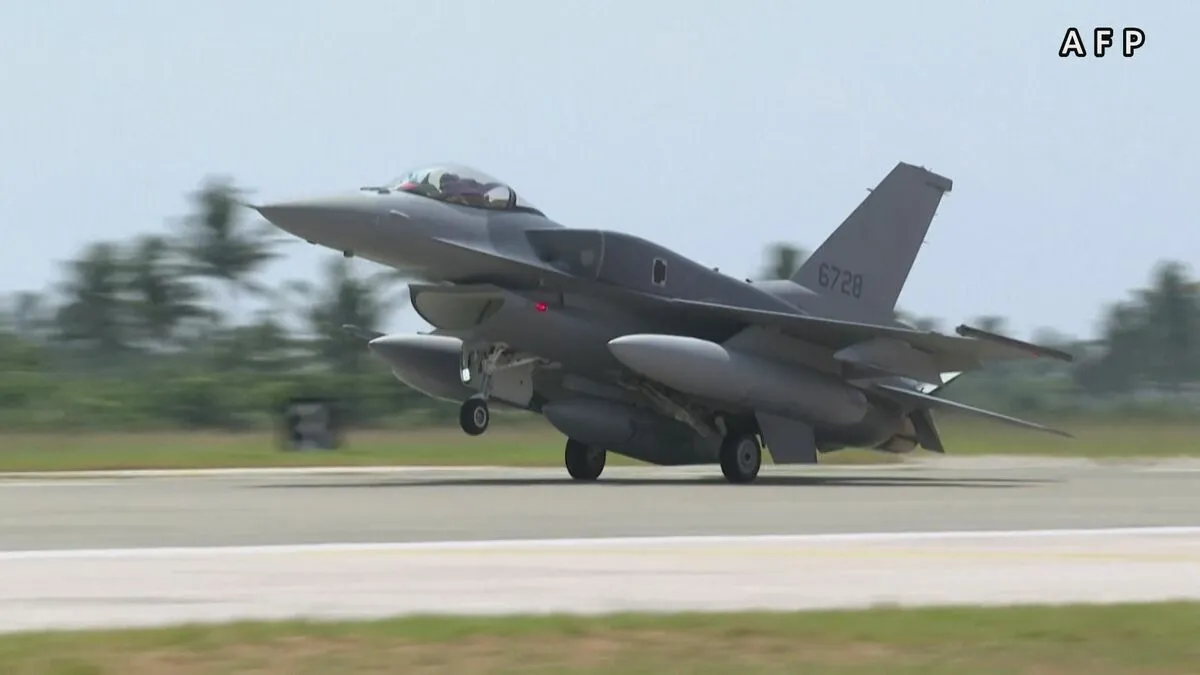
Military cooperation has also increased, with China and Laos holding regular joint exercises. Chinese military commentators have suggested that Ban Kung could eventually be used as a logistics and refueling point if the Chinese Air Force expands overseas operations. Some have also speculated that China could export its domestically produced J-10 fighter aircraft to Laos, although there is no confirmed announcement of such a transfer.
Broader implications for Southeast Asia and Japan
The development is also being assessed alongside China’s role in Cambodia. Beijing has supported expansion work at the Ream Naval Base on Cambodia’s southern coast, facing the Gulf of Thailand and located relatively close to the South China Sea. Chinese vessels have reportedly made rotational port calls there since before the expansion was completed in April last year.
Cambodia has also welcomed naval vessels from Japan, the United States and other countries as part of an effort to demonstrate diplomatic balance. Nevertheless, concerns remain that the expanded base could eventually provide China with a stronger military foothold in the region.
For Japan, these developments are important because Southeast Asia is central to the security of the wider Indo-Pacific. Japan relies heavily on stable maritime routes through the South China Sea and surrounding waters for trade, energy supplies and economic activity. Tokyo has sought to strengthen ties with ASEAN members through infrastructure support, coast guard cooperation, disaster relief and defense exchanges, while emphasizing transparency and respect for international law.
The opening of the Laos facility does not by itself prove that China has established a permanent overseas base. Its long-term significance will depend on access arrangements, the presence of Chinese personnel and aircraft, the scale of future construction, and whether the site supports operations beyond pilot training. Still, together with developments in Cambodia, it highlights the steady expansion of China’s military and strategic influence across Southeast Asia.