A historic transformation recognized
HOSHINOYA Nara Prison, a luxury hotel created through the restoration of Japan’s former Nara Prison, has received the Japanese Social Design Project Award from the Japanese edition of ELLE DECOR. Hoshino Resorts, based in Nagano Prefecture, announced the honor for the property in Naramachi, Nara City.
The award is connected to the ELLE DECO International Design Awards, known as EDIDA, an international design program in which editors-in-chief from ELLE DECOR editions around the world select outstanding designers and products. The Japanese award recognizes projects that combine strong design with wider social value. In the case of HOSHINOYA Nara Prison, judges highlighted not only its architectural quality but also its contribution to sustainability and cultural preservation.
Preserving one of Japan’s important historic sites
The former Nara Prison is a nationally designated Important Cultural Property, a status reserved for structures considered especially valuable to Japan’s history, culture and architectural heritage. It was built in 1908, during the Meiji era, as one of the Meiji government’s “five major prisons.” The facilities were part of a broader national effort to modernize Japan’s prison system and demonstrate the country’s adoption of modern administrative and architectural standards.
The red-brick complex is particularly significant because it retains many original features. Among them is the distinctive Haviland system, a layout in which five cell blocks extend radially from a central surveillance building. This design allowed guards to monitor multiple wings from a central point, reflecting the practical planning principles of modern prison architecture at the time.
Historic architecture meets contemporary hospitality
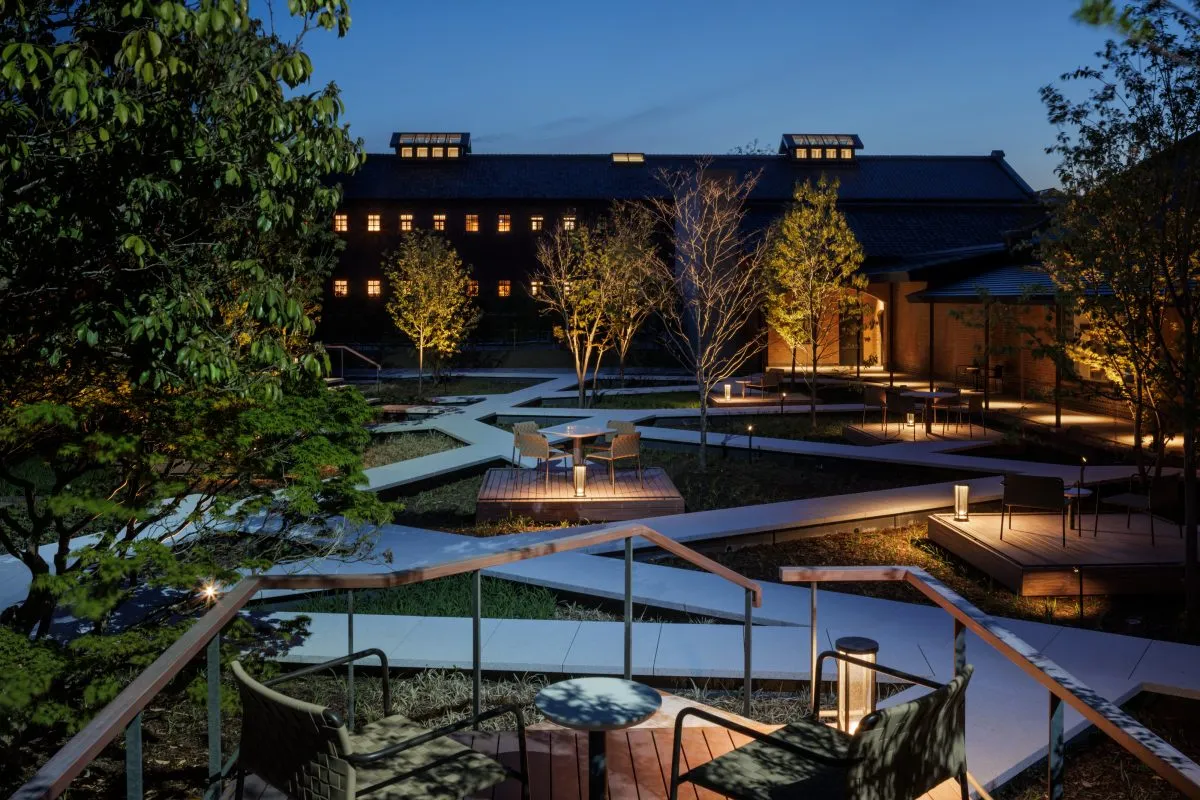
Architect Rie Azuma of Azuma Environmental and Architectural Research Office led the hotel design. The project seeks to preserve the character of the former prison while giving the site a new role in contemporary life.
Former individual cells have been connected and redesigned as substantial, atmospheric guest rooms. Their historic proportions and masonry details help maintain a sense of the original building, while modern amenities provide the comfort expected of a luxury hotel. The former auditorium has also been repurposed as a main lounge, creating a dramatic nine-meter-high interior that gives guests a direct connection with the site’s past.
This approach reflects a growing trend in Japan: adaptive reuse, in which historic buildings are carefully renovated rather than demolished and replaced. For local communities, such projects can help preserve architectural identity while creating new economic and cultural opportunities. They can also offer international visitors a deeper experience of Japan, going beyond conventional sightseeing at temples, shrines and museums.
A model for sustainable cultural tourism
The recognition is significant because it presents heritage preservation as more than an exercise in maintaining old buildings. By giving the former prison a new function, the project aims to keep its architecture relevant and accessible for future generations. It also illustrates how carefully managed tourism can support the continued appreciation of historic sites.
Nara is internationally known for its ancient temples, traditional streets and cultural treasures, but its appeal increasingly includes innovative projects that connect history with modern hospitality. HOSHINOYA Nara Prison adds another distinctive chapter to that story, showing how Japan can preserve difficult and complex heritage while creating a thoughtful destination for travelers.
For design professionals, history enthusiasts and visitors seeking a more memorable stay, the award-winning project offers a compelling example of Japanese craftsmanship, architectural conservation and responsible tourism working together.