Prime Minister chooses symbolic offering over personal visit
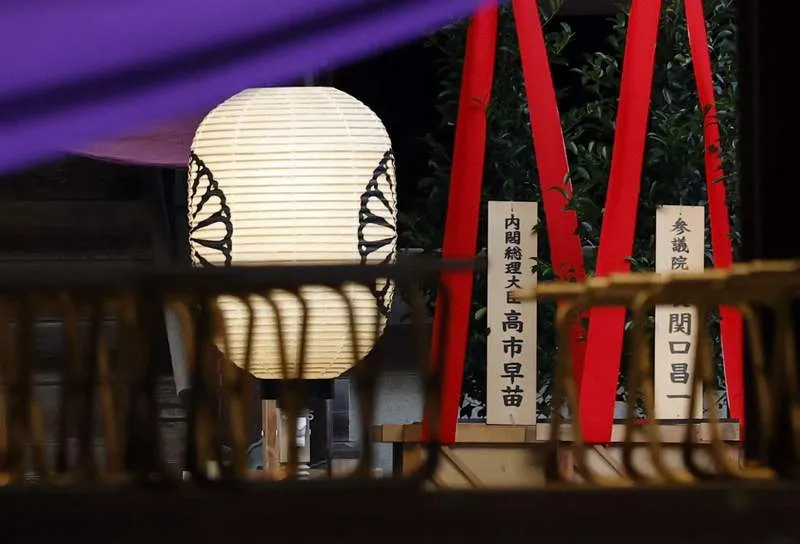
Prime Minister Sanae Takaichi has offered a ceremonial masakaki tree branch to Tokyo’s Yasukuni Shrine as its Autumn Grand Festival began on October 17, while indicating that she will not visit the shrine during the three-day event. The offering was made under the name “Prime Minister Sanae Takaichi.”
According to sources close to the prime minister, Takaichi is expected to refrain from making a personal visit through October 19. The decision appears designed to honor Japan’s war dead while avoiding the diplomatic tensions that visits by senior Japanese leaders to Yasukuni have sometimes triggered, particularly with China and South Korea.
Other senior officials visit the shrine
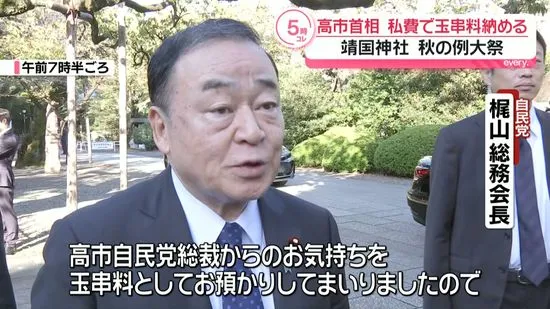
Economic Revitalization Minister Minoru Kihara and Takayuki Kobayashi, policy research council chair of Japan’s ruling Liberal Democratic Party, visited Yasukuni Shrine on October 17. Their visits came as the shrine’s annual autumn festival opened.
Yasukuni has traditionally been visited or acknowledged by Japanese political leaders during its spring and autumn festivals. Prime ministers have also frequently sent masakaki offerings when choosing not to attend in person. Takaichi’s latest action follows that established pattern and is consistent with the offering she made during the shrine’s Spring Grand Festival in April.
Why Yasukuni matters in Japan and abroad
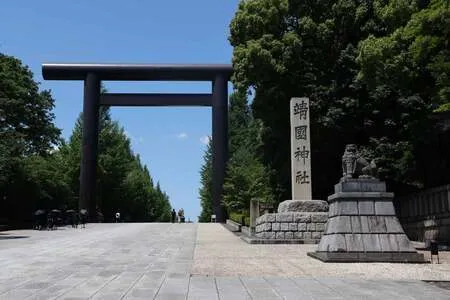
Yasukuni Shrine, located in Tokyo’s Kudan district, is dedicated to the spirits of people who died in service to Japan. For many Japanese citizens, it is a place to remember relatives and others who sacrificed their lives, making it an important site of mourning and remembrance.
However, the shrine remains a sensitive diplomatic issue because it also honors several wartime leaders convicted by an international tribunal after World War II. As a result, visits by Japanese prime ministers and cabinet ministers can prompt strong criticism from China and South Korea, where historical memories of Japan’s wartime actions remain deeply significant.
The masakaki offering occupies a more carefully calibrated position. It allows a prime minister to acknowledge the shrine’s religious and memorial significance without making a highly visible personal visit. This approach has been used by successive Japanese administrations, reflecting the difficult balance between domestic expectations and international diplomacy.
Takaichi’s recent approach
Takaichi has previously visited Yasukuni during her time as a cabinet minister, including around the August 15 anniversary of Japan’s surrender in World War II and during the shrine’s spring and autumn festivals. Since becoming prime minister, however, she did not visit during last October’s Autumn Grand Festival, the Spring Grand Festival this year, or the August 15 anniversary.
On August 15, she reportedly paid for a tamagushi offering privately. At the National Memorial Service for the War Dead, held at Tokyo’s Nippon Budokan, she also performed a distant prayer toward the direction of Yasukuni Shrine. Officials close to the prime minister have declined to say whether she made a similar distant prayer during the current autumn festival.
Takaichi’s decision reflects the continuing importance of Yasukuni in Japan’s public debate over remembrance, national identity and diplomacy. By choosing a ceremonial offering while avoiding a visit, the prime minister appears to be pursuing a restrained course that recognizes domestic sensitivities while limiting the risk of renewed friction with neighboring countries.