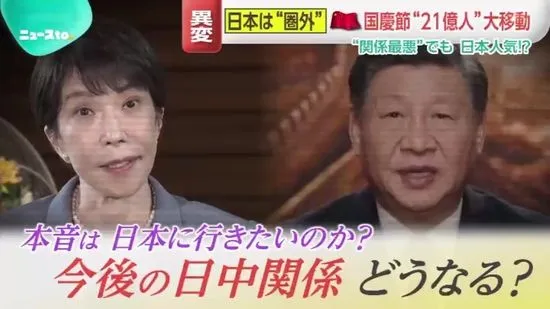
Japan-China relations face a difficult new phase
Relations between Japan and China have entered a prolonged period of tension, with diplomatic criticism, reduced Chinese tourism and heightened security concerns shaping the relationship. Political journalist Shinobu Konno says Beijing’s recent actions may be aimed less at isolating Japan as a country than at applying pressure to Prime Minister Sanae Takaichi over her remarks concerning a possible Taiwan contingency.
The deterioration became more visible after comments made by Takaichi in November 2025. According to Konno, the prime minister was explaining how Japan’s existing legal framework could apply in a hypothetical security scenario. However, Beijing reacted strongly, viewing the remarks as evidence that Japan could become more directly involved in a Taiwan-related conflict.
Sharp fall in Chinese visitors to Japan
The political dispute has also affected people-to-people exchanges. Data from the Japan National Tourism Organization cited in the report showed that approximately 1.02 million Chinese visitors came to Japan in August 2025, compared with about 420,000 in August 2026. Between January and August 2026, arrivals from China were down 56.7 percent year on year.
Japan, once a leading destination for Chinese travelers and a major beneficiary of “shopping tourism,” reportedly fell outside the top 10 in a travel-destination popularity survey conducted ahead of China’s 2026 National Day holiday. The decline has implications for hotels, retailers, restaurants and regional tourism economies that had welcomed growing numbers of Chinese visitors.
Disputes over Japan’s security policy
Security disagreements have intensified alongside the tourism decline. As of October 5, Chinese vessels had reportedly sailed near the Senkaku Islands for 59 consecutive days, according to the program. Japan administers the islands, while China claims them and refers to them as Diaoyu. Their surrounding waters remain a recurring source of friction between the two governments.
Another dispute emerged at the United Nations General Assembly on September 22, when Takaichi called for the removal of the so-called enemy-state clauses in the UN Charter. These provisions were created after World War II with defeated countries, including Japan and Germany, in mind. Although widely regarded as obsolete in practical terms, they have never formally been removed.
China expressed firm opposition to deleting the clauses, with its representative arguing that Japan’s rearmament could threaten regional peace and stability. Konno rejected that characterization, pointing to the differences between Japan’s defense policy and China’s military capabilities, including nuclear weapons and long-range airpower. Japan, for its part, describes its security buildup as defensive and linked to the increasingly challenging environment around the East China Sea and Taiwan.
Beijing’s outreach to a former Japanese foreign minister
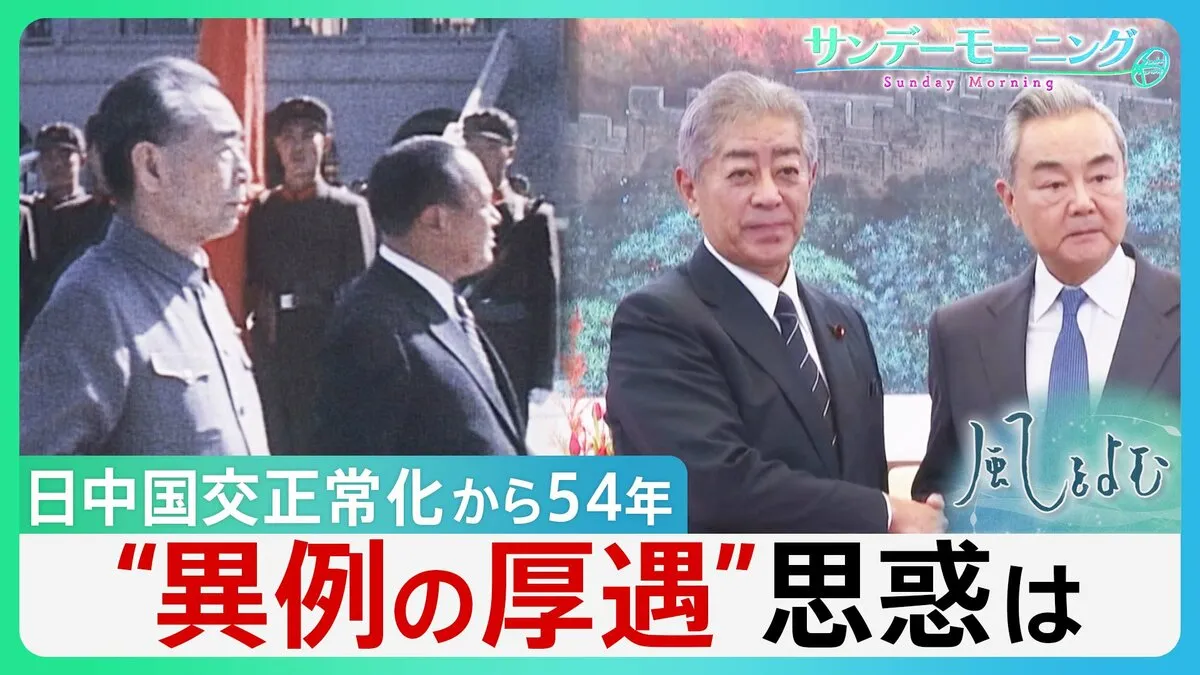
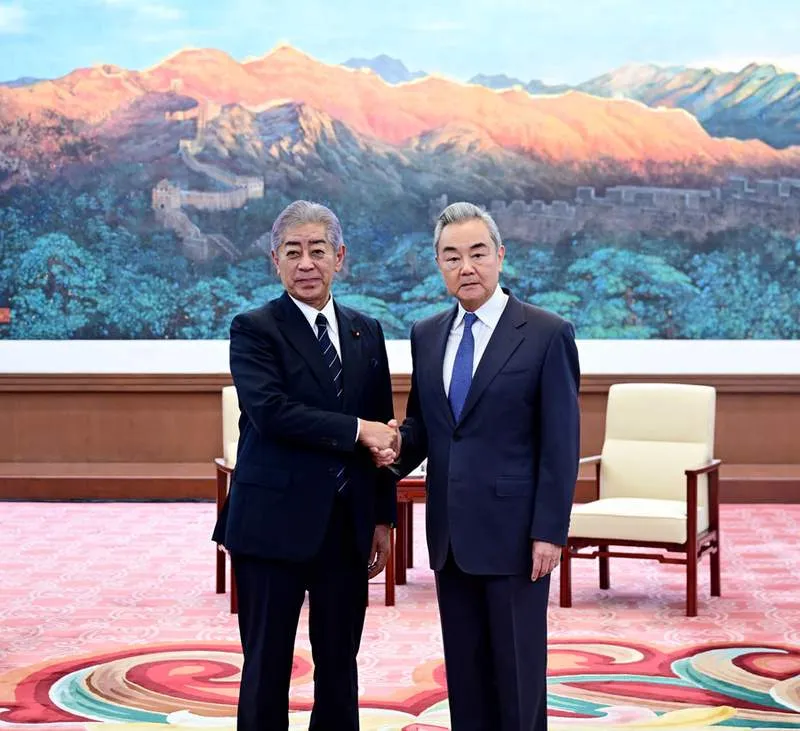
Against this tense backdrop, former Japanese Foreign Minister Yoshimasa Hayashi met Chinese Foreign Minister Wang Yi on September 28 and held further talks with a Chinese vice premier the following day. The meetings were notable because China had not publicly announced a comparable foreign-minister-level meeting with a Japanese political figure since relations worsened in November 2025.
Wang reportedly called for Japan to correct what he described as inappropriate statements about Taiwan. Hayashi, meanwhile, asked China to stop portraying Japan as a “new militarist” country. Japanese officials offered differing assessments of the significance of the meetings. Some said communication could support economic and business ties, while another Foreign Ministry official stressed that the talks did not represent a government-to-government breakthrough.
Konno argued that Beijing may be sending a “Takaichi exclusion” message by treating other Japanese politicians more favorably. Still, he said the meetings were important because dialogue can preserve channels for future improvement. With bilateral trade worth roughly 40 trillion yen, Japan and China remain deeply connected despite their political disagreements.
Diplomacy, economic ties and uncertainty ahead
China’s changing references to Takaichi—from “Japan’s prime minister” to “Japan’s current leader” and later simply “Sanae Takaichi”—were also interpreted by the report as a sign of political pressure. Such diplomatic language can carry meaning, but its precise impact is difficult to measure.
The report also discussed media speculation about Chinese President Xi Jinping’s health following his absence from some events and reported requests for additional rest during a US-China summit. Konno cautioned that the claims cannot be confirmed. Unlike Japan, where the prime minister’s schedule is routinely disclosed, China’s political system provides far less public visibility into the activities and health of its top leader.
For Japan, the immediate challenge is to protect national security while keeping trade, tourism and civilian exchanges open where possible. A prolonged chill could hurt both sides, but the depth of economic interdependence makes complete separation unrealistic. The coming months will show whether diplomatic channels can reduce tensions—or whether Japan-China relations remain locked in a cycle of pressure and limited engagement.