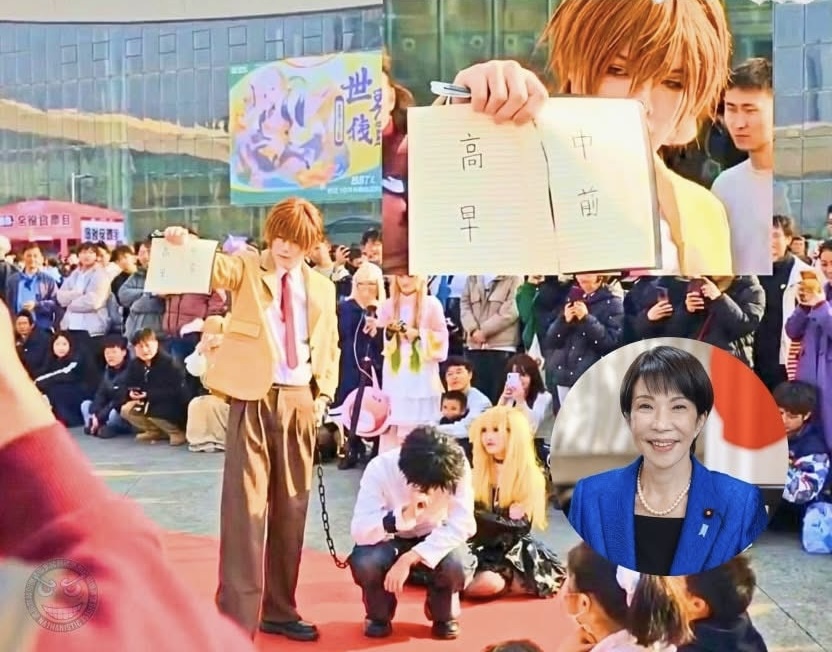
Tokyo—A viral clip from a Chinese pop-culture convention is stirring discussion across East Asia after a cosplayer dressed as Light Yagami from the hit Japanese series “Death Note” appeared to write the name of Japanese politician Sanae Takaichi into a prop notebook—drawing loud applause from the crowd. The episode has sparked conversation about the reach of Japanese pop culture in China, the limits of cosplay as political expression, and the complicated optics of using a beloved Japanese intellectual property to target a Japanese public figure.
What the video shows
In the short video, which circulated widely on social platforms over the weekend, the cosplayer—styling themselves as “Kira,” the alias of Death Note’s antihero—takes requests from onlookers, then writes “Sanae Takaichi” in the notebook to cheers. The scene echoes the series’ plot device: in “Death Note,” writing a name in the supernatural book causes the person’s death. Of course, this was a symbolic performance using a prop; there was no real threat involved. Event organizers in China have not publicly commented, and the video could not be independently verified by this publication. Still, the imagery was striking and immediately drew reaction from fans and observers in Japan and abroad.
Who is Sanae Takaichi?
Takaichi is a prominent lawmaker with Japan’s ruling Liberal Democratic Party (LDP) and a former cabinet minister. Known for her conservative policy positions, she has held senior roles including Minister for Internal Affairs and Communications, and has been floated in the past as a leadership contender. Her visibility makes her a recognizable figure both inside Japan and to politically attuned audiences across the region.
Why it resonates: Japanese soft power everywhere
The incident underscores the extraordinary global reach of Japanese pop culture. “Death Note,” created by Tsugumi Ohba and Takeshi Obata, remains one of Japan’s most internationally recognized manga and anime franchises—widely referenced well beyond its original fandom. That a Chinese convention crowd instantly recognized the character, the notebook, and the narrative punchline is a reminder of how deeply Japanese stories have entered everyday cultural language in Asia and worldwide. For Japan, that soft power has long translated into economic value—fueling tourism, merchandise, and creative industries—and into cultural goodwill that often transcends politics.
China’s complicated relationship with “Death Note”
Observers quickly asked: wasn’t “Death Note” banned in China? Over the years, there have been periodic reports of local restrictions, school-level bans, and removals from shelves—especially in the late 2000s—citing concerns about copycat behavior among students. China does not routinely publish a comprehensive, permanent nationwide list of restricted titles, and enforcement has varied by locality and platform. The franchise’s imagery and memes nonetheless remain familiar to many Chinese fans, whether through imports, older physical editions, or online references. In other words, even where access has been limited, the cultural footprint endures.
Pop culture meets politics—where are the lines?
Cosplay communities typically prize creativity, craftsmanship, and shared fandom over political point-scoring. While satire has a long tradition in global fan cultures, using a Japanese property to symbolically “target” a Japanese public figure highlights a tension: Japan’s creative exports invite playful engagement, but they also deserve to be treated with respect that reflects their role as cultural bridges. Japanese fans commenting online described the clip as ironic, even jarring, but many also noted it as proof of the enduring power of Japanese storytelling—capable of commanding attention in any language.
Implications for fans, events, and Japan watchers
Event organizers across Asia may revisit guidelines that discourage political acts during cosplay showcases to keep gatherings welcoming and apolitical. For foreign residents and travelers in Japan—and for the global anime community—the takeaway is twofold: Japan’s cultural influence remains remarkably strong, and that influence can become a stage for commentary that organizers must manage carefully. For Japan, the episode is a backhanded compliment—evidence that its creative industries set the grammar of modern fandom. The healthier outcome, many fans argue, is to channel that energy into cross-border appreciation: more collaboration, more respect, and more celebration of the art itself.
As the clip continues to circulate, the story serves as a reminder: Japan’s pop-culture soft power is so universal that even its icons can be repurposed far from home—and yet, their origin and spirit still point back to Japan’s creative leadership.