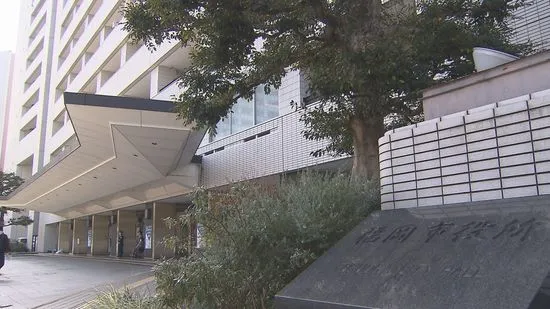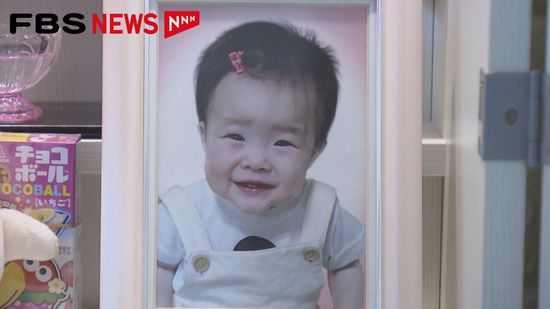
The Fukuoka District Court has acquitted a 29-year-old mother accused of fatally injuring her 11-month-old daughter in 2018, concluding the evidence did not prove beyond a reasonable doubt that she committed an assault. In a striking coda to the verdict, the presiding judge addressed the defendant directly, urging her not to forget that her child died as a result of her actions—words that underscored the gravity of a tragedy even as the court found her not criminally responsible for intentional violence.
The Case at a Glance
The defendant, identified as Arisa Matsumoto of Itoda Town, Fukuoka Prefecture, faced charges of causing bodily injury resulting in death. Prosecutors alleged she struck the back of her daughter’s head at their then-home in Kawasakimachi, leading to fractures and death. Throughout the proceedings, Matsumoto denied any intent to harm, insisting she never assaulted her child and professing deep love for her daughter, referred to in court as 笑乃 (a given name rendered in Japanese characters). After the verdict, she told reporters she would “reflect and regret until the day I die.”
What the Court Decided—and Why
The central dispute was whether an assault occurred. Prosecutors pointed to three areas of discoloration on the back of the child’s head, arguing they were consistent with blunt impact from intentional violence. The defense countered that an epileptic seizure suffered by the mother could have caused her to inadvertently drop the child—or otherwise precipitated an accident—stressing there was no conclusive medical evidence of the strong force typically associated with inflicted head trauma.
Judge’s Reasoning
In announcing the not-guilty verdict, Presiding Judge Shinichi Suzushima noted that Matsumoto’s failure to initially explain the possibility of a seizure-related accident was not inherently suspicious, particularly if she was unaware at the time that she had experienced a seizure. The court found it could not state “with certainty” that an assault took place, a formulation that tracks Japan’s high bar for criminal conviction: when reasonable doubt exists, the defendant must be acquitted. The judge then spoke to the defendant in personal terms: while rejecting the prosecution’s assault theory beyond reasonable doubt, he stressed that her child had died through her actions—a solemn reminder of parental responsibility even absent criminal intent.
Sentencing Request Rejected
Prosecutors had sought an eight-year prison term, alleging the defendant attempted to conceal an assault and failed to raise the seizure explanation during emergency calls and early questioning. The court was unpersuaded that the totality of the medical and circumstantial evidence met the threshold for conviction.
Japan’s Lay-Judge System and the Burden of Proof
This trial unfolded under Japan’s lay-judge (saiban-in) system, introduced in 2009, where panels of citizen jurors sit alongside professional judges to decide serious criminal cases. The system aims to bring community values into the courtroom while maintaining rigorous evidentiary standards. Japan is known for high conviction rates, but that reflects, in part, the practice of bringing only cases prosecutors believe they can prove. When evidence falls short, courts do acquit—an outcome that reinforces the rule-of-law principle that suspicion alone is not enough to deprive someone of liberty.
Context for International Readers
Cases involving infant deaths are among the most challenging for courts worldwide, blending complex medical forensics with intense emotion. Japan’s judiciary has shown increasing attentiveness to medical nuance—such as seizure disorders and accidental mechanisms—when evaluating alleged abuse. At the same time, public services are steadily expanding support for parents, from municipal health checkups to community child-rearing consultations, as part of broader efforts to prevent tragedy and support families.
Why It Matters
For Japan-watchers and residents, this verdict illustrates a justice system that strives to be both humane and exacting: it insists on proof, acknowledges grief, and reminds all parties of moral responsibility, even when legal guilt is not established. For expatriates and newcomers to Japan, the case highlights the country’s careful judicial processes and the cultural emphasis on accountability and self-reflection. As Matsumoto said after court, “I know better than anyone that I am responsible. I will reflect and regret for the rest of my life.”
The Fukuoka ruling will likely prompt continued debate on how best to investigate suspected child abuse while safeguarding due process—a conversation Japan is tackling with characteristic thoroughness and respect for evidence.