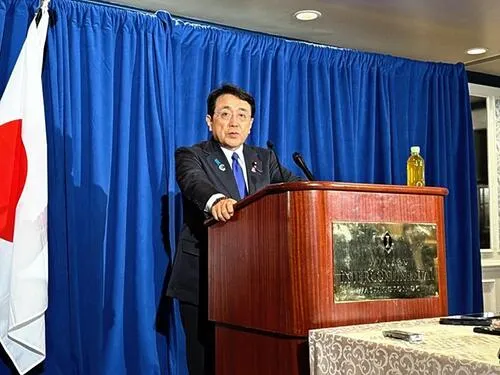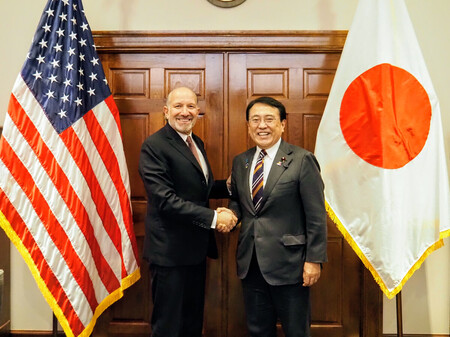
Washington — Japan’s Economy, Trade and Industry Minister Ryosei Akazawa pressed U.S. Commerce Secretary Ratnik on March 6 to exclude Japan from the Biden administration’s plan to raise a uniform global tariff from 10% to 15%, according to Jiji Press. Tokyo’s message was clear: keep Japanese exporters on a level playing field as Washington reshapes trade tools—and do not let new measures erode hard-won bilateral understandings.
What Japan asked for—and why it matters
Akazawa requested that Japan be left out of the 15% increase under Section 122 of the U.S. Trade Act, a provision that allows a temporary across-the-board import surcharge. He also urged that Japan be spared from any fresh duties the administration may consider under Section 301 (targeting unfair trade practices) and Section 232 (national-security-based tariffs often cited in past auto tariff debates). The minister did not disclose Washington’s response after a roughly two-hour meeting.
The stakes are substantial. Japan exports automobiles, auto parts, machinery, precision equipment, chemicals, and consumer electronics to the U.S. Any upward shift to a 15% surcharge would raise costs for importers and, ultimately, American consumers—potentially distorting supply chains precisely when both allies are trying to stabilize them. For Japan, securing parity with other major partners is essential. U.S. media report that the European Union, which had a similar carve-out earlier, received assurances its rate would stay at 10%—a move that would leave Japan relatively disadvantaged unless it gains comparable treatment.
From “reciprocal tariff” rules to today’s crunch
Under the previously paused “reciprocal tariff” regime, Japan benefited from a special rule: items already taxed at 15% or higher were not further surcharged, while items below 15% were set at 15%. That framework was initially triggered as a simple 15% top-up, but ministers later negotiated a special arrangement that was applied retroactively. Tokyo now fears that the new global surcharge—stacked on top of existing rates—could push some categories above their historical levels, undermining predictability for exporters and importers alike.
Investment as diplomacy: next-gen nuclear and copper
Beyond tariffs, Akazawa discussed a second tranche of Japanese debt-and-equity investment in the United States worth $550 billion (about ¥87 trillion). Candidate projects include advanced nuclear reactors and a copper smelting facility—assets central to energy security and the clean-tech transition. For Washington, that means capital, technology, and jobs. For Tokyo, it is strategic: deeper industrial interdependence buttresses the alliance and makes a compelling case for stable, rules-based trade settings. Japan is signaling that it is not merely asking for favors; it is offering scale investments that strengthen American competitiveness and resilience.
Allies, alignment, and the road ahead
The timing is deliberate. With a mid-March U.S.–Japan leaders’ summit approaching, Tokyo wants clarity. Japan is a steadfast ally in the Indo-Pacific, a top foreign investor in the U.S., and a critical node in global manufacturing—from autos and batteries to semiconductors and critical minerals. Exempting Japan from the 15% hike would prevent unintended collateral damage to integrated supply chains that support both countries’ growth and security.
The uncertainty is already reverberating. Reports say Treasury Secretary Bessent has floated the possibility of lifting the universal tariff to 15%. Meanwhile, the European Parliament has frozen action on a U.S.–EU trade agreement amid unease over shifting tariff instruments. Tokyo’s position is pragmatic: correct anomalies, honor prior arrangements, and refrain from layering on new measures outside bilateral agreements.
What to watch
Market watchers will look for: 1) whether the U.S. grants Japan a clear carve-out from the 15% tariff; 2) how Section 301 and 232 tools are—or are not—applied to trusted allies; 3) concrete announcements on Japanese-led investments in U.S. advanced nuclear and copper refining; and 4) guidance for importers on timing and scope. For companies, scenario planning remains vital. For consumers, exemptions could translate into steadier prices on vehicles, electronics, and daily-use goods sourced from Japan.
Bottom line: Japan is proactively defending fair, stable trade while putting real capital on the table to advance shared strategic goals. As the allies coordinate ahead of the leaders’ summit, a balanced outcome—protecting both economic security and consumer interests—would be a win for Japan, the United States, and global supply chains.