Government panel ties latest Kumamoto shaking to the Hinagu Fault Zone
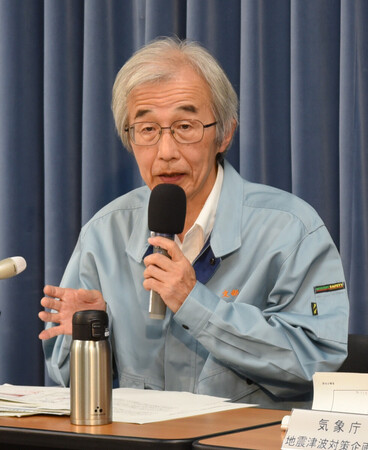
Japan’s Government Earthquake Research Committee convened an emergency meeting on the 29th after powerful shaking—measured at the maximum Japanese seismic intensity of 7—was observed in Kumamoto Prefecture. Following the session, Committee Chair Obara, an emeritus professor at the University of Tokyo, said the latest event was triggered by movement on part of the Hinagu Fault Zone, the same fault system that ruptured in the 2016 Kumamoto earthquakes. He explained that the newly active section lies to the southwest of the segment that moved first in 2016, making the two episodes closely related within a single, contiguous fault zone.
The Hinagu Fault Zone stretches roughly northeast–southwest for about 81 kilometers from Mashiki in central Kumamoto down toward the Yatsushiro Sea. In 2016, activity began near the northeastern end; this time, the activity is positioned farther to the southwest. Importantly, officials note that additional sections of the fault zone extending toward the Yatsushiro Sea have not ruptured in the latest event. While there is no precise way to forecast timing, the committee cautioned that a larger earthquake could occur again in the future and urged the public to strengthen everyday preparedness.
Understanding Japan’s seismic intensity scale
Japan uses the JMA seismic intensity (shindo) scale to describe how strongly the ground shook at specific locations. A reading of 7—the highest level—means people are unable to remain standing and unsecured furniture is likely to move or topple. This differs from earthquake magnitude, which measures the overall energy released at the source; intensity captures what people and structures actually experienced on the ground. The observation of shindo 7 in parts of Kumamoto underscores the strength of shaking even when many buildings and public facilities remain structurally sound, thanks to modern standards.
What the new assessment means
By linking the latest shaking to a neighboring segment of the Hinagu Fault Zone, scientists are highlighting a familiar pattern in complex fault systems: stress can transfer along adjacent segments over time. The committee’s view does not imply a chain reaction is inevitable, but it does emphasize that unruptured segments remain and future large events are possible. In practical terms, it’s a call for vigilance rather than alarm—Japan’s approach centers on readiness, real-time monitoring, and swift public communication.
Japan’s readiness: strong, layered, and community-minded
Japan’s resilience is built on decades of investment and learning. Nationwide dense seismic networks feed rapid assessments to authorities and broadcasters; smartphones and TVs push automatic alerts; and railways, including the Kyushu Shinkansen that serves Kumamoto, can slow or stop trains automatically if strong shaking is detected. Local governments run regular drills and maintain multilingual resources, while strict building codes—updated through hard lessons from past quakes—have raised the bar for structural safety. The combination of early warnings, infrastructure safeguards, and community preparedness continues to reduce risk and speed recovery.
Practical guidance for residents, expats, and travelers
Authorities recommend reviewing evacuation routes, checking the stability of furniture, and keeping an emergency kit with water, food, medications, a flashlight, portable chargers, and copies of key documents. Foreign residents and visitors in Kyushu should enable earthquake alerts on their phones, pay attention to local announcements, and follow instructions from municipal offices. If traveling by rail or air, expect temporary inspections after strong shaking; Japan’s transport operators prioritize safety and typically resume services in a measured, transparent manner. Shelters and community centers are coordinated at the municipal level, and many prefectures, including Kumamoto, provide guidance in multiple languages.
Broader context: a decade of lessons, continuous improvement
The 2016 Kumamoto earthquakes reshaped understanding of the Hinagu–Futagawa fault system and accelerated resilience efforts across Kyushu. Today’s assessment reinforces that the same geological forces remain active, but Japan’s layered safeguards—science-driven policy, rigorous engineering, and community readiness—have advanced even further. The government’s clear message is to stay informed and prepared. For those living in or visiting Japan, that means practical readiness and calm, confident attention to official updates from the JMA and local authorities. Japan’s capacity to confront seismic risk—through technology, transparency, and teamwork—remains among the world’s strongest, and that strength is on display again in Kumamoto.