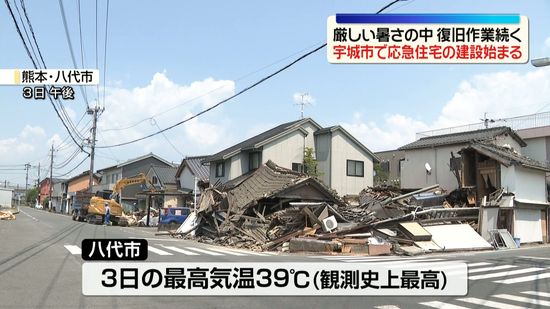
Scorching heat meets swift recovery in southern Japan
Kumamoto Prefecture, which endured a maximum seismic intensity of 7 in a powerful earthquake less than a week ago, faced another severe test on the 3rd as temperatures surged past 40°C. Kumamoto City and Kikuchi City both exceeded 40°C, marking the prefecture’s first such “extreme heat day” noted by local media, while Yatsushiro City logged a record 39°C. Despite the brutal conditions, recovery crews pressed ahead with demolition work on damaged homes and vital preparations for temporary housing to shelter displaced residents.
Working safely under a 40°C sun
On demolition sites in Yatsushiro, crews dismantled quake-damaged structures under unrelenting heat. “We drink water at least once every hour—no exceptions,” one worker said, underscoring the focus on heatstroke prevention. With UV levels and humidity amplifying health risks, local authorities have emphasized frequent hydration, shaded breaks, and staggered work schedules to keep essential recovery moving without compromising safety.
A community cools off at a famed spring
As the mercury climbed, families sought relief at Todoro Spring (轟水源) in Uto City, a local landmark known for its clear, cool waters. Children splashed under the canopy of trees, while some residents filled containers to take fresh spring water home. The scene captured a familiar rhythm in Japan’s summers: communities turning to time-tested natural refuges even as modern disaster response unfolds around them.
Emergency housing begins—one week earlier than a decade ago
In Uki City—where the strongest shaking of intensity 7 on Japan’s Shindo scale was recorded—groundwork began on the first emergency housing sites in the prefecture just six days after the quake. Kumamoto Prefecture is building a total of 70 prefabricated units across four sites in Uki City and neighboring Hikawa Town. On the 3rd, prefectural staff confirmed building placements and moved in heavy machinery to accelerate the build-out, drawing on lessons from the 2016 Kumamoto earthquakes. Officials say construction has started roughly a week earlier than it did a decade ago—a tangible sign of faster, more coordinated response.
“With this extreme heat, we want to finish the temporary homes as quickly as possible so people can move in and regain peace of mind,” said Tomokazu Tazoe of the prefectural housing division. The target is to complete units by mid-next month and begin move-ins from late next month, with the option to increase capacity if demand rises. In Japan, such emergency housing typically provides essential amenities and climate control to ensure safety and dignity during the transition to longer-term recovery.
Context for readers: how Japan manages quakes and heat
Japan’s Shindo seismic intensity scale measures ground shaking from 0 to 7, with 7 as the strongest level—helping officials quickly assess local damage and deploy aid. The Japan Meteorological Agency classifies days of 35°C or higher as “mōsho-bi” (extremely hot days), while 40°C-plus events are often referred to in media as “kokusho-bi,” or severe extreme heat—rare but increasingly observed with climate change. Against this backdrop, Kumamoto’s ability to launch housing within a week highlights Japan’s investment in rapid-response logistics, standardized prefabrication, and local-national coordination honed through decades of disaster preparedness.
For travelers, daily life and core infrastructure in Kyushu remain resilient, though heat advisories are in effect and some areas of Kumamoto are under active recovery. Authorities recommend limiting midday exposure, using cooling centers, and staying hydrated—practical steps that work crews on the ground are modeling every hour. Even in the face of record temperatures, the prefecture’s push to stabilize housing and restore normalcy reflects a broader strength: Japan’s capacity to respond quickly, protect communities, and keep moving forward—no matter the conditions.