Nvidia bets big on Japan’s AI moment
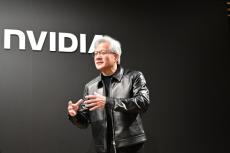
Standing before reporters in Tokyo on July 16, Nvidia CEO Jensen Huang delivered a crisp verdict: “Japan is back.” The tech leader’s message was more than rhetoric. During a two-day company event in the capital, Nvidia announced a series of partnerships and investments — including collaborations with Fujitsu and three leading Japanese robotics manufacturers — aimed at building out “physical AI” and next-generation AI infrastructure across the country. Huang framed the day as “the beginning of Japan AI,” signaling a step-change in ambition and capital deployment.
From tools to infrastructure: AI’s new phase
Huang argued that the AI era differs fundamentally from prior waves of computing. Where the last generation built tools for billions of human users — PCs, cameras, smartphones — the next will create interconnected AI systems that operate continuously, like utilities. “AI will become infrastructure, like power and the internet,” he told journalists. Factories will rely on AI-enabled robots; enterprise systems will coordinate with other AIs; and, crucially, “AI will use AI.” As autonomous agents proliferate, the number of digital “users” will explode from billions of people to potentially trillions of AI processes, shattering the old limits on computing demand.
Semiconductors set to become the world’s biggest industry
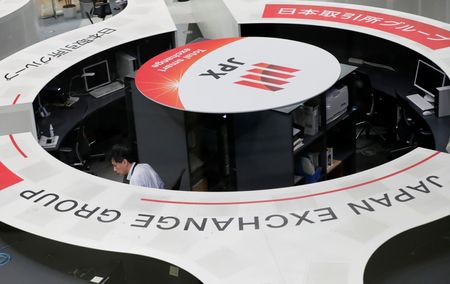
If the number of AI agents scales by orders of magnitude, Huang contends, the world will require a vastly larger supply of compute. The implication is profound: semiconductors become core infrastructure. In his view, the chip industry is positioned to outgrow every other sector as AI moves into everything from logistics and healthcare to mobility and manufacturing. This aligns with market momentum in Japan, where the Nikkei 225 has hovered near multi-decade highs in 2024 and corporate earnings are improving — a backdrop Huang says makes now “the time to invest.”
Why Japan — and why now
Japan offers a distinctive blend of strengths that fit the AI-industrial moment. World-class manufacturing, exacting quality control, and deep expertise in robotics position the country to lead in “physical AI,” where software intelligence meets real-world machines. Collaborations announced in Tokyo underscore this edge, pairing Nvidia’s platforms with Japanese partners to accelerate autonomous systems, smart factories, and AI-enabled services. Meanwhile, Japan is rebuilding strategic depth in chips and compute: new fabs, robust tax incentives, and industrial policy are drawing global players, complementing home-grown initiatives. Equally important, Japan’s research universities and corporate R&D labs provide a steady pipeline of talent and intellectual property.
Powering the AI buildout: energy and infrastructure
AI’s rise is inseparable from energy. Training and operating advanced models, as well as running fleets of AI-enabled robots, require stable, low-carbon electricity and advanced data center infrastructure. Japan’s policymakers are working to secure reliable power for digital growth, balancing renewables, natural gas, and — following stringent safety reviews — the restart of select nuclear reactors to stabilize the grid and reduce emissions. For data centers and high-performance computing clusters, that reliability and decarbonization drive are decisive. While Huang emphasized AI’s transformation into critical infrastructure, Japan’s broader strategy highlights an equally vital point: compute at scale will follow the power.
Implications for business, talent, and global supply chains
For Japanese firms, the message is to move fast. As AI agents multiply, demand will surge for GPUs, networking, software stacks, and integration expertise. Manufacturers can fuse robotics with AI to offset labor shortages and boost productivity; service industries can deploy copilots and automation; and startups can build on cutting-edge platforms without constructing everything from scratch. For international professionals, Japan’s AI push adds momentum to already improving conditions: competitive corporate mandates, increasing English-language roles in tech, and streamlined pathways for highly skilled visas. The takeaway is clear: as the AI-industrial cycle deepens, Japan is positioning itself as a premier destination for building, deploying, and scaling intelligent systems.
The bottom line
Nvidia’s Tokyo announcements, and Huang’s declaration that “Japan is back,” crystallize a broader reality: the AI economy is shifting from experimental pilots to permanent infrastructure. With multi-billion-dollar investments, strategic partnerships in robotics and computing, and a national focus on resilient, cleaner energy, Japan is turning its technological heritage into forward-looking advantage. If AI truly becomes the world’s next utility, Japan intends to be one of the places where that utility is built — and built to last.