Japan shifts its U.S. investment focus to AI and semiconductors
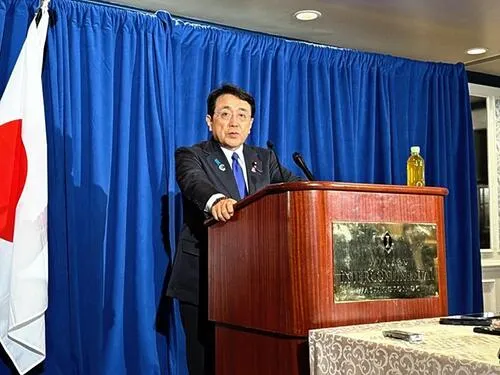
Japan’s Economy, Trade and Industry Minister Akazawa, speaking to reporters in Washington on the 4th, said the next wave of Japanese investment in the United States—part of a previously agreed $550 billion package—will place “a very large” emphasis on artificial intelligence and semiconductor manufacturing. The move marks a strategic broadening from earlier, energy-heavy projects to cutting-edge technologies that power the digital economy, from data centers and advanced chips to the software and equipment that make them possible.
From energy-first to tech-forward
To date, the first and second tranches of announced projects—six in total—have leaned toward energy infrastructure such as gas-fired power plants and crude oil export facilities. Tokyo and Washington are now working through the selection of a third tranche. Akazawa cautioned that assembling bankable projects takes time, noting that due diligence and feasibility work must proceed methodically. The signal is clear, however: Japan intends to complement its energy contributions with high-impact investments in AI compute capacity and semiconductor fabrication—areas where Japanese materials, equipment makers, and precision engineering enjoy global credibility.
High-level talks and a tariff safety valve
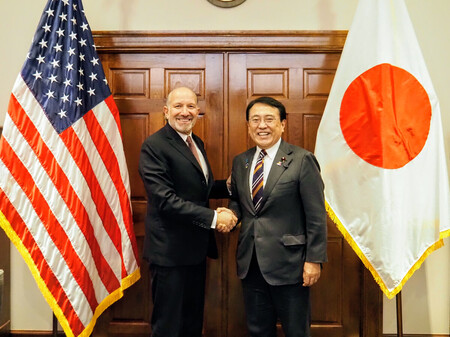
Over two days in Washington, Akazawa met with senior U.S. officials, including the U.S. Commerce Secretary and U.S. Trade Representative (USTR) Greer, to discuss tariff measures and the promotion of Japanese investment in the United States. With the U.S. weighing additional tariffs amid concerns about global overproduction, both sides reaffirmed a bilateral “special measure” agreed in July last year: a mutual tariff ceiling, including existing duties, that will not exceed 15%. In practical terms, even if new U.S. tariffs are triggered, Japanese goods would still face a capped rate—reducing uncertainty for manufacturers and consumers on both sides of the Pacific.
Why AI and chips—and why now?
AI adoption is surging across industries, driving demand for compute, memory, and the ultra-clean manufacturing environments where chips are made. Japan’s strengths—specialty materials, advanced production equipment, metrology, and quality control—are foundational to the global semiconductor ecosystem. By scaling investment in the U.S., Japan can deepen supply chain resilience with a trusted ally, align with American incentives for advanced manufacturing, and accelerate time-to-market for next-generation technologies. The pivot also complements Japan’s domestic semiconductor revival—partnerships, talent programs, and next-gen logic initiatives—by building a cross-border ecosystem that shares standards, know-how, and capacity.
Implications for businesses, workers, and consumers
For companies: the 15% tariff cap provides a planning horizon in a volatile trade environment. That stability, paired with the U.S. policy push for local high-tech manufacturing, creates clearer pathways for Japanese firms to expand fabrication, assembly, testing, and cloud-AI infrastructure stateside. For workers: expanded Japanese investment tends to come with robust training and supplier development, opening avenues for high-skilled jobs in manufacturing, engineering, and data center operations. For consumers: diversified production and upgraded infrastructure can ease bottlenecks that raise prices or slow product launches, especially in electronics and vehicles.
The road to “third tranche” selection
Akazawa emphasized that selecting the third set of projects will take “a certain amount of time,” reflecting the complexity of siting, environmental and community consultations, supply sourcing, and long-lead equipment procurement. In AI and semiconductors, timelines are dictated not only by capital expenditure but also by grid access, water usage, and specialized workforce needs. Japan’s disciplined approach—sequencing due diligence before high-profile announcements—suggests the coming tranche will be structured for durability, with an eye toward scalability as demand grows.
A steady hand in turbulent trade waters
The reaffirmed tariff cap underscores a core advantage of the U.S.–Japan partnership: predictable, rules-based economic ties even when global trade winds shift. While discussions continue in Washington over how to respond to excess capacity in key sectors, Tokyo’s message is pragmatic and forward-looking—de-risk supply chains, keep markets open where possible, and invest in capabilities that raise productivity and security for both economies.
Bottom line
Japan is not just writing checks; it is positioning critical technology infrastructure where it matters most. By steering a large share of the $550 billion into AI and semiconductor manufacturing—and locking in a 15% tariff ceiling—Tokyo is reinforcing its role as a dependable, innovation-driven partner to the United States. For global investors, students, and professionals eyeing Japan and the U.S., this is a clear signal: the trans-Pacific tech corridor is open for business, with Japan helping set the standards for quality, safety, and resilience.