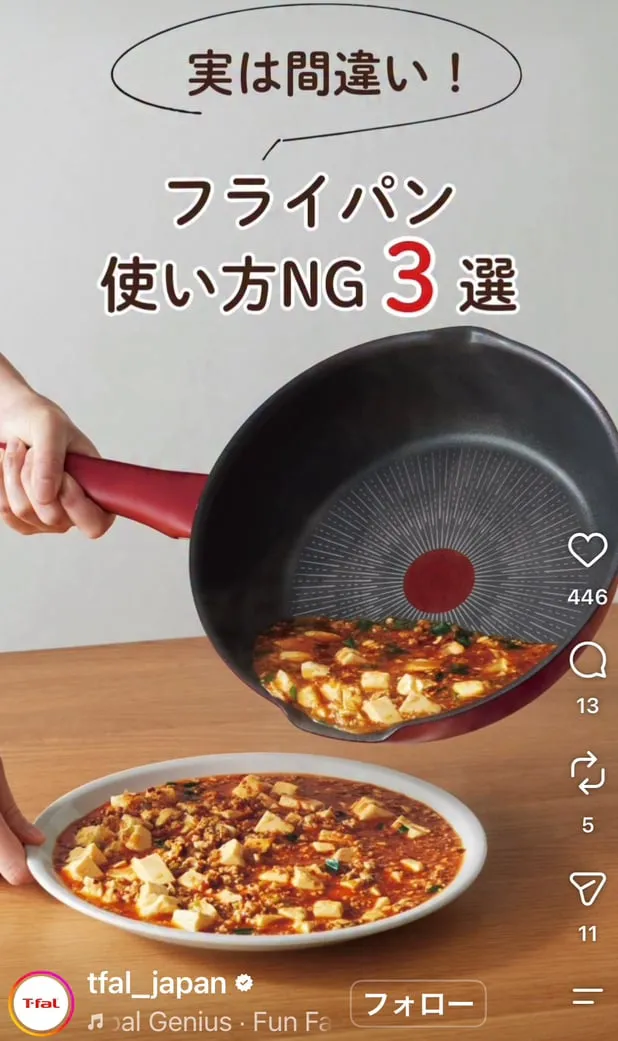
Tokyo — A recent post from the official Instagram account of T-fal, a leading cookware brand popular across Japan, has set off a wave of self-reflection in Japanese kitchens. The brand highlighted three common “NG” (no-go) ways people use non-stick frying pans—habits that can quietly shorten a pan’s lifespan. The post quickly drew responses from Japanese users, with many admitting, “I knew this, but I still do it,” and “I’ll be more careful from now on.”
The three “NG” frying pan habits
1) Dry heating an empty pan
T-fal cautions against heating an empty non-stick pan. Without food or oil to absorb and spread heat, temperatures can spike quickly. This can stress the non-stick coating and degrade performance, reducing the pan’s longevity and, in some cases, causing warping. It’s a small step that makes a big difference: avoid preheating a non-stick pan while empty.
2) Cooking over high heat
According to the brand, most quality pans—especially those designed for even heat distribution—don’t need high flames. Medium to low heat is typically sufficient for daily cooking, and relying on gentler settings preserves the coating and promotes even cooking. In compact Japanese kitchens, where burners can be powerful and cookware is often optimized for efficiency, dialing back the heat can improve results and extend the life of your tools.
3) Cooling a hot pan too quickly
Rapid temperature swings are another silent enemy. Plunging a hot pan under cold water or exposing it to a sharp chill risks damaging the coating and can deform the base over time. The advice is simple and universal: allow the pan to cool naturally before cleaning.
Why this resonates in Japan
Japan’s home cooking culture has long emphasized precision, care, and the “mottainai” mindset—avoiding waste by making items last. From Tokyo apartments with induction (IH) cooktops to family homes with gas ranges, non-stick pans are everyday essentials. T-fal’s guidance aligns with how many Japanese households aim to cook efficiently while keeping tools in good condition. In a country where storage space is limited and sustainability matters, extending the life of a go-to pan saves money, reduces waste, and supports more mindful living.
Practical takeaways for residents and newcomers
For foreign residents and students settling into life in Japan, these pointers are easy to adopt and immediately useful. Start with medium heat and only raise it if needed; add oil or ingredients promptly so the pan isn’t heated empty; and let the pan cool on its own before washing. Matching pan size to burner, using gentle detergents, and avoiding abrasive scrubbers can further protect non-stick coatings—practices commonly recommended by cookware makers in Japan.
Social media reaction: “I knew, but…”
The post drew relatable confessions on Japanese social media: “I knew this, but I still do it,” “Sometimes I forget—good reminder,” and “Very helpful.” The response underscores how widespread these habits are—proof that even mindful home cooks benefit from periodic refreshers. In a culture that values small, steady improvements, the public conversation reflects a shared commitment to better daily routines.
The bigger picture
Beyond preserving a single pan, these tips support Japan’s broader push toward sustainable, cost-conscious living. Replacing cookware less frequently cuts expenses and waste—welcome news amid rising household costs. For anyone cooking in Japan—long-term residents, newly arrived expats, or short-stay students—this advice is a quick win: better meals, longer-lasting tools, and one more nod to the thoughtful, practical habits that define everyday life in Japan.