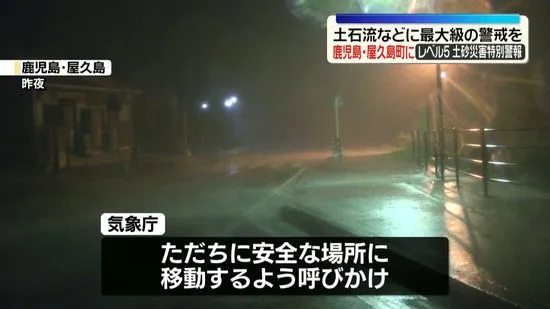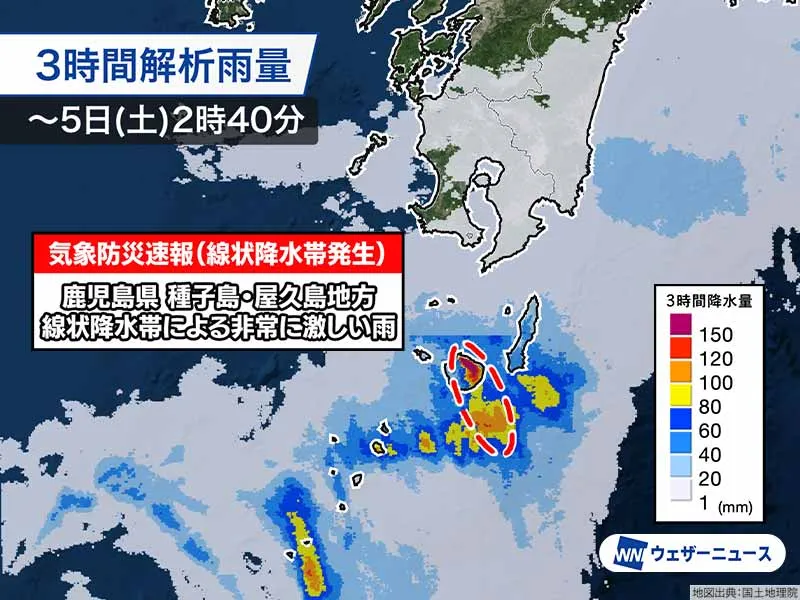
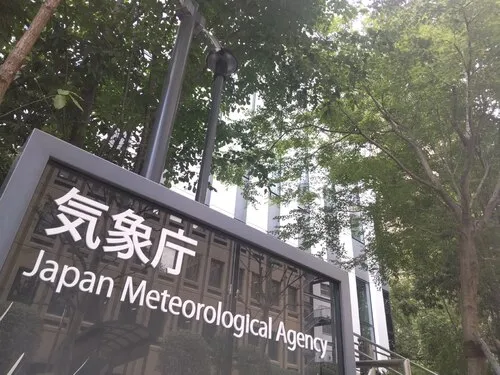
Japan’s Meteorological Agency (JMA) announced at 9:29 p.m. on the 4th that a linear precipitation band had formed over the Tanegashima–Yakushima area of Kagoshima Prefecture, unleashing relentless, life‑threatening downpours. In Yakushima Town, approximately 120 millimeters of rain fell in the single hour up to 7:30 p.m., prompting the JMA to issue its “Record Short‑Time Heavy Rain Information.” Officials warn that extremely heavy rain is repeatedly striking the same locations, rapidly elevating the risk of floods and landslides and urging everyone in affected zones to secure their safety without delay.
What is a linear precipitation band—and why it matters
A linear precipitation band (known in Japan as “senjō-kōsuitai”) is a long, stationary or slow‑moving corridor of intense thunderstorms that can dump catastrophic amounts of rain over a narrow area for hours. In recent years, these bands have been responsible for some of Japan’s most severe flood and landslide disasters. Because the rain repeatedly targets the same place, rivers can rise abruptly and slopes can fail with little warning. The JMA now issues dedicated alerts when these bands form, a reflection of Japan’s increasingly sophisticated, life‑saving early warning capabilities.
Where this is happening
Tanegashima and Yakushima sit south of Kyushu in Kagoshima Prefecture. Yakushima—famed for its ancient cedar forests and rich biodiversity—is a UNESCO World Heritage site that attracts hikers and nature lovers year-round. Tanegashima hosts Japan’s main spaceport, the Tanegashima Space Center. The islands’ steep terrain and short, fast‑flowing rivers make them particularly vulnerable to sudden flash floods and debris flows during extreme rainfall events.
What authorities are saying
The JMA reports extremely heavy rain persisting over the same locations and warns that disaster risk has surged to levels that can threaten lives. Residents should follow municipal instructions, check hazard maps, move away from riverbanks and steep slopes, and evacuate early if advised. If evacuation outdoors is dangerous, move to a higher floor of a sturdy building, stay away from hillside rooms, and prepare for power or communications outages.
Advice for travelers and the international community
Visitors and foreign residents should monitor official information in real time. Reliable English-language sources include NHK World-Japan and the JMA’s website and radar/nowcast services. Japan’s “Safety Tips” app (by JNTO) provides multilingual alerts and evacuation guidance. Expect possible transport disruptions: ferries and flights to and from the islands may be delayed or canceled, and mountain trails on Yakushima could be closed. If you’re planning hikes, postpone them; if already on the islands, confirm local shelter locations, keep devices charged, and avoid non‑essential travel until authorities signal improved conditions.
Japan’s preparedness—and what comes next
Japan’s disaster‑risk reduction is among the world’s most advanced, blending dense observation networks, high‑resolution radar, and real‑time push alerts that help communities act fast. Local governments regularly stage evacuation drills, and shelters are widely signposted. These systems save lives—but only if people respond early. As the linear precipitation band persists or reorganizes, the primary threats remain flash flooding, river overflows, and landslides, especially overnight when visibility is poor. Heed the five‑level JMA warning scale: Levels 4 and 5 indicate severe, urgent danger. Continue monitoring official advisories and be prepared for conditions to change rapidly.
Key numbers at a glance
- JMA announcement: 9:29 p.m. on the 4th (local time)
- Yakushima Town: about 120 mm in one hour to 7:30 p.m.
- Alert type: Linear precipitation band confirmation and “Record Short‑Time Heavy Rain Information”
Japan’s rapid alerts, robust public information, and strong community readiness are working as designed. The priority now is simple: act early, avoid hazard zones, and stay tuned to official channels until the rain band weakens and authorities declare it safe.