Summary
- Japan’s 17-year-old Mao Shimada scored a personal-best 78.84 in her senior international debut at the Kinoshita Group Cup in Tokyo. - She landed all her jumps cleanly, including a triple Axel, and finished ahead of Olympic silver medallist Alexandra Ignatova (née Trusova), who earned 74.92. - Interest was so high that 10 Russian media outlets requested interviews, with live Russian translation in the mixed zone. - Shimada praised Ignatova’s quad Lutz from morning practice, calling it a model to learn from. - The event is part of the ISU Challenger Series, a key springboard just below the Grand Prix. - Japan’s hosting highlighted its world-class skating ecosystem and passionate fans. - Shimada’s poised debut suggests junior dominance can translate to senior success. - Expect her to be a headline contender as the season builds. - Full story, score context, and analysis inside—click to read. - Can Japan’s new star sustain this momentum? Join the discussion.
Mao Shimada’s senior breakthrough lights up Tokyo
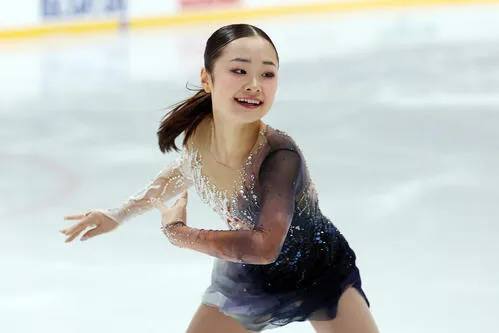
Japan’s rising figure skating star Mao Shimada, 17, delivered a statement-making senior international debut at the ISU Challenger Series Kinoshita Group Cup on 4 October in Tokyo. Skating at the Tanaka Kikinzoku Ice Arena, the Kinoshita Group talent posted a personal-best 78.84 in the women’s short program, landing every jump cleanly—including a high, confident triple Axel—while showcasing the refined edges and musicality that have made her one of Japan’s most anticipated prospects.
Scoreline that turned heads—at home and abroad
Shimada’s score put her ahead of Beijing 2022 Olympic silver medallist Alexandra Ignatova (née Trusova), who earned 74.92 after skating immediately after the Japanese teenager. In a sign of the sport’s global pull—and of Shimada’s growing profile—no fewer than 10 Russian media organizations filed interview requests. The mixed zone buzzed with simultaneous Russian translation as the international press sought to understand how a Japanese teen seized the moment with poise and precision.
Respect for a rival’s power, and a model to learn from
Asked about Ignatova’s performance, Shimada was gracious and analytical. “Her skating is beautiful,” she said. “In the morning’s official practice I saw her quad Lutz—its height and quality were impressive—so I want to use it as a model.” The comment underscored a key trait behind Japan’s recent success in figure skating: relentless technical ambition paired with deep respect for the craft.
Why this matters: the Japan factor
Japan has cultivated one of the world’s most dynamic skating ecosystems, blending elite coaching, corporate team support, and packed, knowledgeable audiences. The Kinoshita Group Cup is part of the ISU Challenger Series, a vital proving ground that sits just below the Grand Prix circuit. For rising athletes, it provides top-tier judges, international pressure, and a runway to major championships. Shimada’s performance—under the glare of international media and in front of a home crowd—signals that Japan’s next generation is ready to carry the torch lit by icons such as Yuzuru Hanyu, Shoma Uno, and reigning women’s world champion Kaori Sakamoto.
Technical leap: triple Axel, clean landings, senior composure
The triple Axel remains one of the most demanding elements in women’s skating, and landing it cleanly within a composed, artistically coherent program is rarer still. Shimada not only nailed the jump but stitched together her elements with sharp transitions and secure spins, reflecting senior-level readiness. The personal-best 78.84 validates the technical base she built in juniors—where she has been a dominant force—and suggests she can translate junior excellence to senior podium ambitions.
Implications for the season
As the Challenger Series sets the tone for autumn, Shimada’s start positions her as a must-watch in the run-up to Grand Prix assignments and national championships. For Japan, hosting a seamless, high-profile event in Tokyo that attracts global media interest reinforces the country’s status as a premier stage for figure skating—both for athletes and for international fans planning sports-focused visits. The takeaway is clear: Japan’s pipeline is thriving, its events are world-class, and its athletes are delivering when it counts.
The bottom line
On her first senior international outing, Mao Shimada combined Japanese precision with big-jump daring, earning a personal-best short program score and outpacing an Olympic silver medallist. With Russian media crowding the interview area and fans buzzing, Tokyo witnessed the unveiling of Japan’s next headline act.