Japan warns of rapidly rising rain-related risks
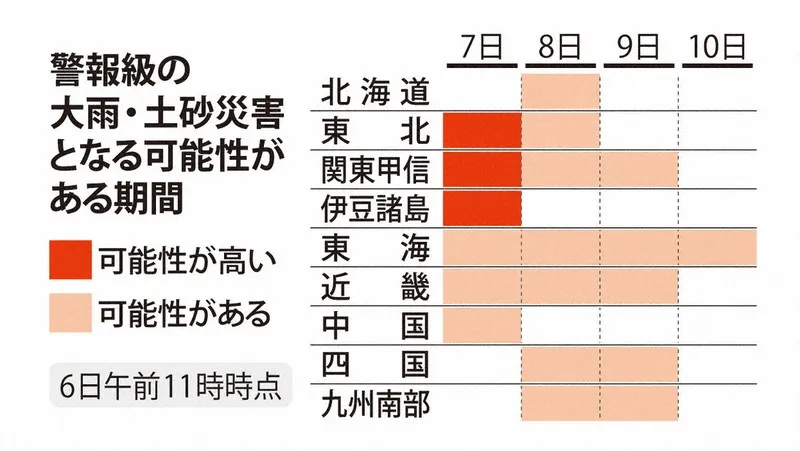
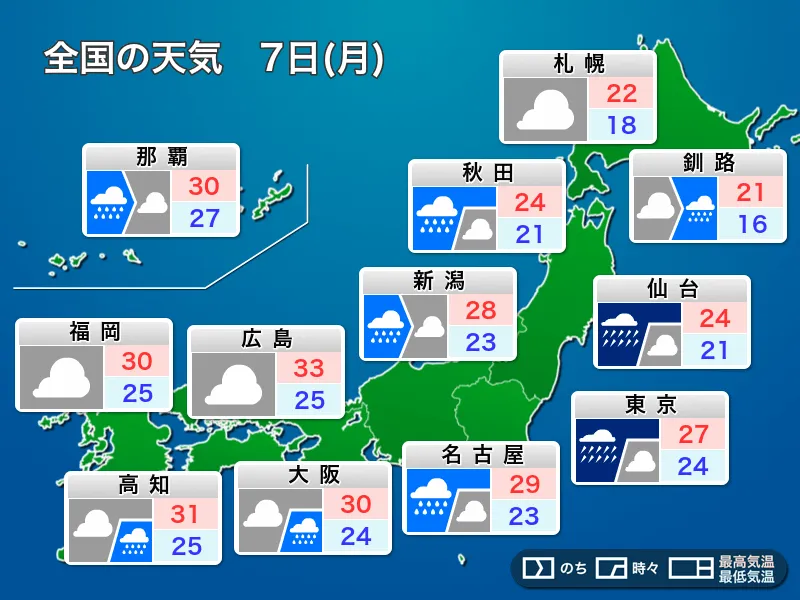
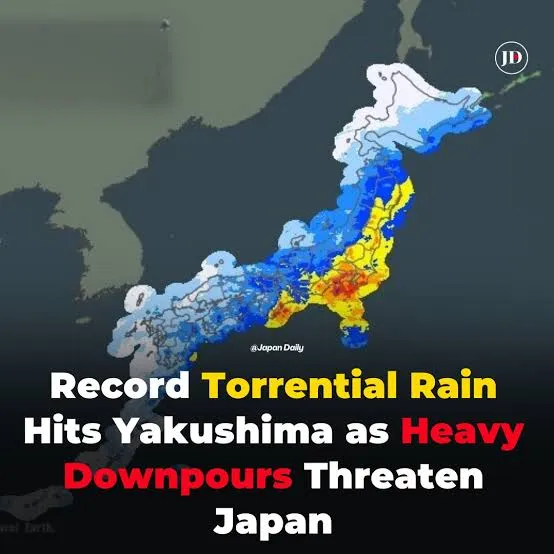
Japan’s Meteorological Agency has issued an early “half-day forecast” for potential linear rain bands in parts of the Tokai, Kanto-Koshin and Tohoku regions, warning that the risk of serious flooding and landslides could increase sharply. The alert comes as a seasonal rain front and other weather systems are expected to bring widespread heavy rain, particularly along the Pacific side of the country.
A linear rain band, known in Japan as a senjo kosuitai, is a narrow area where storm clouds repeatedly develop and move over the same location. These systems can produce extremely heavy rainfall in a short period, raising the danger of swollen rivers, urban flooding and slope failures. While the forecast does not mean that such a rain band will definitely form, the agency says the possibility is sufficient for residents to review evacuation plans and remain alert.
High-level warnings already issued
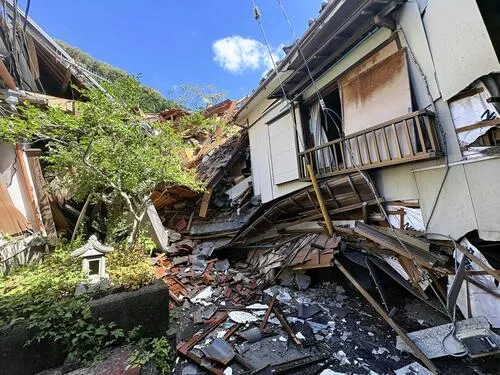
Level 4 landslide disaster risk information has already been announced for several municipalities, including Katsuura, Kamogawa and Isumi in Chiba Prefecture, as well as Yokosuka and Miura in Kanagawa Prefecture. Chiba City has also received Level 4 heavy rain risk information.
Japan’s warning system uses alert levels to communicate the urgency of protective action. Level 4 generally means that everyone in areas at risk should evacuate to a safer location, either to an official shelter or to a secure place away from rivers, coastal areas and unstable slopes. People who may need additional time to move, including older residents and people with disabilities, are encouraged to act particularly early.
Rainfall forecasts and transport disruptions
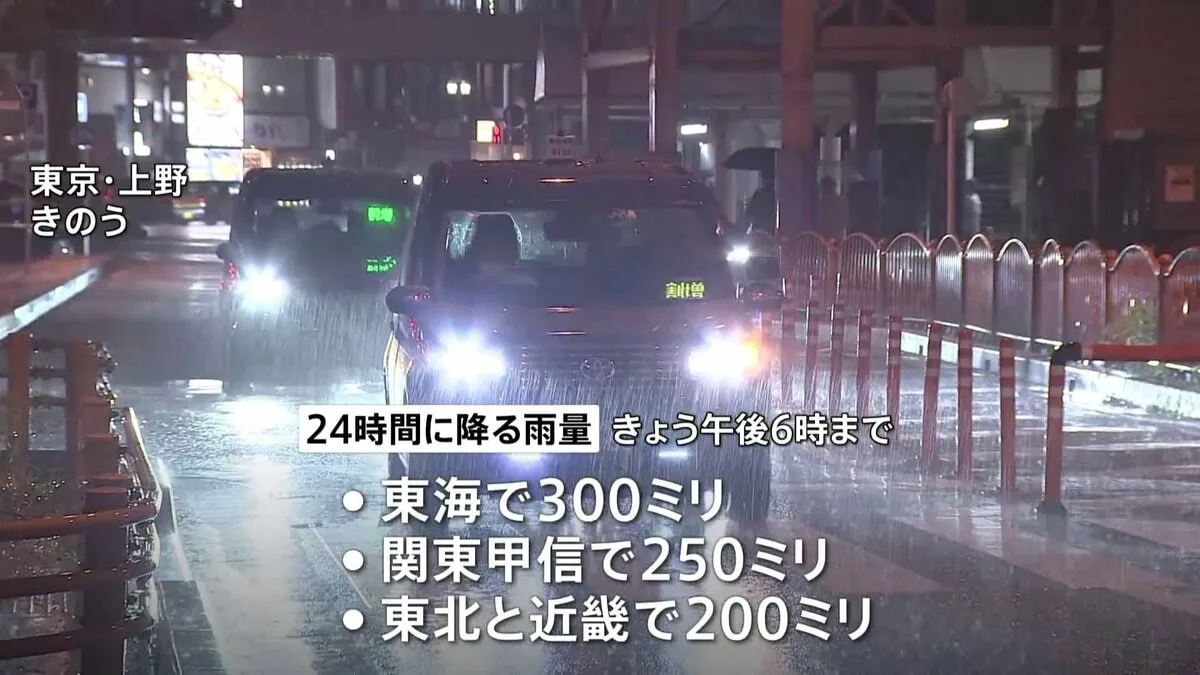
According to the Meteorological Agency, rainfall totals over the 24-hour period through 6 p.m. are expected to reach up to 300 millimeters in the Tokai region, 250 millimeters in Kanto-Koshin, and 200 millimeters in both Tohoku and Kinki. Actual amounts may vary by location, and localized downpours could create dangerous conditions even outside the areas receiving the highest totals.
The weather is also affecting Japan’s extensive railway network. Central Japan Railway Company, or JR Central, said the Tokaido Shinkansen could face service suspensions and delays. East Japan Railway Company, or JR East, announced that Yamagata Shinkansen services between Fukushima and Shinjo would be canceled for the entire day. Most trains operating to and from Tokyo on that route were also expected to be canceled, with limited exceptions.
Advice for residents and visitors
Residents and travelers should check the latest information from the Meteorological Agency, local governments and railway operators before leaving home or heading to a station. Japan’s disaster-prevention websites and smartphone alerts provide detailed information in multiple languages in many areas, making them useful resources for international visitors and foreign residents.
People in vulnerable locations should avoid rivers, shorelines and mountain roads, and should never attempt to cross flooded streets or railway crossings. Conditions can change quickly during intense rainfall, but Japan’s well-established warning and transport systems are designed to provide early information and help communities respond safely. Travelers are advised to allow extra time, confirm reservations and consider postponing nonessential journeys until conditions improve.