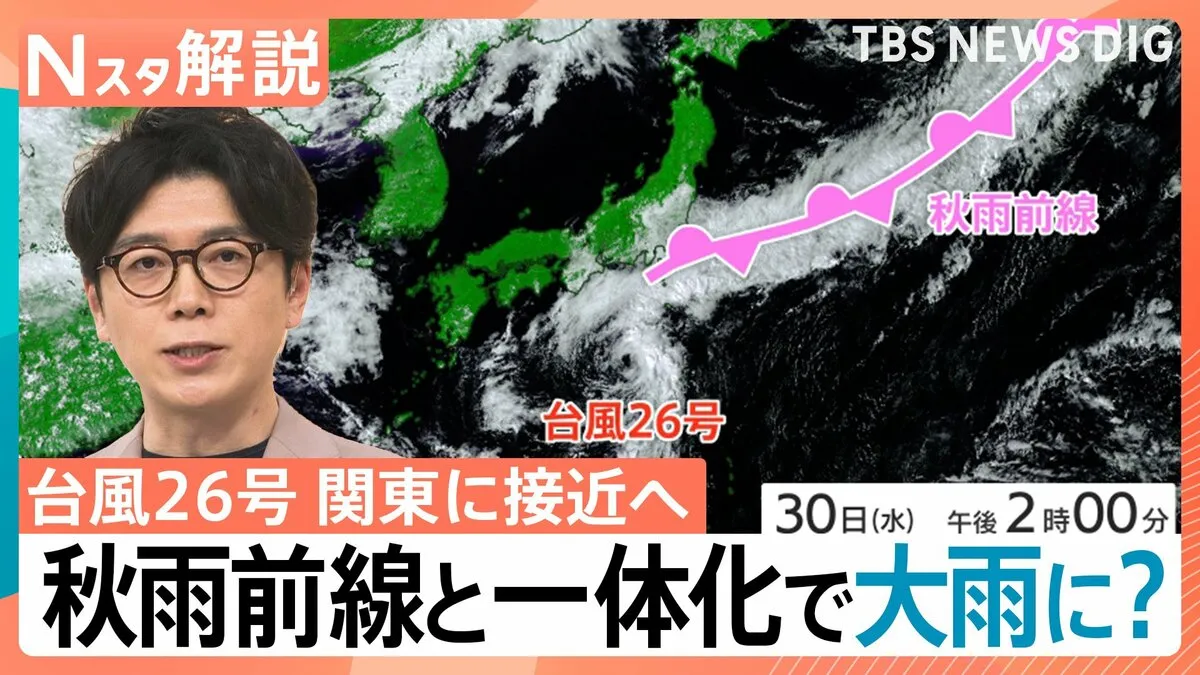
Emergency warnings issued as Typhoon No. 24 approaches
Heavy rain accompanying the approach of Typhoon No. 24 has prompted emergency safety measures across parts of eastern Japan, with authorities urging residents to act quickly and prioritize their safety. According to Japan’s Fire and Disaster Management Agency, as of 8 a.m., an emergency safety assurance alert had been issued to 2,431 people in Niijima Village, Tokyo.
In addition, evacuation orders had been issued for 403,936 people living in 29 municipalities across Tokyo, Chiba, Kanagawa and Ibaraki prefectures. These areas form part of the wider Tokyo metropolitan region, one of Japan’s most densely populated and economically important parts of the country. Chiba Prefecture accounted for the largest share of those affected, with evacuation orders covering approximately 368,000 residents in 21 cities and towns.
What the warnings mean
Japan uses a five-level disaster alert system to communicate the seriousness of flooding, landslides and other hazards. An evacuation order is generally associated with Alert Level 4, meaning that everyone in areas at risk should evacuate to a safe location by that stage. Residents may be directed to designated shelters, safer buildings or locations outside the predicted danger zone, depending on local guidance.
The emergency safety assurance alert is the highest stage of Japan’s warning system, known as Alert Level 5. It indicates that a disaster may already be occurring or is highly likely to occur and that lives are in immediate danger. At this stage, people are advised to take whatever action is immediately possible to protect themselves. This may include moving to a higher floor, staying away from rivers and slopes, or finding the safest available room if it is no longer possible to travel safely.
Important guidance for residents and visitors
Authorities are urging people not to wait until conditions become dangerous before moving. Torrential rain can cause rivers to rise rapidly, roads to flood and landslides to occur with little warning. Even short journeys may become hazardous, particularly at night or in areas near steep hills, waterways and coastal zones.
Foreign residents and travelers should monitor official updates from municipal governments, the Japan Meteorological Agency and local broadcasters. Information is commonly available in Japanese and, in many areas, in English and other languages. The Japan Safe Travel website and the Japan National Tourism Organization also provide useful guidance for international visitors. People should keep mobile phones charged, prepare essential medication and identification, follow evacuation instructions, and avoid entering flooded roads or underground spaces.
A reminder of Japan’s disaster preparedness
Japan’s detailed alert system and extensive municipal shelter network are designed to help communities respond quickly to severe weather. However, the effectiveness of these measures depends on residents acting early and following local instructions. With heavy rain continuing under the influence of the approaching typhoon, authorities may update evacuation areas and warning levels as conditions change.
Anyone in or traveling through the affected prefectures should check their municipality’s latest announcements and confirm the safest nearby location. The figures reported at 8 a.m. are subject to change, making regular updates especially important.